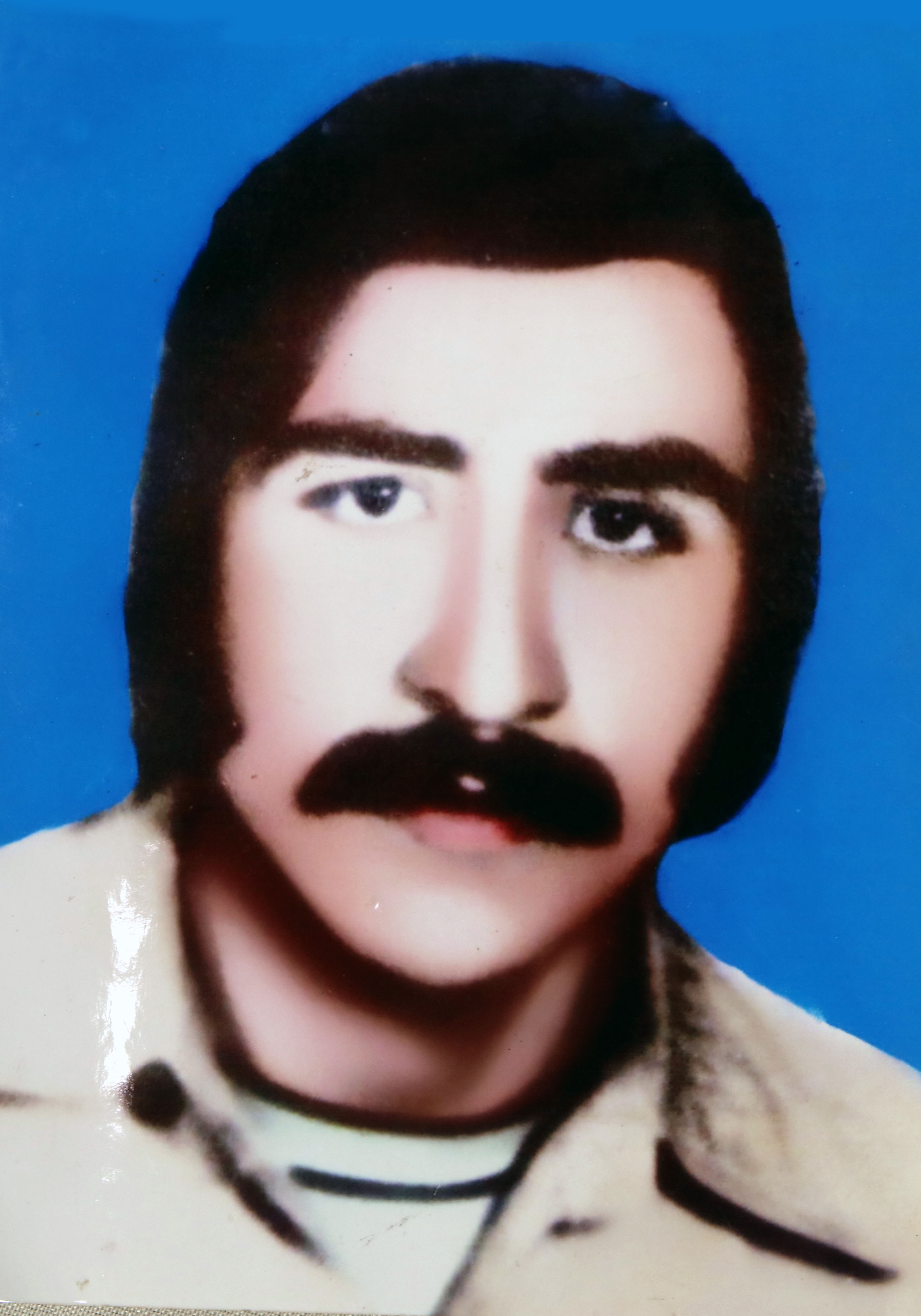
Happiness Lost
The violence in the aftermath of the 1978 Saur revolution has forever destroyed Afghani’s happiness. Before the coup she lived a joyful life with her husband Allah Mohammad. Everything was going well. The result of their happy marriage were two healthy children, a boy and a girl. Afghani was proud of her husband, who was known to be well educated and intellectual. They lived in comfortable economic conditions. They were pleased with their lives and did not feel that anyone could ever take away their satisfaction and happiness.
But suddenly everything changed. Allah Mohammad was arrested by the government and taken to Puli Charkhi prison. He was never convicted of any crime and until today no one knows what happened to him.
The disappearance of Allah Mohammad radically altered the life of Afghani. Soon after, an endless cycle of trouble and suffering began. Looking everywhere for her husband, she did not manage to find him. Later, she lost her father, a brother and her father-in-law. As she became increasingly helpless and with rising violence in Kabul, she eventually migrated to Peshawar. Along with her brother and two young children, she walked all the way to Jaji and Parachinar and finally reached Peshawar. However, in Peshawar she could not afford the cost of living and shortly after took her children and returned to Afghanistan, where she eventually settled in Shamali, north of the capital Kabul.
In Shamali, she worked as vintager. Knowing that she was a widow, all the men stared at her in inappropriate ways. But Afghani was strong enough to resist the patriarchal structure of society and despite the mounting challenges, raised her two children on her own. Finally, one of the commanders in the area forced her to marry him. After two years of marriage, the commander was killed and she remained alone with what by then had become three children. Since then Afghani has done everything in her power to raise her children. She is now approximately fifty-five years old and has lost the strength to continue struggling for a better life. More than thirty years after the death of Allah Mohammad, no sign of joy and happiness is visible in her tenacious face. A world of untold stories are archived in her decrepit body.
The Story Of Afghani
Narrator: Afghani
Victim: Allah Mohammad
Date of the incident: 1978-1979
Location of the incident: Kabul, Pul-e-Charkhi prison
My husband Allah Mohammad had just finished high school when we moved from Shamali to Kabul city. One day, he went out and said that he was going to the university to take an exam. He was arrested along with another person who was fighting against the Soviet army close to Block Twelve of the Old Macroyan. I was just over 20 years old when Allah Mohammad disappeared.
At that time we were living in Qala-e-Wahid, near Kote- Sangi. Our living conditions were good. We had a house and property. But after the death of my husband, our lives were ruined. I migrated to Pakistan with my two small children. When I realized that I could not afford living in Pakistan, we went back to Afghanistan.
My husband was arrested during the time of the Khalq and Parcham regime. I personally could not follow his case but my mother-in- law made several inquires about his whereabouts without any results. Then, my mother-in-law went to Sadarat where she was informed that her son was imprisoned in Puli Charkhi. In Puli Charkhi she was told that her son was no longer detained there and that she should pray for his soul. My mother-in- law returned back home in tears.
Later on when some political prisoners were released, he was not among them, which is when we were finally convinced that he was no longer alive. As the regime was looking after me too, I walked twelve days and nights all the way through the Safi Mountain to Jaji and Parachinar to get to Peshawar. One of my brothers accompanied me in this long and risky journey. When we finally got to Peshawar, my brother began to work in a shop. However, as it was very difficult to live there, I soon came back to Afghanistan while my brother went to Iran.
In Afghanistan, I moved to Shamali and began working in a grape field to feed my children. Twelve years later a commander forced me to marry him. I now have a 19 year-old boy from him. Two years after our marriage, my second husband was killed.
Among the things left from my first husband is his picture and a book. His photo and book are very special to me because they remind me of our beautiful times together. I am including these two important objects in my Memory Box so that my husband’s memory remains alive. I hope that these objects will help others to distinguish between those who are open-minded and progressive and those who kill other human beings.