His Face Was Covered in Blood and One of His Hands Was Stuck Behind His Back
Narrator: Masouma (mother)
Victim: Sayed Baqer Musavi
Date of the incident: 23 July 2016
Location of the incident: Dehmazang, Kabul City
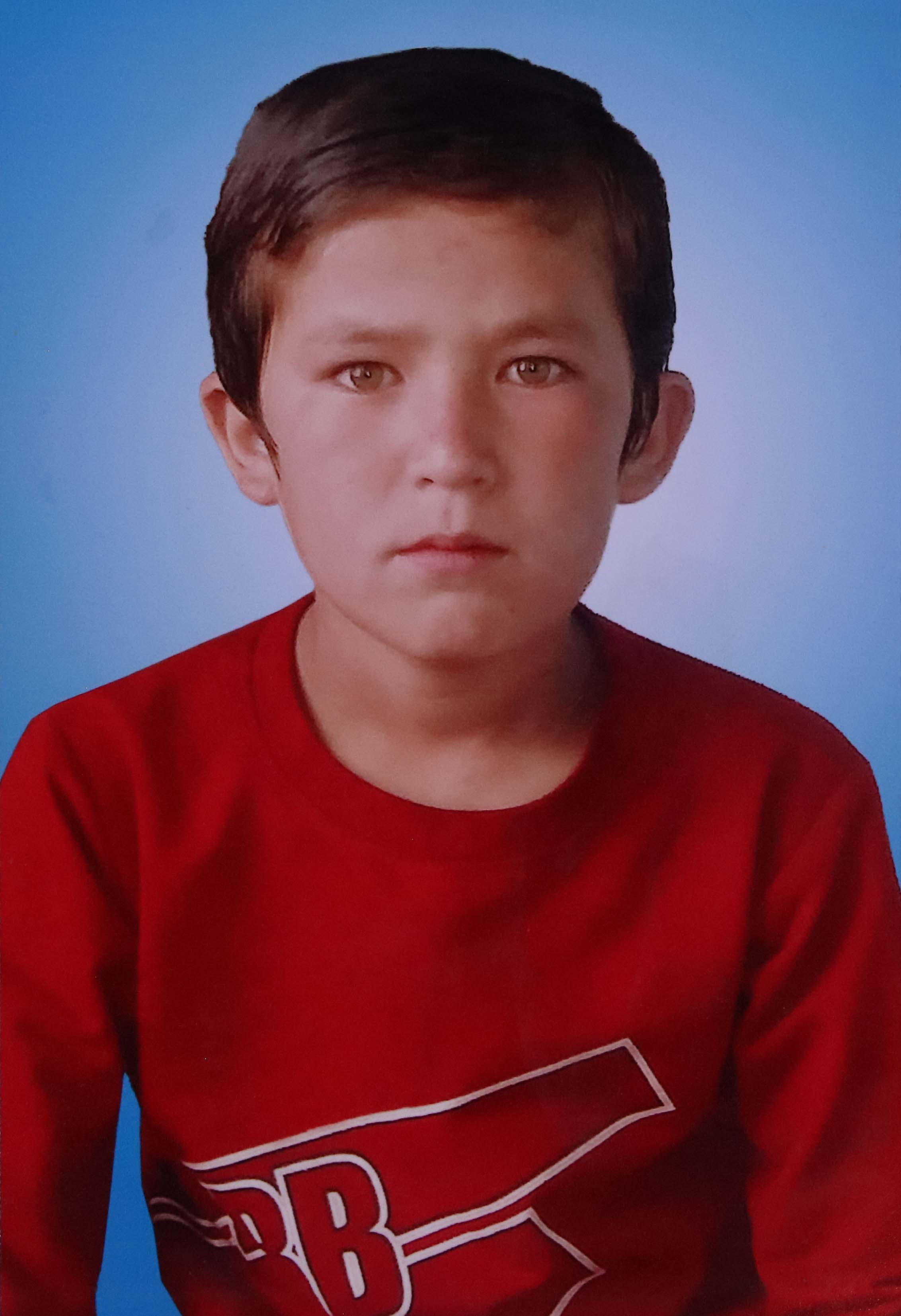
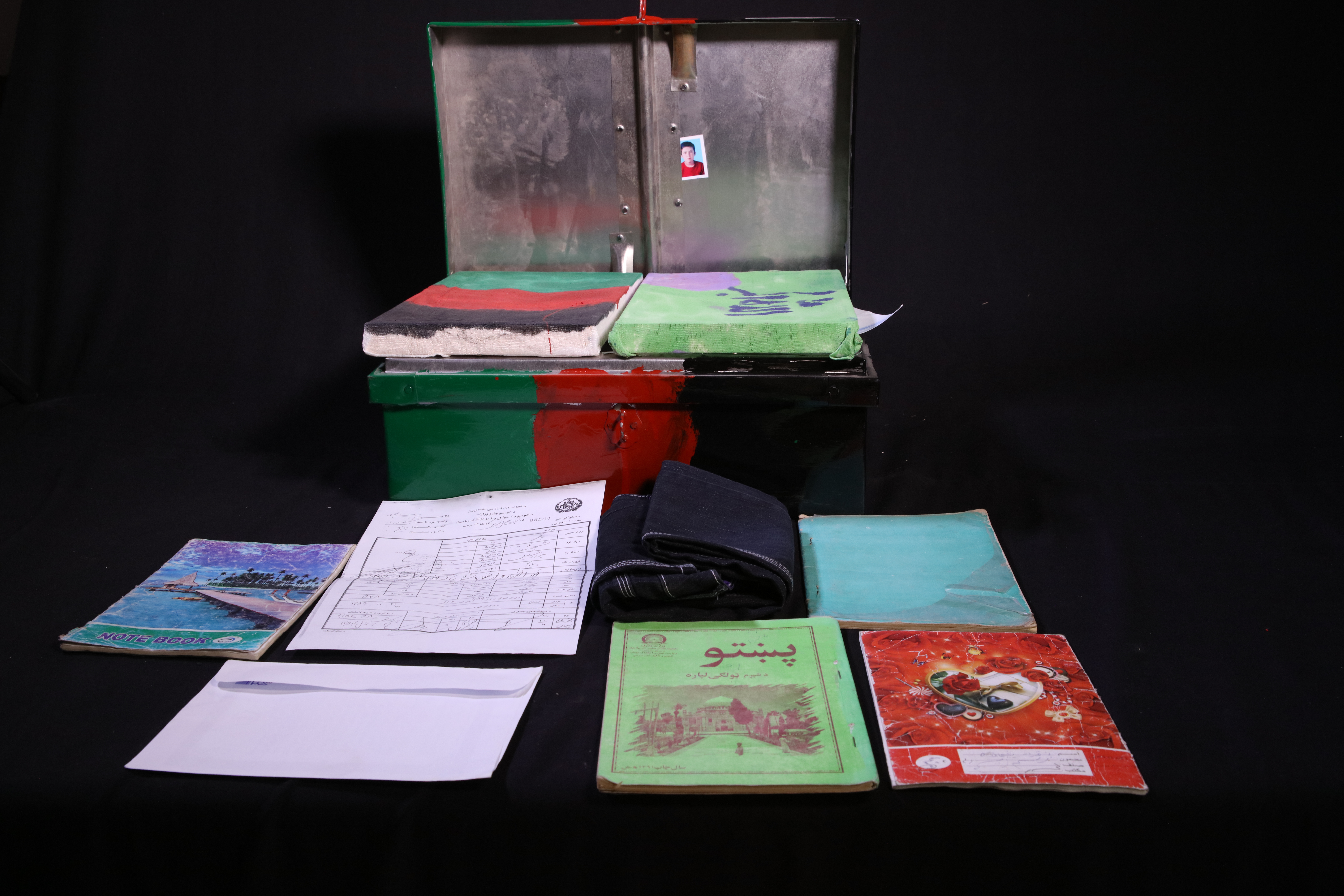
I am the mother of the martyr Sayed Baqer. He was born in 2003. He was a sixth grader at Gulkhana school in Barchi. My son grew up in hardship; he had seen difficult things. In the evening before the demonstration, martyr Baqer told me that the next day, he wanted to take his ice cream cart to the demonstration site to sell ice cream to people. I told him to stay at home instead and not go out so that I could wash his clothes and he could take a bath.
The next day, I was busy with the household chores. I didn't notice when Sayed left the house at 8 o'clock. Before his martyrdom, he either sold ice cream or gathered passengers for the minivans under the flyover. His father had a stomach ache the night before the incident and went to bed without eating dinner. The next morning, his father still had a stomach ache. He has been sick for a long time, so he was sleeping. I woke him up twice during the day, asking him if there was a demonstration happening. He said no, the demonstration had been cancelled. So I felt reassured and believed there was no demonstration and that Baqer had gone to work. I was just finishing washing clothes and was supposed to rinse them when Sayed Baqer’s father came to me and said a suicide attack had happened in Dehmazang. He asked me where Baqer was. He wanted to go to Dehmazang. I was worried and angrily asked him what he was waiting for and wanted him to go there immediately. His father left the house while I continued with the household chores. I rinsed the clothes and hung them on the rope in the sun.

After finishing, I went to the room and turned on the TV and tuned into Tolo network. It was broadcasting news of the Dehmazang attack and the critical situation, showing the dead bodies. I saw a boy with a blue jacket and black pants on TV, and for a moment I thought he was Baqer, but he was not. I moved away from the TV. His grandmother was also at home. She asked me where I was going. I couldn’t tell her I was going to Dehmazang. To avoid her questions, I told her I was just going to the mosque. Wearing my prayer veil, I went to the mosque. From there, I went to a shrine near Pol-e-Sokhta. A mullah was sitting in the shrine. I went to him and asked him to do a Stikhara [consult the Holy Quran]. He told me, “Mother, don't cry, go make a vow and pay alms on your son’s behalf and he will come home by evening.” From there, I made it to the flyover, but I did not see anyone there. I went to the Barchi taxi station. I had reached Gulai when his father called me and asked where I was. I said I was at Gulai. He told me to go to the ice cream distribution center and ask if Sayed Baqer had retrieved ice cream for sale that day. I went there and asked them about it. The owner told me “He got ice cream yesterday but didn't come to get ice cream today.” From there, I went home, sat in the front yard for a few minutes, but I couldn't take it. I left the house again. By the time I arrived at Gulai, the Mullah called for the evening prayer.
I called his father and asked where he was. He said, “I searched Dehmazang square. Our son is not there; now I am going to the Esteqlal Hospital. You should go to the Hospitals in Pol-e Khoshk because they took some of the wounded there.” So, I visited the Alami and Watan Hospitals. They told me in Watan Hospital that a person named Baqer was in Ferdous Hospital in Pol-e Sokhta. I left for Pol-e Sokhta and arrived at 7:00 PM. When I entered the hospital, they told me that there was no one named Baqer in that hospital. They said three wounded had been taken there, but were later transferred to the Wazir Akbar Khan Hospital. They wanted me to go to Mawla Ali Hospital in Kot-e-Sangi because many of the wounded were there. I visited Mawla Ali Hospital. They too told me they had transferred the wounded to Wazir Akbar Khan Hospital; Baqer's name was not on their list. There were a few people there who told me to go to Karte Sakhi. They said they had taken the bodies to the mosque there. When I got there, it was very quiet and the gates of the mosque were closed. Someone told us that they had not taken the martyrs there. He said wherever the wounded were taken, that was where the martyrs would also be.
From there, I went to Pul-e Sorkh where I called his father. He had gone to Wazir Akbar Khan Hospital. He told me he was going to Ibn Sina Hospital and wanted me to join him there. We went there and searched. Our son was not there either. We also visited the Maiwand Hospital, and he was not there either. At Maiwand Hospital, we were told a 13-year-old boy was in a coma and they had taken himto Wazir Akbar Khan Hospital. So we went back to Wazir Akbar Khan Hospital, but when we got there and saw the 13-year-old boy, it was not Baqer. From there, we went to the Jomhoriat Hospital, but he was not there either. Following that, we visited the Emergency and Aliabad Hospitals where we searched for Baqer, but still we could not find him. We continued searching until around 1:30 AM but did not find him. At 2 am, his father and I returned home. When we got home, I asked his father if he had seen his boots in Dehmazang. He said, “A slipper was lying on the ground with a hole in the sole.” The day before the incident, he told me, “Mother! My slipper is torn and my feet get dirty.” I told him, “Use it for one more day. Your father will buy you a new pair tomorrow.” Remembering the slipper and his words, I felt terrible. I thought my son Baqer must have been torn into pieces because we found him neither among the dead nor among the injured.
By early morning, I asked his father to take me to Dehmazang so that I could see his slippers closely so I could recognise them, as I know them. Right at that moment, his aunt came and the three of us went to Dehmazang together. When we got there, we found out that people had gathered the belongings of the wounded and the martyrs and taken them away by 2:30 am. The municipality workers and the passing traffic was washing the blood off the road. I did not see anything except a piece of human flesh lying on the road. We had not checked two last hospitals, that's why we then went to the Afshar and National Security Hospitals. Sayed Baqer was not at Afshar Hospital. When we went to the National Security Hospital, his father started searching. A few moments later, he came back to us and asked, “Did Baqer have a scarf with him?” I said no, he had not taken a scarf. His father said, “Baqir is here, they have placed a scarf on him.” I asked him if he was alive. He said, “No, he has been killed.” He asked me if I wanted to see him. My answer was yes. I went near the gate but the police would not allow me to enter the room. They said his aunt could enter but I was not allowed. His aunt went in and came back to ask what Baqer was wearing. I told his aunt he had on a blue jacket and black trousers.
I passed out right away. They had to take me home in a car. After I left the hospital, they took his body to the mosque. When I regained consciousness at home, I cried and mourned a lot. I begged them to let me see him even if his body was not intact, even if there was just one fingerer left, or even if there was not even a finger left, at least let me see his clothes. They lis-tened to me and brought him home. There was a wound on his back. He had been bleeding from his nose and mouth. His face was covered in blood and one of his hands was stuck behind his back. All his clothes were burned. Only fragments of his shirt and pants remained. His hair was completely burned as if you set a sheep on fire. This sorrow will never leave my heart.
If it was a competent government, why would our children become martyrs in such a way that their pain burns through our whole life? We live with that sorrow every day and every moment.