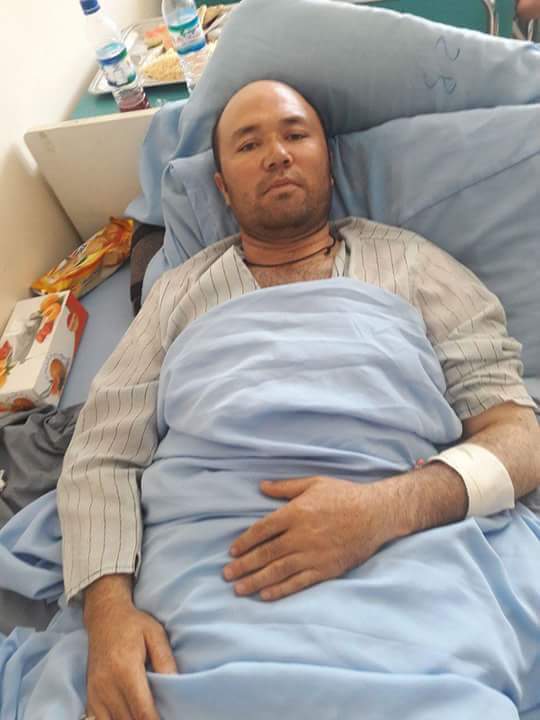
He Rebuilt the School Building
Narrator: Amin Dadfar (brother)
Victim: Reza Ebrahimi
Date of the incident: 23 July 2016
Location of the incident: Dehmazang, Kabul City
My brother was 15-years-old when we lost our father. My other brother, Mohammad Juma, was older than Reza Ebrahimi. Mohammed Juma used to live in Iran and was the breadwinner of the family. This elder brother worked in a field in Iran two days per week and did the hard work assigned by the land owner. He worked there for four years to help the family and left for Iran at the age of 18. The journey was arduous and on the way, he was taken hostage by thieves and imprisoned in the Tal-e Siya prison near the Iran-Afghanistan border. He was kept in jail for two months. They held my brother hostage with ten other people but released his friends and told them to send money when they arrived in Iran to buy my brother’s freedom. Two months later, my brother was finally released and managed to go to Iran.
When he arrived in Iran, he was determined that all his younger brothers should attend school and live a comfortable life. He provided us with money and other necessities of life. One of my brothers, younger than Reza, was not that interested in school. But my older brother and I continued going to school. The second thing Mohammed Juma did for us was to repair and renovate our house in our hometown. During his time in Iran, he engaged in sports. Within five years, he became a sports trainer. After five years in Iran, my elder brother returned to Afghanistan and travelled to our hometown. Reza left for Europe. He traveled with five of his friends and was the group leader. During their journey, they suffered a lot. When a smuggler gave them a boat in the Greek [Aegean]sea, he had to take control of it. He was fearless and helped everyone. One of his friends had become seasick, and he encouraged him to carry on. When they had come across a whale, again, he had comforted others, and they managed to cross the sea.
When they had landed on the coast by morning, one of his friends, who had been very tired, had laid down on the beach but the tide washed him away and my brother immediately jumped into the water and saved him. Then he encouraged everyone to move away from the coast, even though they felt weak. They had to tear up the boat they had sailed in, so they were not put on board the same ship and returned if the police arrested them. When the police approached the island, my brother fled and took refuge in a green, densely wooded area.
My brother described his experience: “After the police left the area, I stayed there until the surrounding areas became quiet. Only then I noticed that a giant dog was standing near me. I stayed still; the dog stood there for 20 minutes and then went away. I was exhausted, hungry, and thirsty because I had not eaten anything at night. I was on the run when the police arrested me. They asked me where my friends were. I told them I was alone. They didn’t believe me and said you must have a companion, or maybe you are a smuggler. I was imprisoned for five days. Then, they released me and took me to Athens, the capital of Greece. After a month, I found my friends.”
My brother, Reza, was a very active person. He lived in Greece for two years and worked in agriculture. In the third year, he went to England with his three friends. On a rainy night, my brother and 15 other people, including 8 Pakistanis and 7 Afghans, tried to hide in a stream but the Pakistanis did not allow the Afghans to hide there. Angry at this, my brother threatened to beat some Pakistanis. He was athletic and strong, and when the Pakistanis saw this, they decided not to mess with him. My brother had taken his friends out of the stream and they had hidden somewhere else. Later, they moved to France and stayed there for six months. Their journey was very challenging. He said they had to cling underneath trailer trucks to hide and move from one city to another. They would use their clothes bags as pillows when they slept during the night. They had no idea where the trucks were headed: Africa, Europe, Australia, or even Pakistan. So they arrived at their destination, England. He lived in England for two years but was not accepted because he was an adult. So eventually he returned to Afghanistan. He worked hard and was always popular with people.
Reza got married in our hometown and then was nominated and elected as head of the community council. One of the public works he did for the people was constructing a road that connected our area with a neighbouring region. He also upgraded the elementary school into a high school and renovated its building. He was very good-tempered and treated people with care and respect.
One of my brothers is older than me. He graduated from twelfth grade in the same year. Reza told him to study any field he likes and not to worry about tuition. Taking part in the university entrance exam, my brother was accepted for the two-year electrical engineering course, but in the end, he didn’t enjoy it and said he wanted to work in national security instead. After two years of struggle, he was offered a job in national security and returned to Daikundi. When the incident happened on July 23, I was at the Institute. I kept calling my brother’s number, but he didn’t pick up. I called his friends, but they didn’t give a concrete answer. I left for Kote-Sangi. I then realized I should call the driver of the vehicle in which my brother rides. When I called him, he told me, “Reza Ebrahimi is with me, and I have just come out of Esteqlal hospital and want to go to Wazir Mohammad Akbar Khan hospital.”
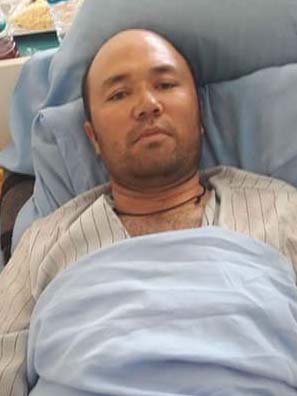
I recall him calling me several times a day for the entire year I had been in Kabul. He asked me where I was, what I was doing, and whether I had attended classes. He was very kind. I felt disappointed because he would never have left my calls unanswered, so if he did not answer, he must be in a bad way. When I arrived at Wazir Muhammad Akbar Khan hospital, his condition was critical; one of his legs was broken. I approached his bed. As soon as he saw me, he grabbed my feet. I tried to stay calm and not to cry. I told him he would be fine. Then, we transferred him to the 400-bed hospital. After he regained consciousness, he started cracking jokes with a friend of his who was a policeman, who had also been injured.
Reza asked me how I did my exams. I said I had only one exam left. He wanted me to get an inquiry letter and finish the exam. Following that, he talked to my brother, who worked in national security. He assured Reza not to worry about home. He told me I should not lose patience and stay focused on my studies after he is taken to India for medical treatment. “I have asked our brother to send you money from Daikundi.” He was taken to India with other wounded people on Friday. I was thrilled that he would recover in India. I attended classes on Saturday and Sunday. On Monday, I spoke with him. He sounded sad compared to the first days. A friend of his was with me. They talked a lot and he seemed happier talking to his friend. At 8 p.m., I went to my room; my friends had prepared food. I had dinner and wanted to call my brother Reza. I turned my mobile data on. One of my brothers, who lives in Iran with his family, was online and sent me photos of his sons. He asked me how Reza was doing. I said, “Thank God, he will be fine.”
In the meantime, my brother’s friend Abbas sent me a message asking how I was doing and what updates I had. The guy texted me again and said, “How are you? What is going on at home?” I said I was fine and so was the family. The person who was with my brother, his friend, was called Abbas. I asked him if Reza was fine. He said, “He is fine. Pray for him, and God willing, he will be fine. Make a vow for him.” I said, “I do pray, and now I will pray some more.” Following that call, Abbas’s phone and internet were turned off. Ten minutes later, a person named Hashem called me and said, “Dadfar, can I tell you something?” I said yes, tell me. With a lump in his throat, he said it was God’s wish. God took Reza Ebrahimi from us. I was shocked and immediately asked him what had happened. Hashem said, “Reza had a heart attack, and the doctors could not save him.”
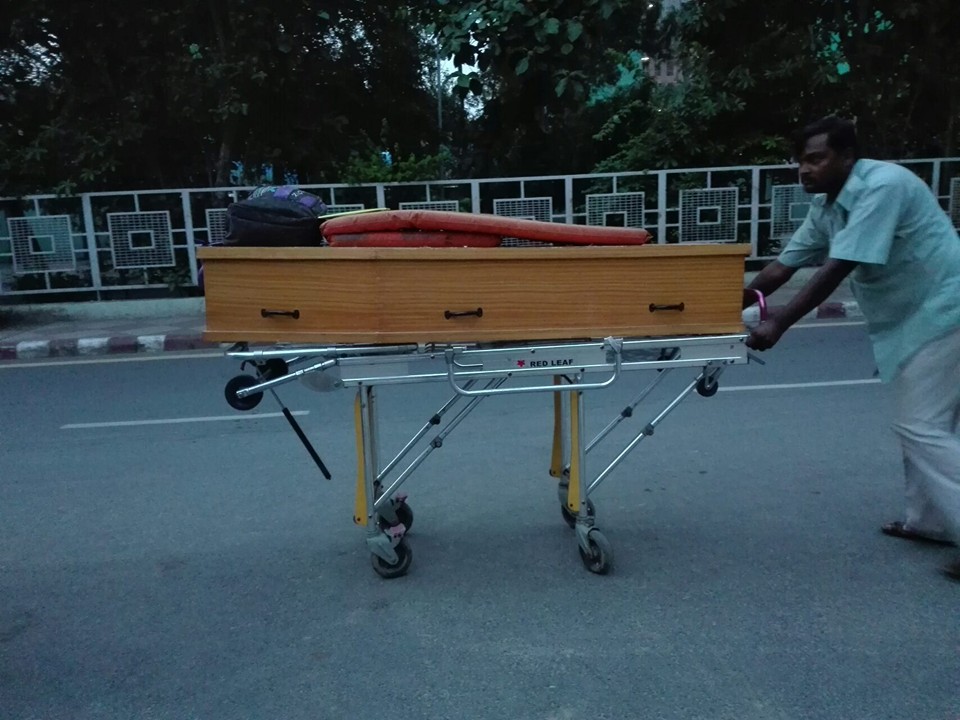
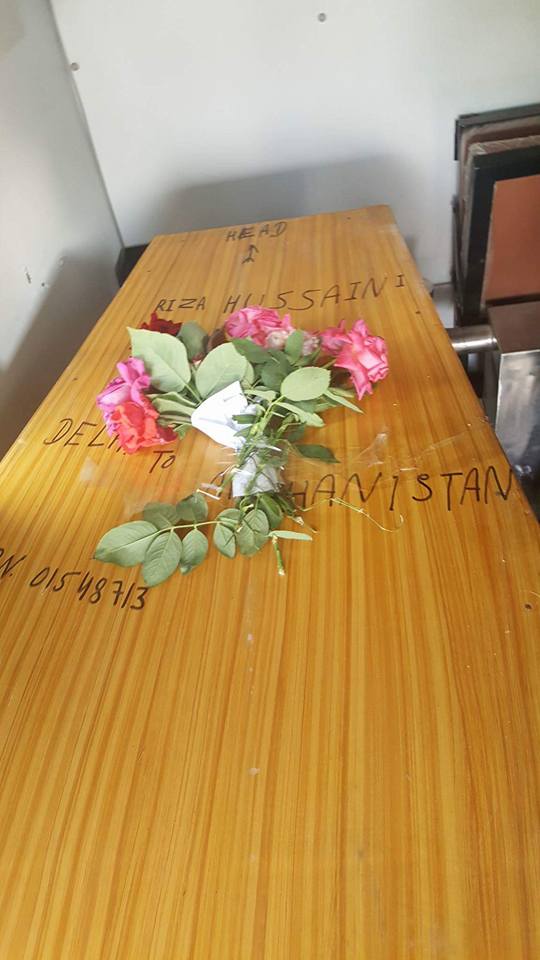
I hung up the phone and informed my elder brother in Iran. He cried a lot over the phone and told me he would leave for Afghanistan the next day. My other brother, who was on duty, said he would go to Daikandi tomorrow. My other brother, who lived in Herat, only knew about Reza’s injury. He was in Iran, too, and arrived in Kabul on Monday. Upon the arrival of Reza’s body from India, we transferred it to the morgue in the 400-bed hospital because the high temperature could have impacted the body. When everyone arrived in Kabul, we moved to Daikundi on Tuesday and laid Reza to rest. He departed this life and left us alone in grief.