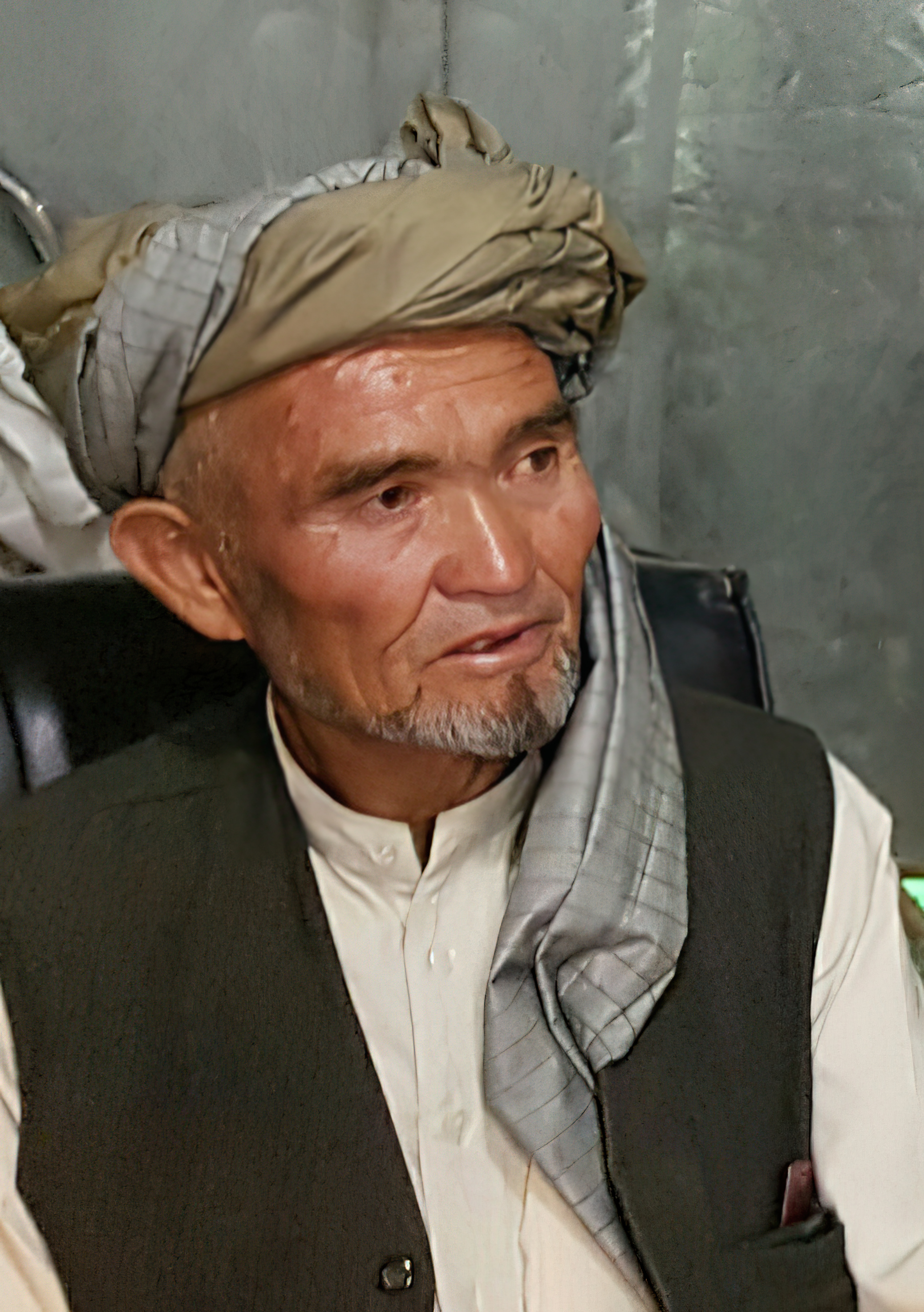
The Third Body Was My Father
Narrator: Shafiqullah (Son)
Victim: Abdul Shakoor Karimzada
Date of the incident: 23 July 2016
Location of the incident: Dehmazang, Kabul City
My father was born in 1942 in Qoluj Village of Qarabagh District in the province of Ghazni. My father was martyred in Dehmazang at the age of 74. My father has four sons and two daughters. My brothers and sisters are married and all live separately. My father always encouraged me to get an education and improve my life. He encouraged my sisters to have good relations with people. To perform the prayer, he would always go to the mosque. My father had five brothers, one of whom was killed during the wars. He spent his childhood in the village. Almost 50 years have passed since my parents got married. Their eldest child is 34-years-old. My best memory of my father is related was when I managed to pass the university entrance exam. When I told him about it, he had tears in his eyes, hugged me, and was very happy. He had many dreams for his children and always said he wanted all of us to succeed. He even encouraged his daughters to get an education and said they should go to school, get good grades in university, and achieve their dreams. We moved to Kabul in 2009, following which he never returned to Ghazni. My father was a social and good-natured person who was very fond of his children and grandchildren.
My father and brothers, Najib and Zabihullah, worked for ten years in Iran. He had a cow, and he would always look after it. Later, he sold the cow and bought a cart to work as a vendor. Sometimes he would do construction work. He had become interested in the activities of the Enlightenment Movement and frequently attended their meetings. He believed that our people should stand up for justice and raise the voice of the oppressed.
On July 23rd, he left home at 9 am. I also went to Kot-e-Sangi. I did not know my father, too, would be taking part in the demonstration. When I got there, I felt that the security situation was not good, so I returned home. The university exams were coming up, so I was studying at home. The night before the incident, Negah TV announced that the next day’s demonstration had been cancelled. However, when my father heard from the Movement's announcement that the demonstration would happen anyway, he went to Dehmazang the next day.
At 2:30 pm, when I turned on the TV, news of the explosion in Dehmazang was being broadcast on the 1TV network. My mother was distraught. She came to me and wanted me to call my father immediately. She explained that he had gone to Dehmazang. When my father left the house in the morning, no one stopped him; he was participating in the demonstration of his own free will. I called his number, but he didn't answer. I called him again, and somebody else picked up his phone and said: “I am a doctor, the owner of the phone is seriously injured, come to Ibn-e Sina Hospital.” I didn't know what I was doing. I took a taxi and immediately went to Esteqlal Hospital. I called my father's number and said I had arrived at the hospital. The doctor again told me that I should come to Ibn-e Sina Hospital. The road was closed, and the police would not allow anyone to pass. With difficulty, I made it to the hospital. I searched everywhere, but I could not find my father. A doctor called me and told me to follow him. I was in a terrible mental state and told myself my father must be injured. The doctor would take me to him. Then I realized that he was taking me to the morgue. When I got there, there were other martyrs too. The third body was my father’s. My world fell apart. I broke down and felt lost and I didn't know what to do. It was a difficult moment.
My father was transferred to the Emergency Hospital. The next day, we brought his body home. After bathing him, we buried him in the cemetery of Nawabad in Deh Qabil.
I am not asking for anything from this government because this is the same government that killed our people. I am requesting human rights institutions not to let the blood of our martyrs be wasted in vain, since they gave their lives for justice. Our loved ones did not take part in the demonstration for electricity, but because the government discriminates against some of the people of Afghanistan. We must follow in their footsteps and not let their voices be silenced.