My emotional state was very bad and I didn’t know what to do
Narrator: Ishaq (cousin)
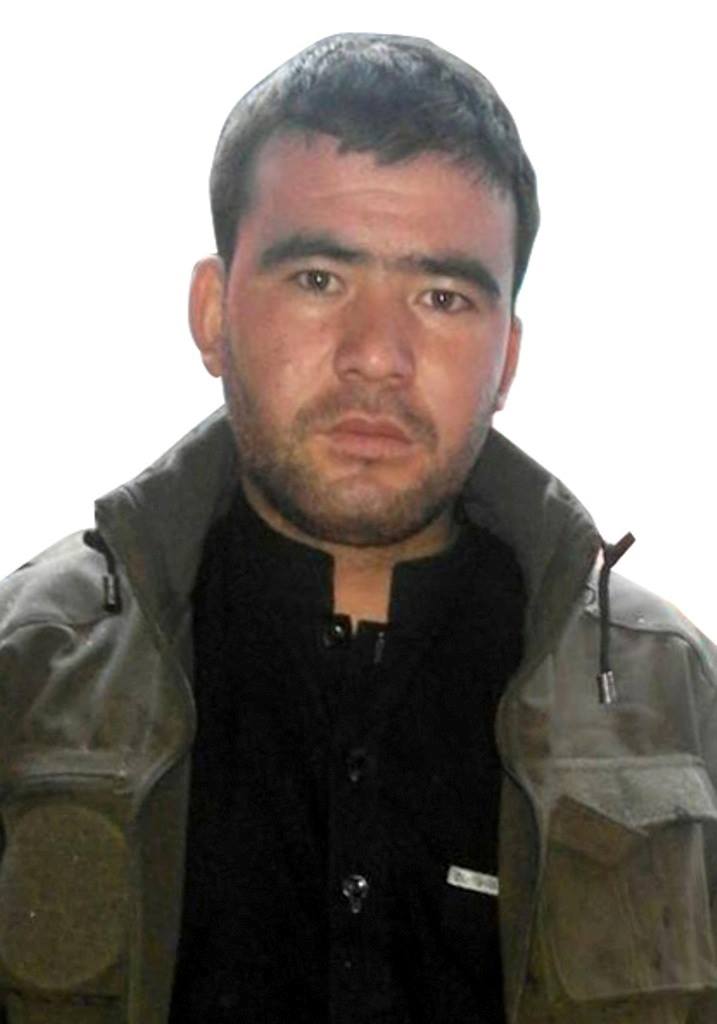
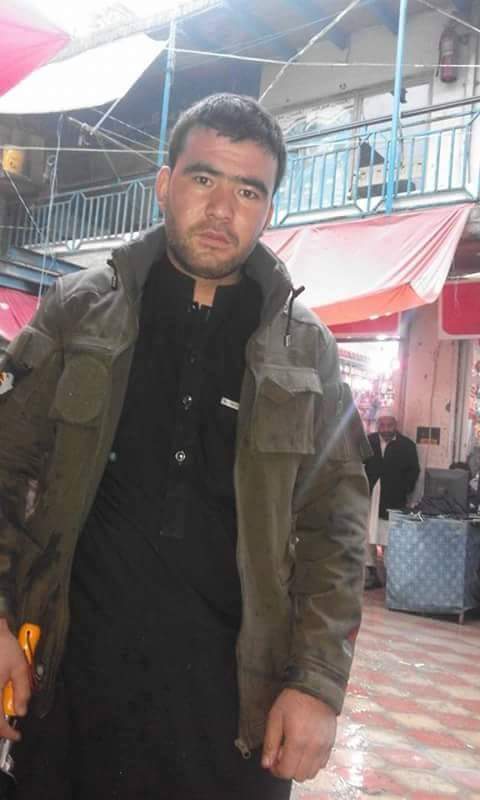
Victim: Jawad Haidari
Date of the incident: 23 July 2016
Location of the incident: Dehmazang, Kabul City
Jawad was born in the province of Bamyan in 1992. During the period of Taliban rule, his father was hired as a farm worker in the Tah-ghar area, working only at night due to the security situation. If he worked on the farm during the day, the Taliban would kill him. One day Jawad’s father attempted to go plough his field early one morning, hoping the Taliban would not notice his presence. The Taliban saw him and took him to back his home, where they behead him. When the Taliban came, Jawad hid in a corner of the family house and his mother ran away. Four other neighbors who had worked with Jawad’s father came out of their homes, thinking that the Taliban had gone away. Unfortunately, all four were found and also beheaded.
My father and I worked as shepherds in an area called Dara-ye Nura (Nura Valley). Since the area was not secure, my father would go to the area for 20 days and farm only at night so the Taliban would not see him. I was little and fled to the mountains along with my family [after the Taliban came to our house]. We learned only three weeks later that my uncle had been killed by the Taliban. Jawad’s mother lived in my uncle’s house for 3 months until one of our relatives said: “She is a young woman. One of your brothers should marry her so that she is not without a guardian.” Then one of my cousins married her. Unfortunately, my cousin had a defective eye. He worked for a while until he earned enough money to send Jawad to school. Jawad went to school until eighth grade. At the time, conditions at school were not good, so Jawad was sent to Kabul and started working in the Now-Bahar Hotel in Kot-e Sangi. I recommended that he should work with me [as I already worked there].
After some time, in 2011, he joined the national army and worked for six months. His duty station was at the airport but he left his job due to insecurity. Later, we bought wheelbarrows and started working in Mandawi market. My wife and I got him engaged to a girl last year. A clergyman in Karte Sakhi officialized their marriage contract so Jawad could easily go to his father-in-law’s house. He had planned to hold the wedding ceremony in the fall of this year but his fiancé’s family had problems, and so he had to wait until their problems were resolved. Unfortunately, he was martyred in the summer. His family was not here - he lived with us. Only on Fridays would he go to his fiancé’s house. Due to the problems with the road, his mother came to Kabul only once, which was for his engagement party. Our economic situation was not good. In the run-up to Eid, we would try to save some money from work, and my wife and I would bring an Eid present for Jawad’s fiancé.
Jawad’s dream was to escape poverty and misery. Sometimes he would say with a smile, “Cousin, will there ever be a day when I have a wife, a life and children?” I would always respond the same way, saying, “Don’t lose hope and have faith in God’s grace and generosity.” Jawad was very honest, good-tempered, brave, and hard-working. We would participate in most of the Junbish (Movement) programs together. I had guests at my house on the day of the demonstration on July 23rd, but Jawad went to Dehmazang. My aunt had died a short while before, and some of our relatives had come to our house to pay their condolences. On the morning of the incident, Jawad went to Dehmazang along with some youths. I called him at 12 o’clock and told him to come back home because the weather was very hot and he would get sick, and he should come eat and drink water. I asked my wife to prepare more food because Jawad would also be coming home. I called him again and asked him again to come home, but he said that he was still in Dehmazang and that all the roads to the city were blocked off. I told him to come home through Guzargah. Our house is just behind Ibn-e Sina Hospital. He said he did not know the Guzargah route and that he would wait a few minutes for the demonstration to finish. I was worried and again called him to ask him where he was. He said he was waiting on the street, that people were going to eat and a few people had erected tents. We were waiting at home for Jawad before starting to eat. At around 2:30 p.m. the sound of an explosion was heard, and dust rose from the Dehmazang side. My house is near the top of the mountain, so the city landscape is vividly visible. I got out and started running towards Dehmazang anxiously, but when I neared the bridge, a soldier stopped me. I tried to pass toward the Pul-e Artal bridge when a second explosion happened. Gunfire was heard. The people around me were saying that there was fighting in Dehmazang. Yazdanparast, the representative of Chendawul, had put some injured people in his car. I asked his bodyguards what had happened. They replied that there had been an explosion in Dehmazang. However many times I called Jawad, he did not answer the phone.
When I arrived in Dehmazang Square, I saw a police vehicle picking up the injured. But Jawad was not among the injured in the police vehicle. I rushed to Ibn-e Sina Hospital but did not find him there either. I called his phone again and someone else picked up and said the owner of the phone was in Isteqlal Hospital. I called my friends and relatives and told them he had been injured. When I arrived at Isteqlal Hospital, I was very confused and in a very bad condition. I went to the female ward without realizing it.
My emotional state was so bad and I didn’t know where I was or what I was doing. There were three or four dead bodies on a bed and the hallways were full of the injured and the bodies of martyrs. Of the three dead bodies on one of the beds, one had green pants. I looked at the bodies more carefully and then I recognized Jawad. There was a doctor there. I was angry with him, and said that they were playing with the life of the injured, and did not care who was alive and who was dead. The doctor said that Jawad had died even before he arrived at the hospital. There were two holes in his shoulder, his hand was wounded, and there had been blood flowing from his mouth. The hospital didn’t give me the body that night, but moved it to Wazir Akbar Khan Hospital.
The following day, I received the body at 11 o’clock and took it to the mosque, and performed ghusl (full-body ablution) at 12 o’clock. I rented a car and took him back to Bamyan where we buried him. At that time, no one was in a good emotional state and we didn’t know about Tepa-ye Shuhada (Martyrs Hill). I didn’t have money, so I borrowed 10,000 Afghanis from a relative to pay for his shroud, funeral, and memorial service. We arrived in Bamyan close to sunset and because the weather was bad, the mullah of the area performed namaz-e janazah (Islamic funeral prayer). We buried him at night.
Jawad’s mother and my uncle insisted that we bury him in our own home area and next to his father’s grave. We still go to Jawad’s fiancé's house. Unfortunately, after Jawad’s martyrdom, she suffered from deep emotional problems. She fainted constantly though luckily with some treatment, her condition is improving. If the Junbesh [Enlightenment Movement] invites me to, I will attend their meetings. We follow our martyrs’ path. Jawad’s family now faces a myriad of problems. His mother is old and they have numerous financial problems. We only received support from the Junbesh and have not received any ikramiya (death benefits) from the government at all.