He Believed the Issue was not so much Electricity as the Suffering of the Hazaras
Narrator: Masouma Jafari (wife)
Victim: Mohammad Zia Jafari
Date of the incident: 23 July 2016
Location of the incident: Dehmazang, Kabul City
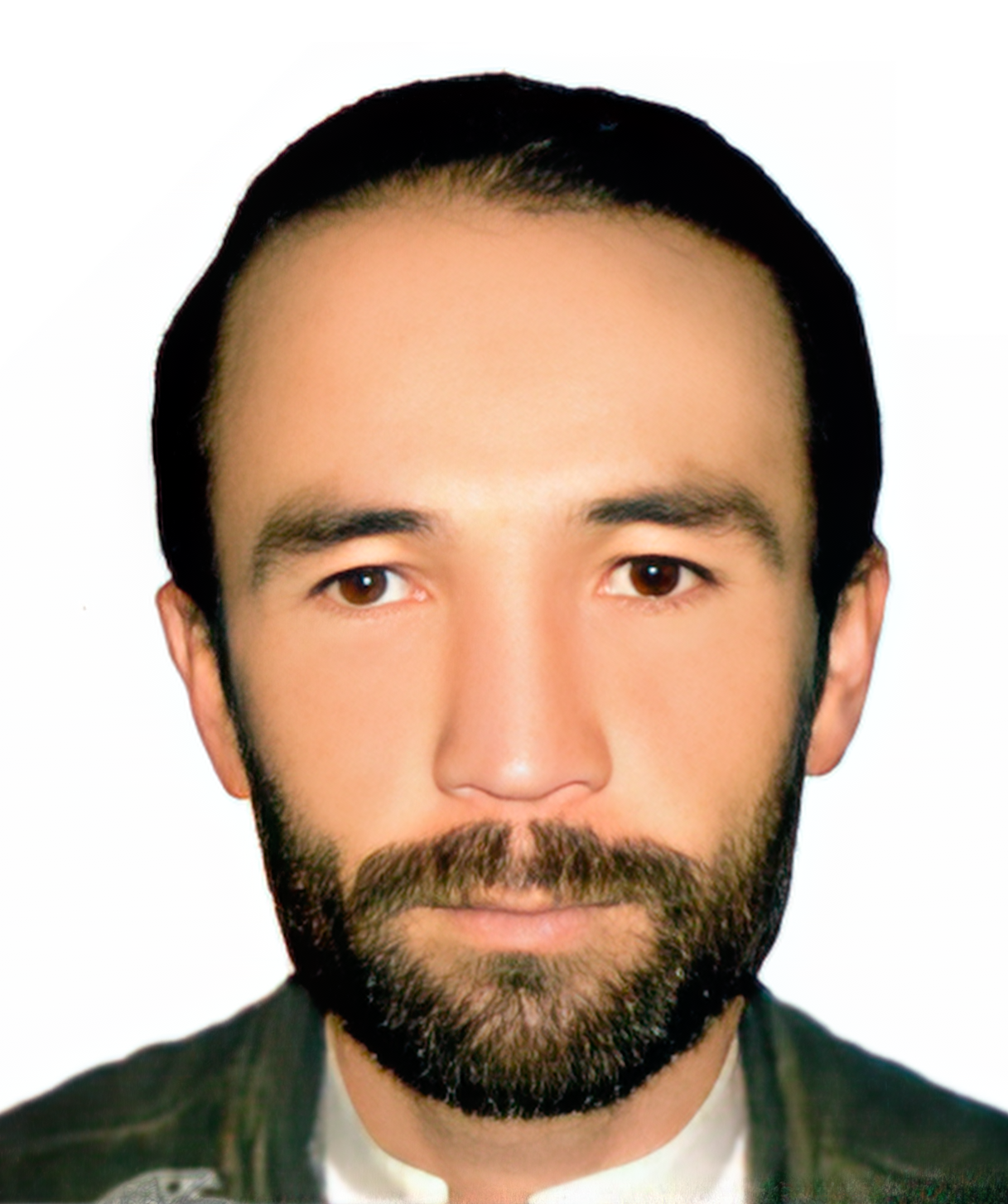
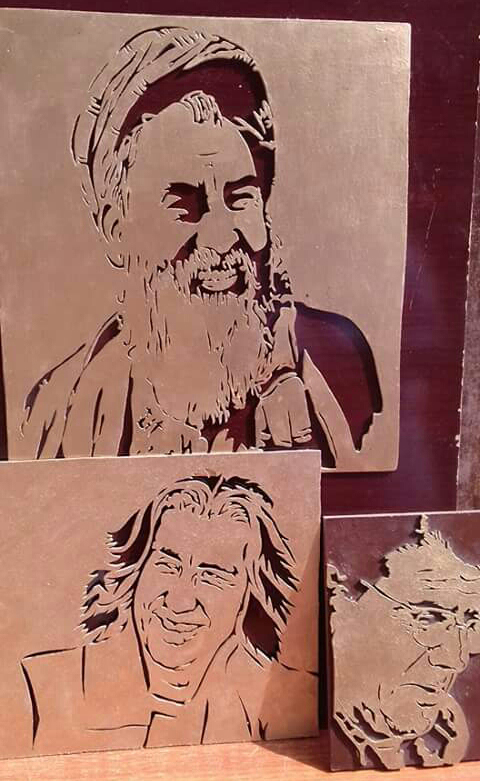
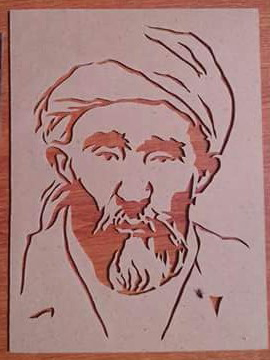
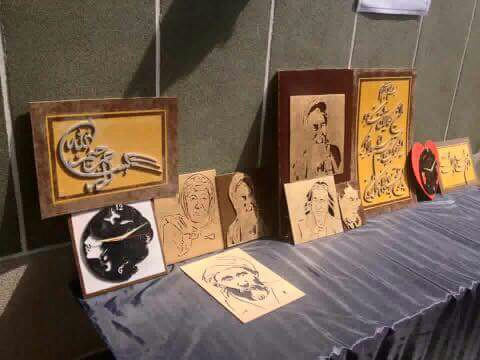
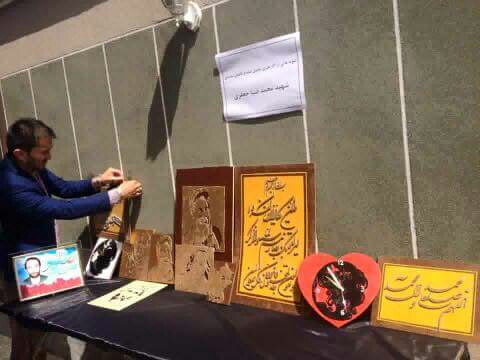
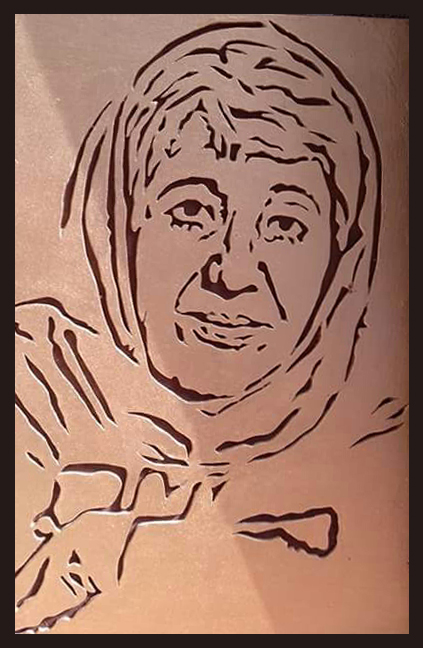
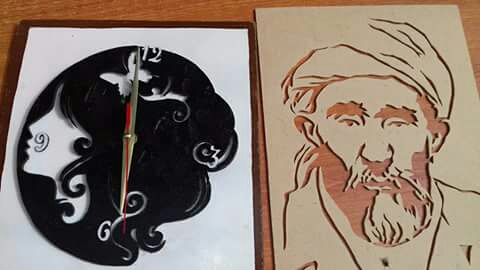
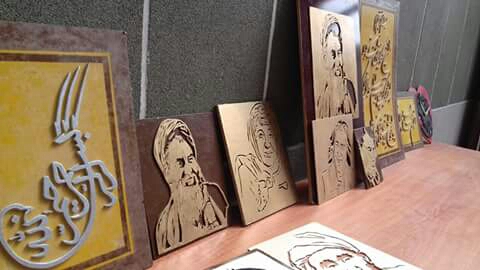
Mohammad Zia was born in May 1979 in Sangsurakh Village, Jaghori District,Ghazni Province. He was the youngest child of the family and had six brothers and one sister. His father traveled to Iran for work and to provide for the family. On his way back to Afghanistan, while he had stopped to buy gifts for his children, he died in an accident. My husband was one year and six months old when his father died. So Mohammad Zia grew up an orphan. His brothers helped raise him until he finished his education. During the Taliban era, he moved to Iran to improve his living conditions. He lived there until 2011. In Iran, he worked in stone masonry. From 2001, he took up calligraphy and painting, attending classes in Iran. He was not allowed to get a certificate because he was Afghan. But they knew and respected him as an artist there. We got engaged in 2010 and got married a year later. After our wedding, we lived in Iran for almost a year. Then we returned to Afghanistan, to Kandahar City. We lived there for two years during which he worked in a hotel. Later we moved to Kabul, where we lived for three years. Mohammad Zia had several jobs here, from painting to opening an art shop where he sold his carvings. In his spare time, he was always creating artwork. He participated in events organized to commemorate Baba Mazari.
During the summer, we had travelled somewhere together. Upon our return, when we came close to Mosala, we heard the announcement about the Enlightenment Movement. He got excited and said if the movement continued, he would participate in it. He gradually became more engaged in civic activities and used to go to listen to Behzad's speeches.
At first, he was just following the Movement programs through Facebook. Then he took part in the first demonstration. Without me knowing, he had gone to Dehmazang Square. I was concerned as my husband would not share much about his involvement in the Movement. To reassure me, he would often tell me he had been somewhere else.
The night before the demonstration, he was very upset because of Khalili's withdrawal from the demonstration. He repeatedly said, “Khalili encouraged and rallied people initially, but now he has withdrawn. People lived quietly in their homes; what was the need for him to fire us up and then turn his back on us?” When he was at the first demonstration, he did not say anything to me so that I would not worry. He even said that since he was now a father and had a child, he would not participate in those events.
He had come to believe that the issue was not so much about electricity as about the suffering of the Hazaras. On the day of the incident, he did not tell me he was planning to take part in the demonstration. I woke up at ten to six in the morning. I didn't think that it would be the last time I saw him. It seemed like he was going to the bakery to get some bread and come back straightaway because he didn't even say goodbye.
The demonstration was a disaster that we got caught up in. It was a cruel betrayal of the people’s hopes by our elders. It is unclear what the purpose of the demonstration was given the huge cost to the families of the victims. I constantly wonder why I had to lose my husband. I just know that my home now feels cold and depressing. I lost my man, and for nothing. Before this incident, my main concern was that there was not a good park in Afghanistan for my daughters to have fun in, but today, my daughter, Nazanin’s, wish is for a plane to come and take us to her father in the sky. I had no problems in my life before this incident. I grew up in Iran, and as I said, when I returned to Afghanistan, we lived in Kandahar for two years. In that city, I was troubled about why women in Kandahar should wear veils while people and women in other countries enjoy such freedom. I worked as a teacher in Kandahar for one year and I was pained to see what the girls went through there.
Now my pain is losing my man for an issue that felt very remote to my concerns. The problem of electricity supply in Bamiyan did not concern my family because we never lived in Bamiyan. We never worked there, and didn’t have the money to build a factory in Bamiyan. We didn't need electricity but my husband took to the streets for what he said was not so much about electricity as about the suffering of Hazara people. Several times a day, I ask myself if the suffering of the Hazaras has ended. How do I deal with the loss of my daughter’s father and how do I deal with this huge pain and sadness? Maybe I have not understood anything. But I lament the discomfort of my life and I am shattered by pain and grief. Maybe those who were there at the demonstration knew more than us. But why should their blood have been spilled and trampled on?
I will never forgive or pardon Behzad, Khalili , Mohaqiq, Daoud Naji, and Danesh. Our government is corrupt and they are cowards, like Mohaqiq who represents our people within the government. Mohaqiq and Khalili should not have informed people about the electricity supply problems in Bamiyan in the first place, because they rallied people around this cause only to let them down later. We all knew that these corrupt leaders would abandon us. I don’t understand why we were so naïve as to believe in them. Khalili came on the TV to say that they had made peace and that peace did not mean surrender. It was an absurd statement to make, which brainwashed our naïve people. Now as a consequence of this, my home is empty.
Before the 23rd of July, I was struggling, but quite differently to now. My life has changed completely. When I visit the Martyrs Hill, I think of all those people who had to go through immense challenges to get an education. Today they are sleeping under the ground. In a single instant, a 10 or maybe 11-year-old boy killed 86 people with a bomb hidden in an ice cream cart and made thousands of families mourn. Behzad talked about the cruelty of Abdur Rahman Khan and how many people he massacred. But in my opinion, Behzad is no less of a murderer than Abdur Rahman, because he puts on a suit and a tie and spreads lies about taking care of the widows and orphans of the victims of 23rd July. Nobody takes care of us. Talking to people, they believe that that our families [of martyrs] receive 5,000 to 10,000 AFN every month. You may not believe me, but before the death of my husband, I did not need to ask anyone for a single penny. Those leaders became famous for helping the families of the 23rd July victims. What if the wives of Khalili, Mohaqiq, Behzad, Naji, and Danesh had become widows? Then the children of these traitors would also have become orphans, and not ours. We are the poor, helpless people. All those who supported this demonstration and caused our youth and heads of families to be provoked to take to the streets are now safely and happily living in their own homes.
My heart aches and bleeds for my children. Some families come to me and say: “You are not the only one who has responsibility for these orphans, we consider them our orphans too.” But why should my child have become an orphan, and for no good reason? I was not rich, but I know how painful it is to be an orphan. I lost my father when I was a child. Why should my child have to suffer this same devastating pain? At what cost? Why should my husband have died and why should I be asking myself a thousand times a day what will happen to us?
Leaders knew that Afghanistan was insecure. I may not be very well integrated in the community, but I hear that every day. All the news reports of explosions and suicides bombings. Funerals, mosques, even hospitals have been hit by suicide attacks. Suicide bombers have not spared the wounded, women, or children. If you all grew up in Afghanistan and you know the horrendous security conditions in the country, why would you go and gather people together instead of protecting them? You had the money to organise demonstrations, so why not deploy soldiers to provide security during the demonstration? Why not ask the national security and police for help? Why play with the lives and fate of our [Hazara] families? The people who organized this demonstration were neither injured nor martyred. Only poor people lost their lives.
Now, all my daughter's wishes are summed up in this one sentence: "the plane will come and we will go to the sky to daddy." I met martyr Sarwar's wife. She said that now the world is worthless, and I too have come to believe that the world is cruel. The Taliban kills its own members, ISIS kills its own people, but I do wonder why Hazaras kill other Hazaras. Why do we sacrifice our own for nothing? For transient power? For a position that does not last? What for? Do they think we, the families of the victims, will forget the bloody incident of 23rd July or ignore the rights of our children and families? That will never happen!
Our marriage was going well and we had dreams. I dreamed that when my second daughter grew up a little, I could work alongside my husband and become a teacher. I was a kindergarten teacher in Iran. Likewise, my husband wished to progress in his artistic work, to promote woodcarving in Kabul and rent a shop for his work. But the Movement leaders, these people have destroyed my dreams, as well as the dreams of my daughters and our lives. My husband leaves the house in good health. They bring him back wrapped as a gift and simply say, "Sorry, a suicide attack happened." Looking at our situation, they give him a title: “the martyr for justice”. The government pays 100,000 AFN, the Movement gives 50,000 AFN, and 10,000 AFN are donated from somewhere. Do you think that is what someone’s family member is worth? We want our family member back. We don't want your hundred thousand, fifty thousand, or ten thousand Afghanis.
While my husband was still alive, if someone brought us a gift, I would refuse it. You may call it pride or whatever you like, I don't care. I didn't like people helping us. Now, when they deliver aid to our house, I tell them I don't need it. But they tell me it is for the orphans of the martyrs and not for me, and that I must accept it. My daughter was never far from her father, not even for a single night. My husband never left us alone. I sent my daughter to kindergarten for a while, but after this incident, my daughter no longer wants to go there because she is scared. She is not alone in this; we are all afraid. After the death of my husband, I feel very scared and lonely, but I try to be strong for Nazanin.
The people who organized this demonstration are all living their lives and taking care of their work and I am the one who has now become helpless. I ask myself a thousand times a day: now that we have lost Mohammad Zia, would he still be willing to take part in the demonstration, if he were still here? Mohammad Zia, are you happy leaving your daughters alone like this? Has the Hazaras' suffering ended? Who will heal our pain now? Why should you have had to sacrifice yourself to heal the pain of the Hazaras? When I was at the Martyrs Hill, a few boys were telling each other to take photos for Facebook. We have lost our men, and people are thinking of taking a Facebook photo.
When my husband used to work at his wood carving, I was happy and also scared. I was afraid he might hurt his hand. He used to watch art programs on Iranian TV channels to learn about artworks. I am bitter to think that once I was afraid of him hurting his hand, and now I have lost him completely.
The night before the demonstration, Mohammad Zia went out to do some grocery shopping for the house. When he got home, he was very sad and said, “Khalili has withdrawn and abandoned the people.” We had just recently moved to this house and there was no running water yet in the building. All my thoughts and concerns were about washing clothes and dishes. To me, it didn't matter who had withdrawn. He even named a particular hospital that announced they were ready to take care of any potential problems the next day. He also said that they had prepared several water tankers so that people would not face a shortage of water. He was talking about those issues but I didn’t really listen because I was thinking about something else. On the day of the incident, he woke up at 10 to 6. I was sleeping with my daughters in the other room when I heard a sound. I got up and asked him what he was doing. He said he needed his backpack. I asked him what he needed it for. He said he wanted to go and take part in the demonstration. I got upset and said I did not agree with him going. He got up and shook his head but said nothing.
Right then, we heard an announcement. He hurriedly left the house as if he had missed the car. He didn't look back, and left the house without even saying goodbye. If he had stayed at home, he would have tended to our little girl and I could have easily done my housework. I called him at 7 o'clock to know where he was. He said he was at Musala. At 9:00 and 11:30, I called him again and asked about his whereabouts. When I called him again, he said they had arrived at Kot-e-Sangi. I was restless; I called again. He said they were at the square. The last time I called him was at around ten minutes to 2 pm. He said the demonstration was over and he was coming home. He said people were raising tents to stay there overnight but he would come back home. There was a lot of noise in the background and I could hear Dawood Sarkhosh's song being played, so I couldn’t hear my husband clearly. After saying goodbye, I hung up the phone. Later, people reported that the explosion occurred before the end of Dawood Sarkhosh's song. I was waiting at home for him to come back. It was 2:30 but Zia was nowhere to be seen. At 3:30, there was still no news of him. After I put my daughters down for a nap, I went to see my brother-in-law and his family who live downstairs. I sat next to my brother-in-law’s wife. She asked me if Zia had called. I was not in the right mood, I absentmindedly replied, "No, he has not called." She asked if I was supposed to do anything. I told her there was nothing I could do. Recalling the story today, I feel she knew about the explosion and wanted to know if I knew too. I came back to my house a bit later in the afternoon. I looked at several TV stations, but none of them was covering the demonstration. But when I tuned to Tolo TV, both the subtitles and footage showed the wounded. The presenter announced that a deadly attack had hit the protest group in Dehmazang.
I called Mohammad Zia but his phone was switched off. I called him again, worried by now, but his phone was not working. I went downstairs and told my husband’s cousin that Zia was at the demonstration, and that a suicide attack had happened there, and Zia's phone was switched off. I was very worried and asked him what I should do. He said not to worry, it would be okay. He was a student. I asked him if some of his friends were in Dehmazang for the demonstration. He said they were in Dehmazang but had returned to their dorm. Until 9:00 p.m. that evening, I kept calling those who were looking for Zia. One of them was visiting one hospital and someone else was at another. One of the hospitals had told them that since it was late at night, they were not allowed to enter, and should come back the next day to get information. I prayed and was very worried. I thought he had either fainted or was not well. But others comforted me and said he is a smart and responsible person and must be helping others who are wounded. I calmed down a bit, and I thought he would be fine and would come back home. But by midnight, there was still no news of him and I knew then that something bad had happened to him. I prayed until the morning and made a vow to give bread to charity the next day. It was an ominous and terrible night. I was awake all night and prayed and recited the Holy Quran. After those events, after the incident, I felt my prayers, my worship, and recitation of the Holy Quran were useless. I lost my religious beliefs and became perplexed.
That entire night, I had less than twenty minutes of restless sleep. At 6 in the morning, I told my brother I would visit the hospital myself to look for him. He said I could not do it on my own because the hospitals were very crowded. But I insisted and said that if men are not allowed to enter, maybe women are. I wanted to leave the house immediately, but my brother said, “I know a good driver who’s skilled and knows the city well; wait for him to arrive.” I was so worried that I kept going up and down until 8 in the morning. I felt very restless and had run out of patience. My brother said that a suicide bomber had entered the city and the security situation was not good. At 9:30 am, the vehicle finally arrived and my brother and I began searching. But it was useless. We visited the hospitals in Barchi and Western Kabul. They said all the wounded were transferred to 400-bed and Wazir Akbar Khan hospitals. My brother wanted to take me back home; he did not want me with him. But first we went to Musala around 11:00 am as we had been told that was where some of the martyrs had been taken. When I got out of the car, it felt like this was the end of the world. Quran recitation was being played at Musala and no one was smiling. People looked exhausted and sad. I looked around. Everyone was grieving. Musala was very crowded and there were no ladies there. The police had gathered within the crowd. My brother said there were no other women inside Musala, and we should go, but I insisted, “I will go inside, maybe they will allow me.” Inside Musala, people were wandering around as if it was doomsday, and no one was speaking. Then I went and waited in the car for half an hour. My brother said they hadn’t brought Zia in yet, but would bring in the wounded at 3:00 pm.
I was so beside myself with worry that I didn't even question why they would bring the wounded to Musala. I remained speechless and didn't protest. I was scared at the news of another potential suicide bombing and said it was better we left because three suicide bombers were said to be in the city and there was the possibility of another attack. So we returned home. At 2 p.m., I asked my brother to go back to Musala. He replied, “There is someone there who can identify Zia and bring the wounded home.” At 2:30, I heard a noise coming from the stairs. That day, I kept mentioning Fatima Zahra's name and I was very scared. I kept praying to God to not let me hear bad news. A few minutes later, some women informed me of Zia’s death. In that moment, all I could hear was someone asking to close the windows because of the stormy weather. Someone else said the storm was happening because innocent blood had been shed. We humans don't always realize it or take it seriously, but it seemed like the cosmos was upset and was protesting.
After some time, they brought Zia in. I was desperate. I have no words to describe my bleeding heart. They only comforted me by saying I should thank God that his body was intact because many martyrs lost their limbs and some were dismembered. Later, our relatives from Pakistan and Jaghori visited our house. Only one shrapnel had hit him in the back of his head. My husband's cousin was with Zia and said, “Zia was far from the explosion, he wanted to get water when the explosion happened. A few minutes earlier, he had said he wanted to go home, but the wave of the explosion threw him some distance away, and shrapnel hit his head.”
Anyway, my man is gone and left us all alone in profound grief. My family and my husband’s family are in Iran; there is no one here. I used to visit Imam Ali’s Mosque once a week to offer pilgrimage and would take my daughters with me. When I was in Iran, I used to visit pilgrimage sites and pray. Sakhi Shrine was a long way from where we lived, and I could not go there on my own, carrying a child. It so happened that Zia’s funeral ceremony was being held in this mosque. What sin did I and my daughters commit? I used to be a strong believer and after the 23rd July incident, I thought I must have been guilty of something for God to take my husband from us. But when the Baqir-ul-Uloom mosque incident happened, I started to ask myself what sin have these people committed and why were they killed? Now I have lost all my religious beliefs.
In this country, they don't even spare people's corpses. A suicide bomber blows himself up among them [at a funeral]. Why doesn’t the government provide security for the people? Why don't people learn not to participate in this dirty game, and so avoid losing their lives for no good reason? They massacre a group of people protesting in Dehmazang in the name of Hazara rights, and kill another group of Hazara praying inside a mosque. Did killing 86 people help the discrimination faced by the Hazaras in any way? Did it bring electricity to Bamyan?
Today we are left alone at home, where is he? Sometimes I tell myself, from now on, the Hazaras should only demonstrate in their own homes because it is meaningless for our people to stand up in Afghanistan. After that incident, whenever I hear that a demonstration has taken place in any country, I always say to myself that I hope they will be able to return home safely and not have to mourn a loved one killed in an attack.
We object to this National Unity government. Hey, government! You killed our innocent people! I wish you had imprisoned our youth instead of blowing them up! After the incident, someone visited our house to offer Fatiha and said, “There were two explosions that day. The first explosion was not that strong. Someone called on everyone to lie down on the ground. Right at that moment, there was a second explosion.”
The government fired at youth while they were running. The government used force against the Hazaras, especially against members of the Movement and Hazara leaders. I lost my man. Talking does not help me; my husband was killed for no good reason. Hey, government! It was better you deported those who participated in the demonstrations to other provinces! You did not have to kill them! The first Martyr on Martrys Hill is my husband, Zia. Next to him, two brothers are buried. Look at everyone, they are all young but are lying under the ground. Whenever I visit the Hill, I keep telling myself that they died and their dreams died with them. Mohammad Zia used to raise my daughter on his lap and hold her in his arms. Because he himself had suffered from being an orphan, he pampered his daughter as much as he could.
My mental state is improving now, and I am getting better in every way. I spent the first days in despair, crying and moaning. Nazanin would wake up in the middle of the night, and she would start crying and have nightmares. When my husband was alive, he would comfort her if she cried. After the martyrdom of Mohammad Zia, my daughter became very restless and she constantly has nightmares. I had also lost my spirit and would cry at night when I woke up to soothe my daughter. Before the incident, my second daughter was 6 months old. Her father was teaching her to stand up, to hold objects, even to walk. With her father's encouragement, she dared to stand up little by little. Now, she stands up, leaning against the wall or other objects, and walks slowly. But her father is no longer with us to see this.
These leaders and the government destroyed my children's world and made my life miserable. Martyr Hekmat's wife found out that she was pregnant after her husband was killed. Now she lives in sorrow, just like a dead person. Who will take care of us? What sin did our children commit that they were made orphans? My heart burns to see that Hazaras do not have mercy on their own people. What can you expect from extremist Pashtuns, ISIS, and others, when your own people become your killers? In Iran, I was a teacher in a Pashtun school and I liked the Pashtun children. They were courageous and hardworking and did not bother anyone. My father grew up in Lashkargah and always said, “Not all Pashtuns are bad; there are many kind and good-hearted people among them.” But after the Dehmazang incident, I lost my belief also in them. I am sick of those people. I don't know if it’s wrong of me to believe this, but after they shed the blood of all those innocent young people, including my husband, I no longer love or respect them like before. I used to treat other people without prejudice. I watched other people’s TV stations because I had suffered from racism and insults in Iran. When I returned to my country, I liked the people in Kabul, and I liked that I didn't have to change my accent when I spoke to my own people.
But today, I no longer watch Afghan TV stations, and especially not Rahe Farda and Negah. They traded in the blood and lives of their people. All I think about is that time is passing, and what have you, Mr. Khalili, Mohaqiq, Danesh, Naji, and Behzad, managed to achieve? Some time ago, they posted a big photo of Mohammad Zia on the street. When I was going to buy bread, I would tell him, “Zia, look what your Hazaras are doing!” Do Mohaqiq and Khalili need the support of their people again? Will the people be fooled once again by Khalili and Mohaqiq's shows? When I visit the Martyrs’ Hill, I see young people lying under the ground, and each one of them was adored by their families. My poor daughters were unjustly orphaned.
I used to think that a widow was an old woman, but now I am that widow myself, and now I realize that widowhood does not distinguish between young and old. In this country, people are killed easily. Then they give them a title: Martyr. According to them [the leaders], martyrdom is an honor, so I say to them: then let this honor be yours! What sin did Mohammad Zia commit? What did his wife and children do to end up in such misery? What was the sin of Martyr Hekmat's wife whose husband was killed? I moved to Afghanistan only because of Mohammad Zia.
When people from Europe and Australia came to propose to me, I refused. I told them I wanted to study and return to my country, and to serve my people. The homeland is like a mother and we owe her so much. When the incident happened to Zia, I started to hate this country. This country gave me and my family a bloody bad deal and took my loved one from us. Around evening time, I look at the mountains and out of loneliness and sadness, I tell them, “I used to see you like a mother and a sheltering place. Why did you treat me and my loved one this way? What shall I do with this huge burden of sadness that I have?” Forgive me for sharing my story and disclosing my sorrows to you. You must have already got tired with all my words. I try to hold onto my nerves, but when I recall the sorrows that hit me at the beginning of my life, I wish to go to the mountains and cry and complain about life and about the whole human race.
Some time ago, I visited a family therapist and a psychologist. He said that I cannot accept my husband’s death because of my love for him. But he said that this is the bitter reality that I must accept so that I am able to live a normal life. Until a few months ago, when I would visit Mohammad Zia’s grave, I would talk to him: “I wish the ground would shake and take me in. I can't tolerate this sadness anymore. Why did you leave me alone? You did not even travel away from home, so as to not leave your daughters and me alone. You would always tell to me when you were offered a job in a remote place, ‘Why should I leave you to go somewhere else for work?’ But then you left us for a frivolous job and this time, you never came back. You have left us alone for the rest of our lives. Are you happy with that? How will I spend my dark and sad nights?" Mohammad Zia really loved this land and its people and he has given his life for this country, but this country did not love him back. The best thing my neighbors' do to help is that they send their daughters to play with Nazanin, so my daughter does not feel lonely and sad. When Nazanin is alone, she keeps fantasizing and imagining flying in the sky, and a plane. She wishes a plane could take us to her father. Sometimes, she finds me keeping quiet and watches me shedding tears. So, to calm me down, she says: "Mom, don't be sad, I will save my money, then we will buy a plane, and go to visit my father." I don't know how to respond to her in such moments. When Nazanin goes out with me, as soon as she sees a girl of her own age holding her father, grandfather, or elder brother’s hand, she immediately grabs my hand. I asked her several times why she does that. She says, “Mom, don't leave me alone, I'm scared.” We all are afraid since this incident took place. I can’t sleep well at night and I always fear another similar incident might happen. Once again, forgive me for bothering you with my story. My sorrows are too big for them to heal.