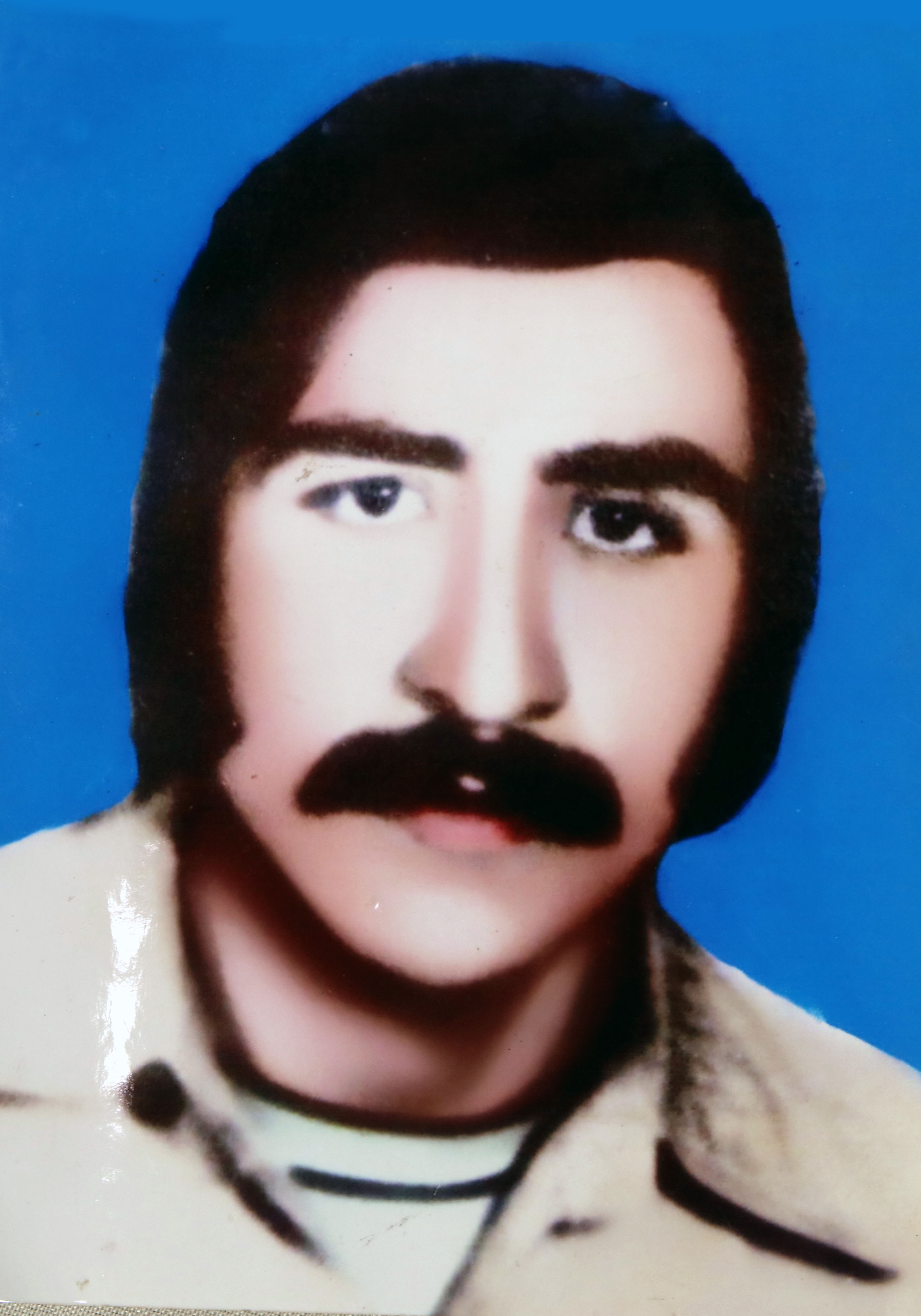
Happiness Lost
My husband, Allah Mohammad, had just finished high school when we moved from Shamali to Kabul City. One day, he went out and said that he was going to the university to take an exam. He was arrested along with another person who was fighting against the Soviet army close to Block Twelve of the Old Macroyan. I was just over 20-years-old when Allah Mohammad disappeared.
At that time, we were living in Qala-e-Wahid, near Kote-Sangi. Our living conditions were good. We had a house and property. But after the death of my husband, our lives were ruined. I migrated to Pakistan with my two small children. When I realized that I could not afford living in Pakistan, we went back to Afghanistan.
My husband was arrested during the time of the Khalq and Parcham regime. I personally could not follow his case but my mother in-law made several inquires regarding his whereabouts without any results. Then my mother in-law went to Sadarat, where she was informed that her son was imprisoned in Pul-e-Charkhi. At Pul-e-Charkhi, she was told that her son was no longer detained there and that she should pray for his soul. My mother in-law returned back home in tears.
Later when some political prisoners were released, he was not among them. This is when we were finally convinced that he was no longer alive. Since the regime was looking after me too, I walked twelve days and nights all the way through the Safi Mountain to Jaji and Parachinar to get to Peshawar. One of my brothers accompanied me in this long and risky journey. When we finally got to Peshawar, my brother began to work in a shop. However, as it was very difficult to live there, I soon came back to Afghanistan while my brother went to Iran.
In Afghanistan, I moved to Shamali and began working in a grape field to feed my children. Twelve years later, a commander forced me to marry him. I now have a 19-year-old boy from him. Two years after our marriage, my second husband was killed.
Among the things left from my first husband is his picture and a book. His photo and book are very special to me because they remind me of our beautiful times together. I am including these two important objects in my Memory Box so that my husband’s memory remains alive. I hope that these objects will help others to distinguish between those who are open-minded and progressive, and those who kill other human beings.