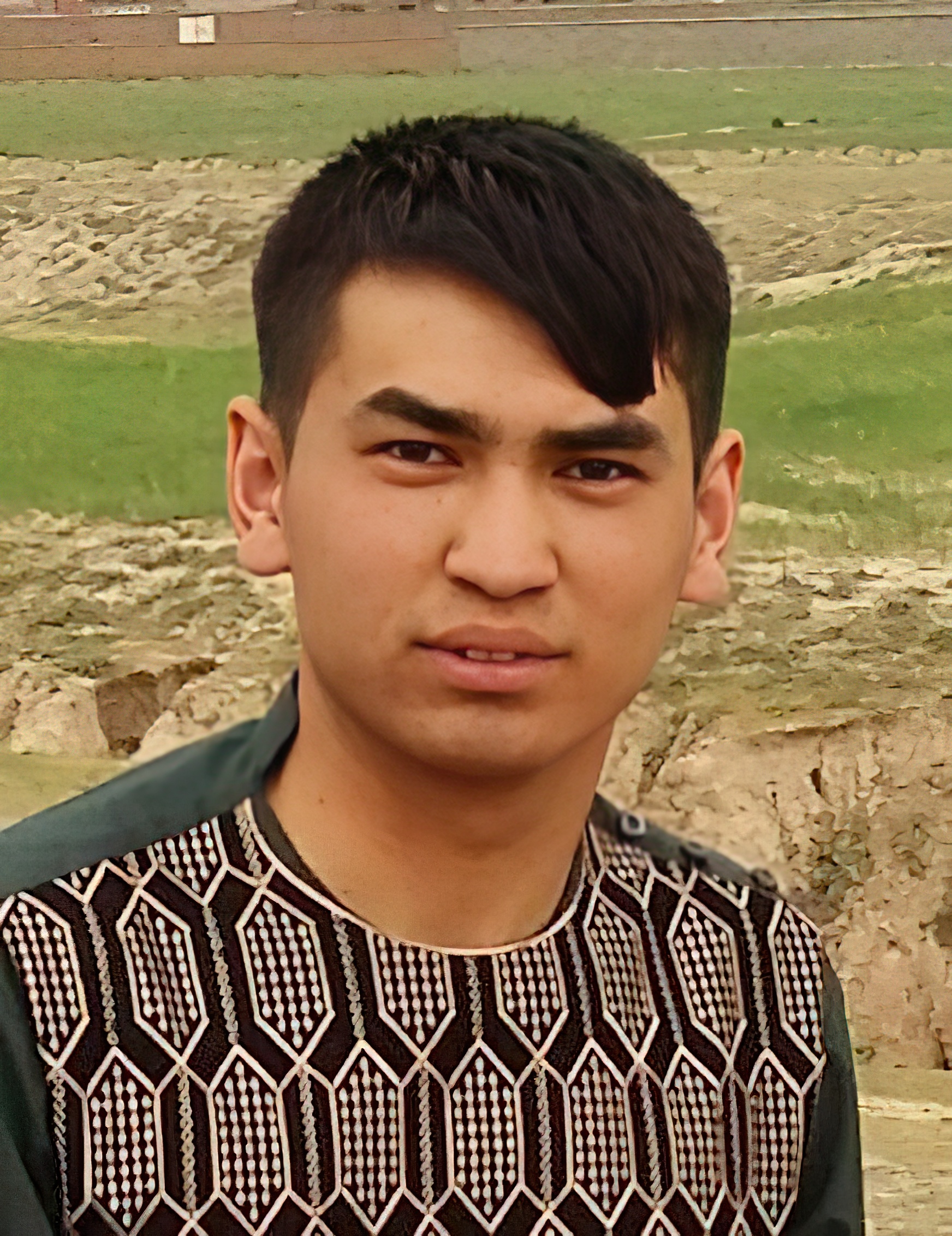
I Will Never Stop Calling out for Justice
Narrator: Hamidullah (brother)
Victim: Shafiqullah Zamani
Date of the incident: 23 July 2016
Location of the incident: Dehmazang, Kabul City
Shafiqullah was born in 1997 in the Zimni Village of Daimirdad, in Maidan Wardak Province. Our father passed away when he was one and a half years old. My mother is my father’s second wife. My father had nine children: five sons from his first wife and four children from his second wife, my mother. My older brother and my mother became our guardians when my father died. My older brother tried very hard to help us progress since we were children and he never treated us like stepbrothers. He enrolled us in the Hazrat Abu Bakr Siddiq School in our neighbourhood.
Shafiquallah attended this school until 9th grade. He then enrolled in the Zeivalat High School in Maidan Wardak Province, where he completed his 10th grade. We moved to Kabul 5 years ago [in 2011]. I don’t remember that much about my brother’s childhood. After resettling in Kabul, we were enrolled in the Abdul Rahim Shahid School. Shafiqullah, and it was from this school that we graduated. After passing the university entrance exam and getting 330 marks, my brother started his studies at the computer science department of Kabul University. He was in his second year of university when he died. He studied hard and got good grades.
Although he had taken part in the first demonstration, my brother was not intending to go to the July 23rd demonstration as he had university exams. My eldest brother had called Shafiqullah and asked him not to go to Dehmazang. Because of his upcoming exam, he was at home studying in a separate room when he got a call telling him the exam was being held today. He immediately took a shower and rushed to the university. After taking the exam, he called some of his friends to say they too should come and join the demonstration to support justice and the rights of our oppressed people.
One of his close friends was Asadullah Hossaini, and they went to Dehmazang together. Some of his other friends were also wounded. Shafiqullah was a very peaceful, kind, faithful, and diligent boy. He respected everyone at home and everybody loved him. He always got excellent grades in university and at educational centres. His GPA was 92 [out of 100]. He sometimes made and sold beehives with my other brother, just to fund his education. When he was a teenager, he always said: “We must be mindful of changing our future and should try to defend our citizenship rights.” He was martyred as he struggled to defend the rights of his people. He often told my mother she should not cry if ever he was killed. “I will never stop calling out for justice,” he said.
When he and my other brother had taken part in the previous demonstration, I had not been able to join them since I was in Maidan Wardak Province at the time. Through the Movement’s announcements on social media, Shafiqullah heard that the rally the next day was not cancelled, but my other brother was against him taking part in the event. That morning, his classmate called to tell Shafiqullah that the demonstration had been cancelled and the exam would be held. Shafiqullah took a shower and told my brother: “Stay at home today and don’t go anywhere.” After the exam, his friends and classmates called and asked him not to participate in the demonstration. He replied that he would go to Dehmazang and join in the march to support his oppressed community and raise his voice for justice. He called his friends ‘quitters’ for not being prepared to get involved in the protest. “You have been silent for years and have failed to stand up for your rights. I will go to Dehmazang, raise my voice and demand my rights,” he told them. During lunchtime, some of his friends asked him to take a break and have lunch with them. He told them he would stay there until the protest ended.
Our financial situation now is not good. We rent a house with a single room and a kitchen for 2,500 Afghanis per month. We have had to live in this house for five years. I was able to get an excellent job so I could in part support the family. Our household running expenses are provided by my eldest brother, who lives separately. After the incident of the Enlightenment Movement, Mohaqeq Kabuli gave us 50,000 Afghanis. Nobody else has helped us since then. I wanted to visit the Provincial Governor’s office to get the martyrs and disabled ID card. But since the Movement has promised to get this card for all the families of victims of July 23rd, my brother did not allow me to go and ask for it myself.
Shafiqullah was closer to Hafizullah because of their small age gap. They spent most of their time together and attended courses together. He was very interested in sports, but after we moved to Kabul, he didn’t participate in any sports club activities for about a year because of the intensive preparing for exams. After that year, both of us were getting training together. He would go to the club most nights, unless he had work or a wedding party. Otherwise, he would train regularly. Also, he always performed his prayers on time. He used to get up early and after praying, would eat breakfast and then study or do some computer work before going to the university. When he returned from university, he would always engage in some work. He hated being idle. He didn’t take a class to prepare for the entrance exam, but instead studied at home. It was thanks to working so hard that he was finally accepted as a student in Computer Science at Kabul University.
Before the July 23rd attack, I was selected as a teacher in Maidan Wardak Province, where I had started working. During the holidays I would come back home and everyone, especially Shafiqullah, were always pleased to see me and would joke with me. A few days before the incident, I wanted to return home because I missed my family members. I wanted to depart for Kabul, but my busy teaching schedule did not allow me to, and I postponed my travel to the weekend. I was unaware of Saturday’s demonstration and was in class teaching when my cousin called and said an explosion had happened in Dehmazang. I asked him if everyone was okay. He too was unaware, and told me that everyone was okay. A few moments later, my uncle, who works in Sia Pitab of Maidan Wardak, called and said, “Do you know what has happened in Kabul? They say there has been an explosion in Dehmazang. Is everybody at home, okay?”
I didn’t understand my uncle’s questions at that moment. Later, I found out that he had heard about my brother’s injury and wanted to see if I knew about it or not. I told him, “Thanks to God, everyone is fine.” After I hung up the phone, I got worried and wondered why both my cousin and uncle would call. When I called home, the phone line was busy. I became even more concerned. I thought there must have been an accident, otherwise why would they ring me, knowing I was teaching class at this time of day? I checked my phone credit balance. It was low. So I dismissed my students, immediately went home, and called my mother using the home phone, but she didn’t pick up. I called several times until my brother answered the phone. He didn’t say anything at first, but he sounded hoarse. After I insisted, he finally said that Shafiqullah was injured and was in the hospital. He said, “My mother’s phone is with me, and I am on my way to the hospital to see Shafiqullah. Do not call home because our mother does not know.” I became alarmed and turned on the TV. Most TV channels were airing the Dehmazang incident. My elder brother was at home, and my other brothers were in La’al District for beekeeping. It was 5 p.m., and I got impatient and went on the road to find a vehicle. I called my cousin and he said he would wait for me in Kote-Sangi. A car came immediately. On the way, I called my uncle and asked about my brother’s condition, but he said something different each time, making me more worried. I called my cousin several more times, but he did not answer his phone. When I arrived in Kote-Sangi, my other uncle called me: “Come home and don’t go to the hospital.” I said I was going to the hospital to see Shafiqullah, but he insisted we see him together. I hung up the phone. A few minutes later, my cousin called and wanted me to go home. I asked him about Shafiqullah and told him angrily, “Shafiqullah is in hospital. Do you expect me to come home in this condition?” With a lump in his throat and a shaky voice, he said, “Shafiqullah is dead and his body is now at home.” I couldn’t comprehend what was happening. I paid the taxi fare in a disoriented state. I could not even feel my movements. Looking at my terrible condition, the driver asked several times what had happened. I could not understand what he was saying, and although the driver called me and said he would give me a ride to my address, I got out and was walking. I later got into another car and headed for home. When I got there, they had bathed Shafiqullah and were waiting for me. After bathing him, we took him to Maidan Wardak and buried him.
Shafiqullah’s mother:
My son was a man of faith, kind, compassionate, and intelligent. He performed his prayers on time and observed fasting. I am totally satisfied with him. When he was a child, he always made a toy car and played with it. He became interested in computer science when he was a teenager. He constantly stood up for the rights of his people. I remember well, 50 days ago, I was sitting in this same corridor, and he was reading a book. He approached, put his knee close to mine, and said, “If I open my heart to you, would you not be upset or offended?” In response, I said I wouldn’t be upset if it were not wrong. He said, “Mother, if one day, I am killed, and my body is brought home, please don’t lose hope; be strong. You have watched the Mokhtar tv series. Learn patience from Wahab’s mother, and don’t whimper.” He always joked with me and said education did not benefit him, so he would better join the national army. The incidents that were happening in Maidan Wardak Province upset him. Taliban were setting fire to police check posts, and many of our people were killed. That’s why he would say he should enroll in the army and help his people. Listening to him, I was worried and would advise him that he was still a teenager and should think about his studies and his life, not about those issues.
My eldest son was not at home on the day of the incident, and the other two sons had an exam. The night before the demonstration of July 23rd, there was an announcement that it had been cancelled. Shafiqullah was busy on his phone by the wall in the front yard. I didn’t know what he was discussing. His brother lighted the heater to heat the water for a bath. When the water was heated, Shafiqullah called his brother, asking him to put more water on the heater. His brother said, “There is enough hot water! Go and take a bath first, and I will be next.” One of his classmates called him to say exams was not cancelled after all, and that he should go to the university that same day to take the exam. Shafiqullah hurriedly went to the bathroom and shouted, “Mother, which clothes should I wear?” I told him I washed and ironed his blue clothes for him to wear. He came to me and said, “I took my university card, taxi fare, and mobile phone. Do you think I have forgotten anything?” I said with a laugh, “You know better than me what you need.” He went down the stairs but came up again and said, “Mother, let me tell you the truth; I have no passion for this world and I feel that the world has become small and ugly.” I became angry and asked what had made him say that so early in his youth. “You don’t hang out with people, and if you stay at home, you are busy studying and reading from dawn to dusk. That’s why you think about these pointless matters,” I told him. He responded, “Mother, I am not withdrawn. I always try to interact with people, but I don’t know why, I don’t like this world.” He said goodbye to me and left the house.
On other days, because of security concerns, I would frequently call his phone to know when he would come home and where he was. I didn’t call him that day because a few days before the incident, when he came home, he angrily said, “Mother, please don’t call me every moment; it is embarrassing for me to answer your call, looking like a kid in front of my friends. They sometimes make fun of me. They say nobody would ask about them if they don’t go home for a week, but you call me every minute and ask me where I am.” So on that day, I didn’t make a call until 2 pm. My other son returned home after taking his exam. I asked him to call Shafiqullah. He did but Shafiqullah did not answer the calls. The TV was on and I changed the channel. They were broadcasting the news of the explosion in Dehmazang. I became distraught and told his brother to go to the university immediately to discover Shafiqullah’s whereabouts. My son said the university was probably closed. I didn’t know about Shafiqullah being involved in the demonstration. I insisted he should go to the university, but my son made some excuse saying he would not find him at the university. I said that in that case, I would go there alone. He stopped me, and went out to look for Shafiqullah.
Somewhere around Pul-e-Sokhta, he called Shafiqullah’s number and a doctor picked up the phone. Before letting the doctor speak, he angrily asked why he had not answered his phone earlier. “I have called you ten times since morning. My mother is worried about you and after all this time, you answer the phone and take it lightly,” he had said. However, the person holding the phone was not Shafiqullah but a doctor. In response to Hafizullah, my son, he had said, “I am not Shafiqullah; I am a doctor at the 400-bed Hospital. Your brother is injured and is now in the hospital. Please don’t call this number. I’ll turn off his phone, you should come to the hospital.”
Hafizullah immediately called his uncles and told them about Shafiqullah’s injury, so they went to the hospital too. I wandered about in the front yard, asking myself where my son was and why he was not answering my calls. I was agitated and didn’t know what to do. I lost patience and I went to my brother’s house. When I got there, I found everyone distraught; no one was talking. I immediately called my nephew. It took some time before he answered the call. I asked him where he was and whether he knew about Shafiqullah. He said he was injured and was in the operating theatre. I left the house and saw my nephew’s brother-in-law waiting for me in his car by the side of the road. I got in the car. There was a heavy traffic jam near Kote-Sangi, and the traffic police had stopped the vehicles. We begged them to let us pass and moved on through Gardana-e Baghbala. There, too, the traffic police were not allowing vehicles to pass. I cried a lot and they finally allowed us to pass.
I searched all the rooms in the Wazir Akbar Khan Hospital to find my son, but he was not there. We went to the 400-bed Hospital and I saw my other nephew there. As soon as he saw me, he cried, “Auntie, we lost Shafiqullah.” I went through the most painful moment. Crying and lamenting, we took his body home. His friends were very sad when they came to our house. They said, “Once we had taken the exam, eight of us headed towards Dehmazang. Shafiqullah was the group leader, chanting slogans. As soon as we reached Dehmazang, the explosion happened.” My son died young and did not achieve his dreams. His struggles to build himself a life were all in vain.
Hafizullah, brother of the martyr:
Shafiqullah was born and grew up in Maidan Wardak Province. The oppression against our community always exasperated him. He needed to improve his English and was attending a course. He asked for my advice in choosing a field of study. I told him to study any field he was interested in. He chose Computer Science. He studied hard and always obtained good grades.
Ali Asghar Haidari, the martyr’s cousin:
Nowadays, life is tough, and work is not easily accessible. Shafiqullah’s family has also lost their father, and the elder brothers have to provide for all household expenses. Shafiqullah came to my house the night before the demonstration. That night, we bought a sheep for a vow. Unfortunately, there was no butcher, so he and my elder brother slaughtered the sheep. The work started at 4:30 pm and was finished by sunset. We distributed the meat among the people. Later, I heard Shafiqullah say, “I wish my uncle had cooked some of the meat and invited some close friends and relatives so that we could sit together and chat.” I regret it now so much. I wish Shafiqullah had tasted the meat. I wish we had listened to him because the demonstration happened the next day, and everybody would have been too busy to cook him some meat. Well, sometimes it’s too late to regret.
I participated in the previous demonstration. I am a civil engineer, and unfortunately, this time I had too much work to do. The night before, it was announced that the protest had been cancelled. I took care of my work. I only found out via Facebook that there was a demonstration in Dehmazang after all. Many of our people were there, taking part. When the explosion happened, again I found out through Facebook. I immediately called my sister’s home and asked if anyone from the family had gone to Dehmazang. She said that only Shafiqullah was there. I immediately called his number, but there was no answer. I called again, but it didn’t work at all. I told myself he must be injured and someone else might answer his phone. I called a few more times. Finally, a doctor picked up his phone and said the owner of the phone was slightly injured and was in the 400-bed Hospital. He asked how I was related to the wounded. I said I was his cousin.
I left the office and called my brother and some friends to go to the hospital, but the roads were closed. With great difficulty, we reached the hospital through Gardane Bagh Bala. The police were present at every intersection and did not allow anyone to pass; all roads to the city centre were blocked with containers. At the hospital, only one person was allowed to go in, so my elder brother went in and searched all the rooms but did not find him. We kept calling him and asking about Shafiq’s condition, but every time he said he had not found him yet. Finally, they said that General Murad Ali Murad had come to visit the wounded, and nobody was allowed to go in. The list of the injured was not yet available. Our phones were constantly busy; either his mother was calling, or friends and relatives were asking about Shafiqullah.
Finally, having given up hope of finding him among the wounded in the wards, my brother went to the morgue. There he found Shafiqullah’s body. I was apprehensive, so I started quarrelling and went inside the hospital, right into the cold room. There were the bodies of some of the martyrs who had been seriously injured and even torn to pieces. I saw Shafiqullah. Shrapnel had hit him in the chest and head. His feet were burnt. His university card was placed on his chest. At 4:30 in the evening, I talked to the hospital authorities. They told me they would give us an ambulance to carry the body. I spoke to Shafiqullah’s brothers and asked where they would bury Shafiqullah. They said they would bury him in Maidan Wardak Province. It was better to leave him in the hospital for the night to prevent his body from decomposing.
His mother was restless and called several times. I didn’t dare tell her about Shafiqullah’s martyrdom. Every time she called, I said he was simply injured and that they would not allow anyone to meet him. But I told myself it was not good to deprive his mother of seeing her martyred son. I called his brothers again and said that we would bring the body home so at least their mother’s heart is calmed and she gets the chance to pray for him and recite Holy Quran. We asked the hospital for an ambulance, but they said they were not allowed to give the ambulance to the families for an entire day because it belonged to the government and was meant for transporting and helping the wounded. But they allowed us to use it for transporting Shafiqullah’s body home. With great difficulty, we took him home. The roads were closed so to avoid the body decomposing, we got coolers and fans from friends’ houses and placed the martyr’s body in front of them to keep it cold. In the morning, after bathing him, we transferred him and buried him in Maidan Province.