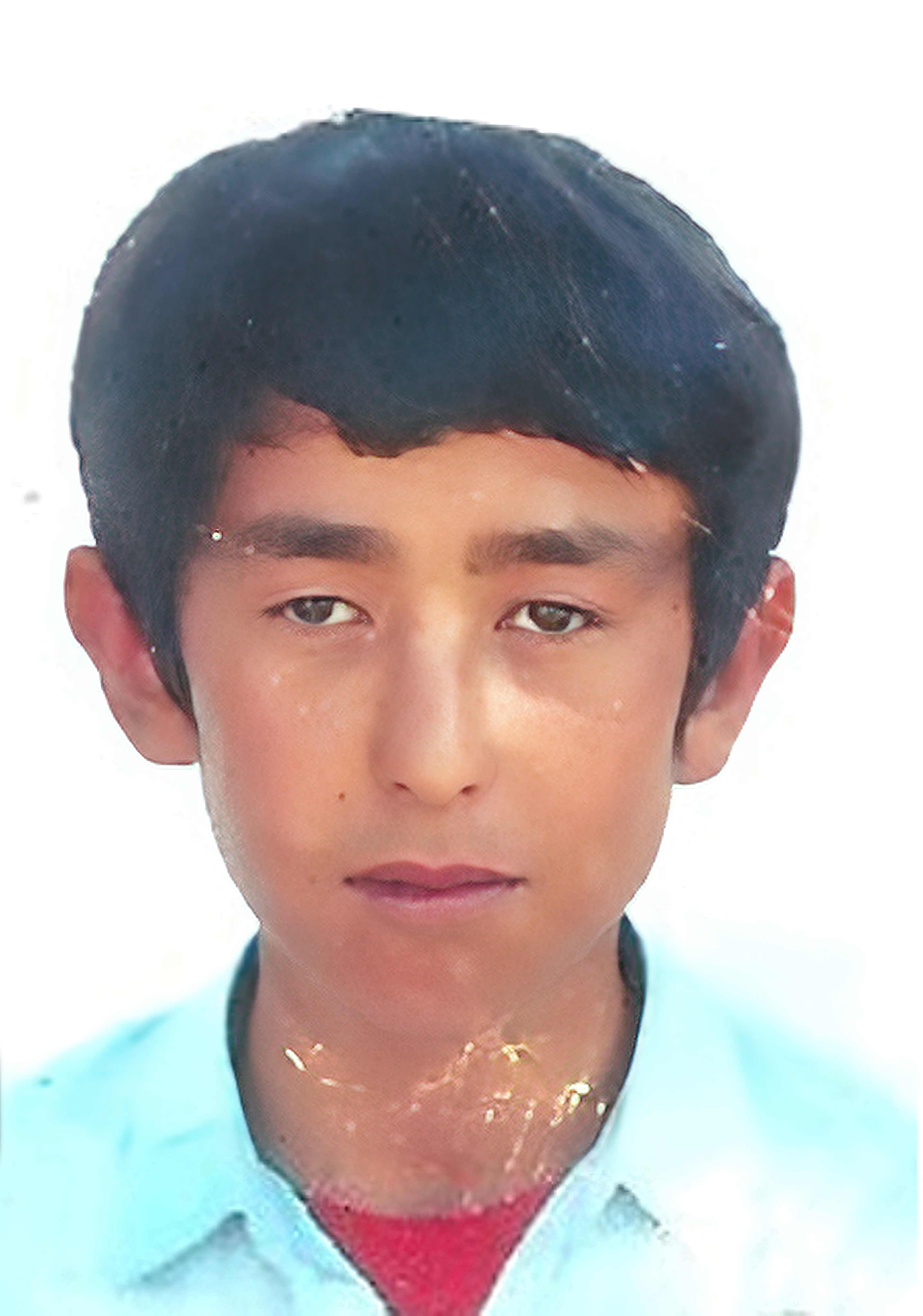
Bullets Had Struck His Back, Heart, And Lungs
Narrator: Nader (uncle)
Victim: Jamil Kohestani
Date of the incident: 23 July 2016
Location of the incident: Dehmazang, Kabul City
Jamil Kohestani was born in 1995 in Bamyan Province, Varas District, Kohestan Village. 8 years ago, him and his family traveled to Kabul to improve their living conditions. He has four sisters and no brother. One of his sisters is married and the rest are single. Their living conditions had been very bad since his childhood, and that's why they left their province and moved to Kabul. His father worked as a laborer because he had no land to cultivate. The martyr was helping his father. They rented this house for 4,500 AFN. After Jamil's martyrdom, they have not been able to pay the rent due to poverty and unemployment. They could not even heat one room. Jamil used to work after school and earned 100 AFN per day. He attended school up to 8th grade at Sartakht school in Varas District, then came to Kabul. In Varas, he used to go to the mountains after school to collect grass. In Kabul, he was working as a porter in Chowk. Sadness and poverty had caused us to remain busy with our own lives. He didn't share his feelings with me, but he did try hard to get an education. After graduating from school, he successfully enrolled in the Geology Department at Kabul University. This year, he was doing his third year and had just turned 21.
On the day of the demonstration, his father told him he did not consent to his participation in the demonstration, but he did not listen to his father and said we should all go to Dehmzang to demand our rights. “How much longer will we stay silent, watching others take away our rights?” he asked. That day, he left home alone. He took an exam and then he went to Dehmazang. His father was at our house at the time. After the suicide attack, one of his acquaintances called his father and asked where Jamil was. This acquaintance said there had been a suicide attack in Dehmazang. I was very sick that day. My niece called and said, “Jamil is injured.” I hurriedly left the house and tried to call Jamil, but his phone was turned off. At around 2:30, we left the house for Kot-e-Sangi. First, we went to Esteqlal Hospital, but he was not there. That day, we searched all the hospitals but we could not find him. The next day, they picked up his body from the 400-Bed Hospital. There did not appear to be too much damage to his body, but bullets had hit his back, heart, and lungs. For us, his martyrdom was a horrific tragedy; we have not forgotten it, and it broke our hearts. Following that incident, his father developed nervous problems and is always depressed.
I am not educated enough to do something for my brother's family; there are plenty of problems that Jamil's family is facing. When he was alive, he helped his family with the small amounts of money that he earned and he was a good support for his elderly parents. Due to poverty, his father, even though he is old, still has to work so that his family does not starve. He earns just 6,000 AFN a month. Due to severe economic problems, he has missed rent payments for several months. Jamil was a calm, good-natured, and kind young man. The local people loved him very much because he didn't hurt anyone. At home, he always helped his two younger sisters with their homework. He encouraged them to get an education and he himself did his best to do the same. He also loved football and played with his friends.
I have nothing more to say. I wish our leaders supported the families of the martyrs because some families of victims of this incident are going through very tough times; sometimes they don't even have enough to eat.