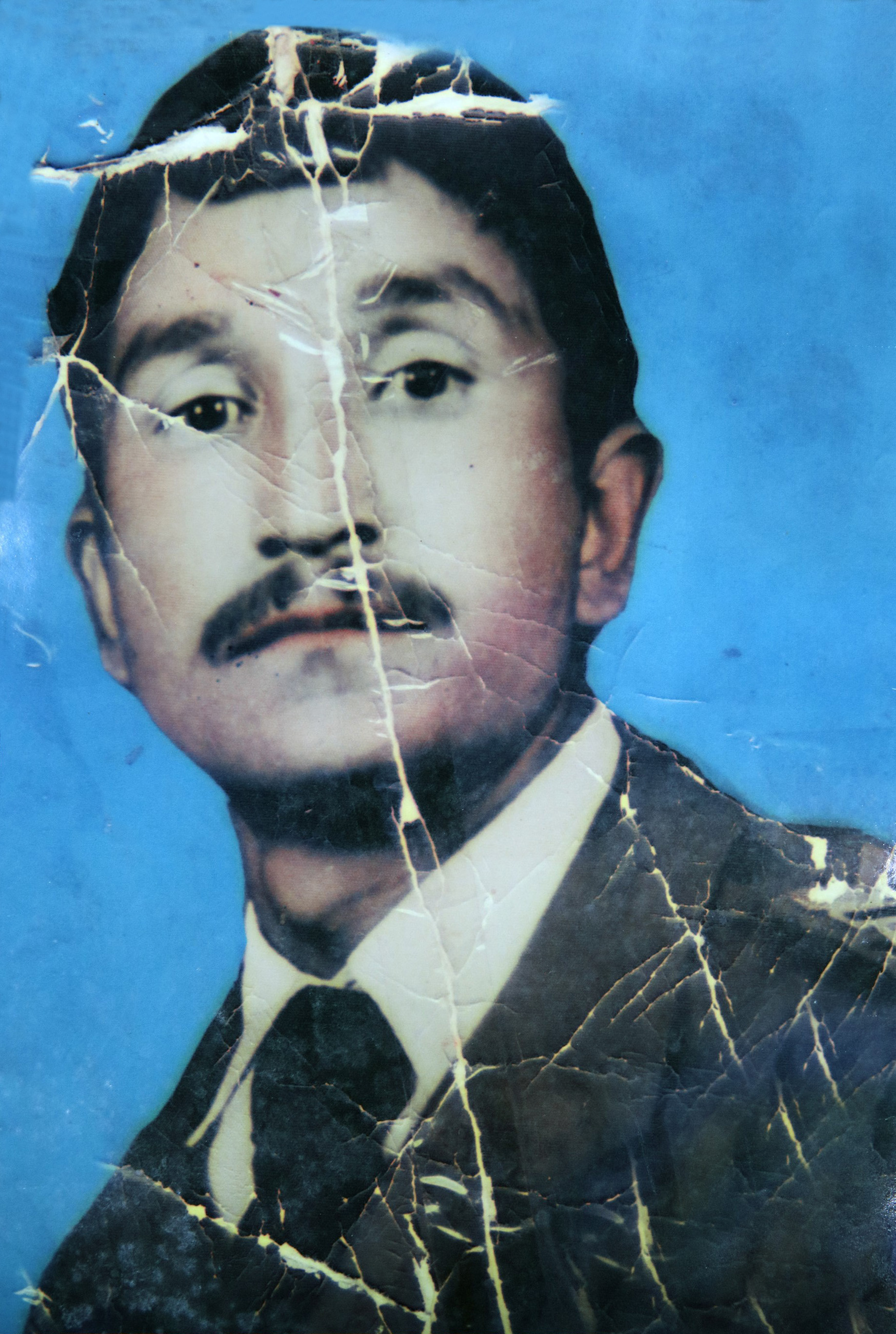
About Happiness
Narrator: Halima
Victim: Ghulam Hazrat
Date of the incident: 1992-1996
Location of the incident: Kabul
Halima’s list of dreams is neither very long nor very ambitious. Her dream is to be happy. Certainly, many people in war torn societies like Afghanistan have similar dreams of happiness. For them, happiness is not about prosperity, wealth, and power. Neither is it about having stylish and luxurious mansions, or expensive cars. In short, they do not have as sophisticated an understanding of happiness as ordinary people in other countries have.
On the contrary, their world is extremely small and their expectations are very modest. For Halima and people like her, happiness means bread. It means being able to provide a piece of bread for their children to sleep at night with their bellies full, so that they can dream of other things than something to eat. At best, happiness means having a home and that one’s children sleep under a roof in which they can grow up in peace. In addition, for people like Halima, happiness means being looked upon as a normal member of society. As long as the community does not humiliate her and her sons and they can live without fear and intimidation, she is content.
Halima does not desire much more than these simple things. Unfortunately, war has denied her even the simplest of dreams. Six years after getting married, she lost her husband and was left alone with four children, with the fourth one being born six months after the death of Ghulam Hazarat. For three years, they survived thanks to the assistance of the Najibullah government. However, after the Mujahidin took power in Kabul, the situation changed and government funding was no longer available to them. As a result, Halima had to sell her home utensils, one after another, to feed her children. When there was nothing left to sell, she had no option but to wash and clean people’s clothes and homes. Other times, she worked as a sewer. She remembers many days when she could only provide dry bread for her children. Today she is 45-years-old, has heart disease, and can no longer operate the sewing machine. The nightmare of poverty has returned. She does not know whether a day will come when she can finally feed her children properly. If such a day were to arrive, she would finally consider herself happy. Such is Halima’s modest understanding of happiness.
The Story of Halima
When I first got married, it was my father in-law who was the main breadwinner for our family. He was a carpenter. Later on, my father in-law stopped working due to old age. Therefore, my husband joined the army as an ordinary soldier. My husband did not have a good salary. Since he was deployed in another province, it was difficult to send money home. In those days, together with my sister in-law, we were doing embroidery work at home and then sold it at the local market. Eight months later, my husband returned on home leave. With the small salary he brought, we bought flour and oil. He stayed with us for a few days and then went back to the barracks. After eight months, he once again sent money to us through one of our relatives. Then, after two years, my husband finally came back and we had two more children. He began working at a bakery. In those days, our living conditions were relatively good.
After a while, he was recalled by the army. Eighteen months later, he was killed. It was just a few days before his home leave. We waited for him to come home but he did not come. On the 18th day, I woke up and told his mother that I was going to prepare bulani for her son today. I prepared everything and then fell asleep. My mother in-law came and woke me up and I returned to my preparations. I had prepared only three bulani when I heard someone crying outside the house. I went out and saw two soldiers standing at the main door. They inquired if this house belonged to Hazrat Khan and when my father in-law affirmed, the soldiers told him that Hazrat Khan had been injured and hospitalized.
Together, they went to the hospital where they discovered that Hazrat Khan had died. They came back home around 4pm. I was calling my father in-law Baba, so I asked Baba how Hazarat Khan was. He answered that he was slightly injured and that he would bring him home the day after. My younger son did not sleep the whole night and asked to go and see his father. That night a lot of people came to our home. They brought big dishes. I heard my uncle asking for the Quran. I told my father in-law that he was trying to hide something from me and that perhaps Hazrat Khan had died. I began to cry. My mother in-law tried to make me understand that they needed the Quran for a different purpose.
The next morning, my father in-law asked me to clean my room, saying that he and his friends would like to sit there. I went and cleaned the room. Later on, my sister in-laws came in. They hugged me and said that Hazarat Khan had passed away. I was six months pregnant. After the news, I fainted and remained unconscious for a long time. Later, when I regained consciousness, I saw a coffin covered with red cloth. My six-year-old daughter came and asked me who she should call father from now on. She hid under the bed and began to cry.
Over the next few weeks, the fire of war spread everywhere, including Chihil Sotun where we resided. Everyone was forced to leave their homes and we moved to Shur Bazaar. There, my mother in-law died. Then, I went to live in my father’s home in Jade-Asmayi where we had nothing to eat. Next, I stayed with my sister in-law for three months before we finally found a place to stay, though we did not even have a carpet to sit on.
Later, someone donated military blankets and a bag of flour, but I had no utensils to make bread for my children and I was forced to borrow a small cooking pan from my neighbor.
My children slept most of the time as there was nothing for them to eat. In the evenings, we had nothing to light and heat our home with. We spent three months like this. When the fighting finally came to a halt, I borrowed a sewing machine from my father and began sewing for others in order to feed my children. Gradually, I managed to buy little things for our home including three cups, spoons, and a plastic blanket.
The worst moments were those days that I had no food to give to my children, except a piece of bread. Nowadays, I wash clothes and tailor. Although this is increasingly difficult to do as I have a heart problem.