Human Flesh Was Everywhere
Narrator: Laila Kazemi (mother)
Victim: Mohammad Jan Kazemi
Date of the incident: 23 July 2016
Location of the incident: Dehmazang, Kabul City
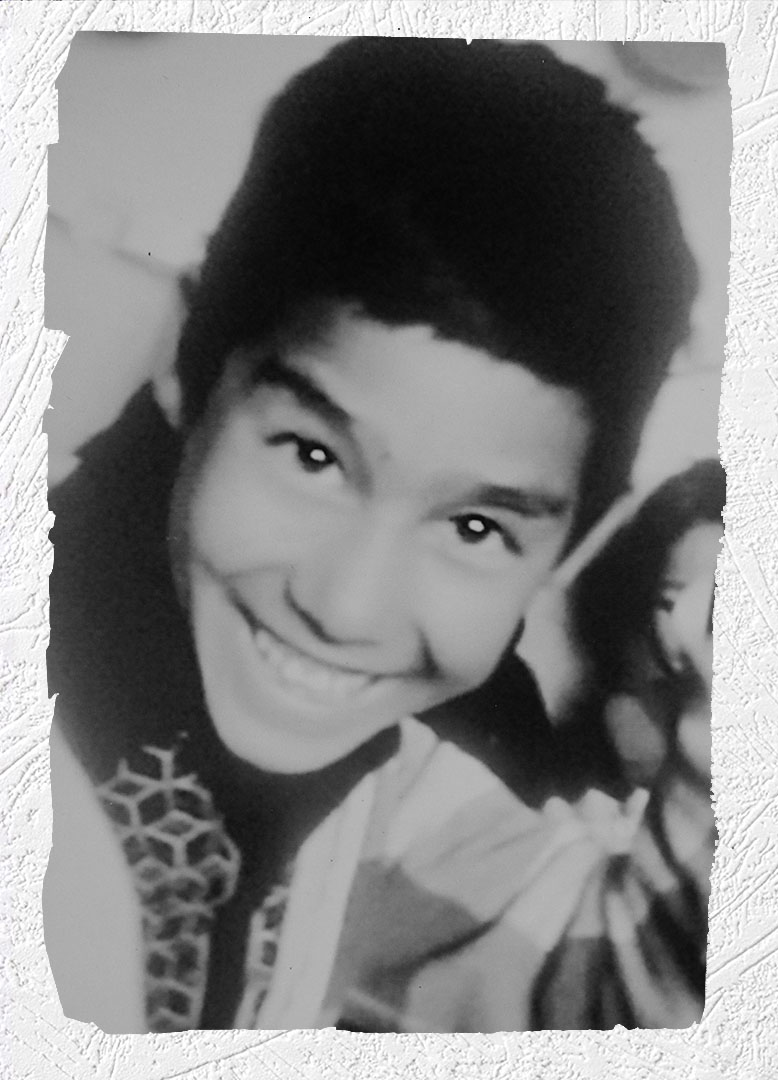
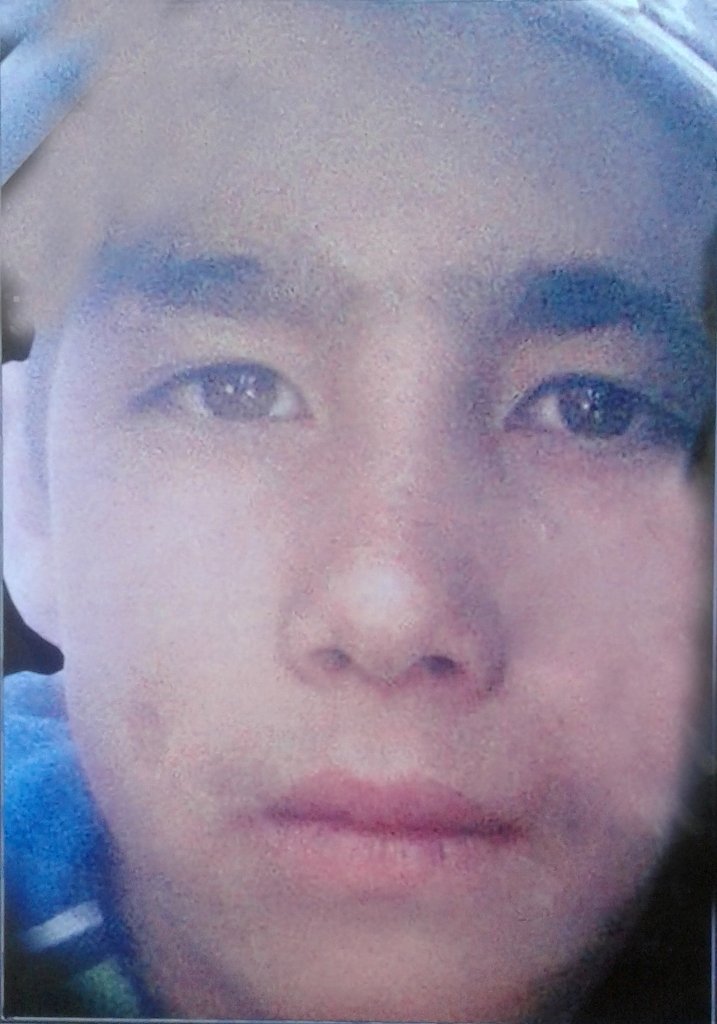
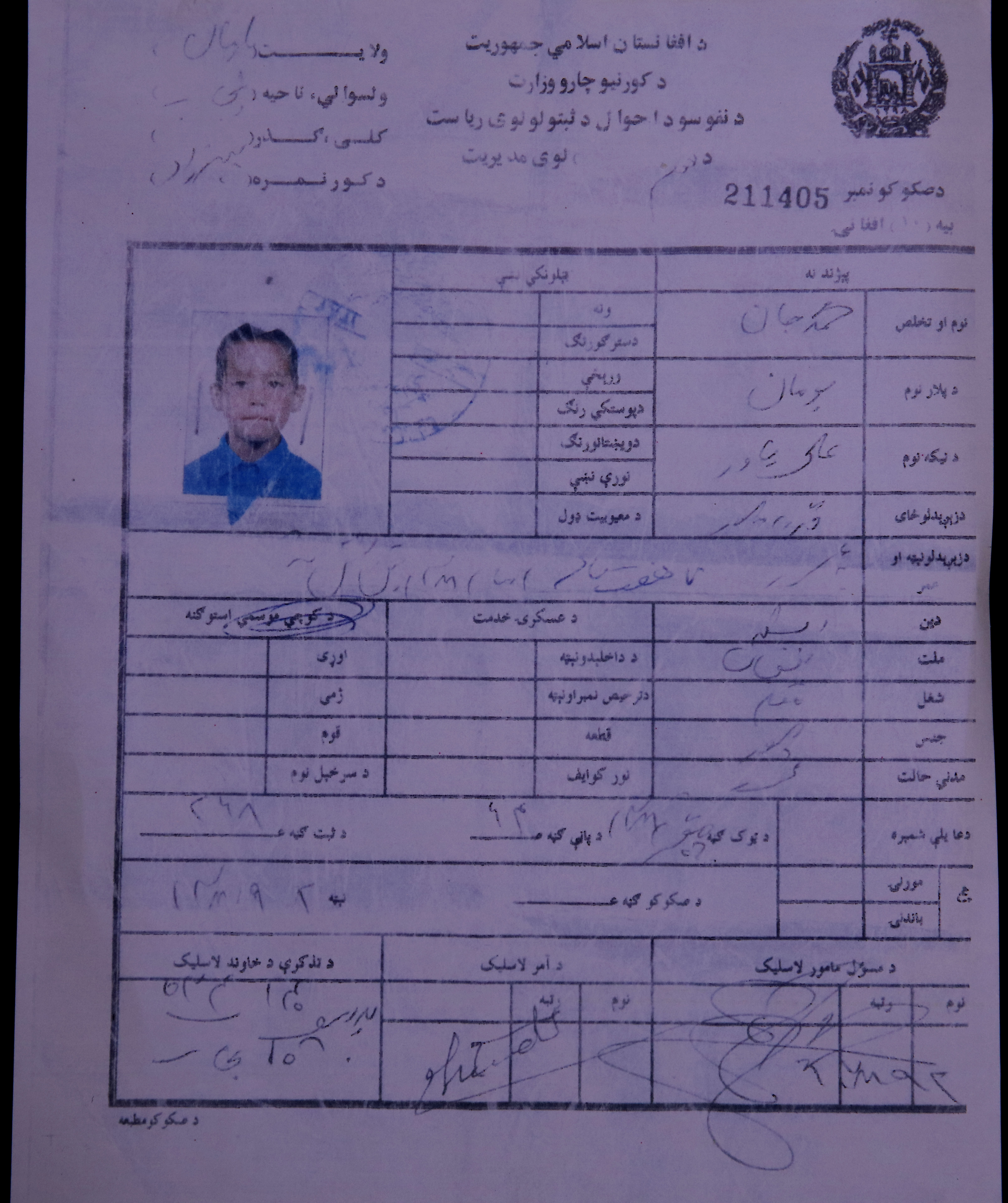
My son was 14-years-old. I raised him in poverty. In fact, he had just started working so we were all very happy, especially me and his father. His father used to say, “It's good that I have a big son and like a mountain, he has my back.” When his father would go to a party at night and would not return home or go on a trip, he was confident and would say, "Thankfully, my son has grown up and is there with his four sisters and his mother." For a while we lived in Taimani out of necessity. Poverty forced us to live in places where people consider my son alien. We were there for one year, and my son attended the first grade in one of the schools in Taimani. Then we moved to Guzargah, and I enrolled my son in the Abdul Ali Mostaghni school. His sisters attended the same school as it is for both girls and boys. One day in second grade, my son was walking to school alone and was brutally beaten on the street. Some people dragged him into an alleyway and beat him with an electrical cable. He was not someone who would usually complain. When he came home, he simply said to me, "Mother, I was beaten with electrical wires.” They had attacked him for being a Hazara.
I will never forget the moment he came home with bruises on his face and body, and refused to say who had hit him. After that incident, I transferred him to a different school. I enrolled him in a school near Guzargah where he studied up to the sixth grade. He tried very hard not to be a burden. I always said to myself, “Leila, look at how the difficulties of the world have affected a 14-year-old child!” When he was with us at home, he would empathise and say, “I must work to help my father. How long does he have to work? He gets work one day and has no work the next.”
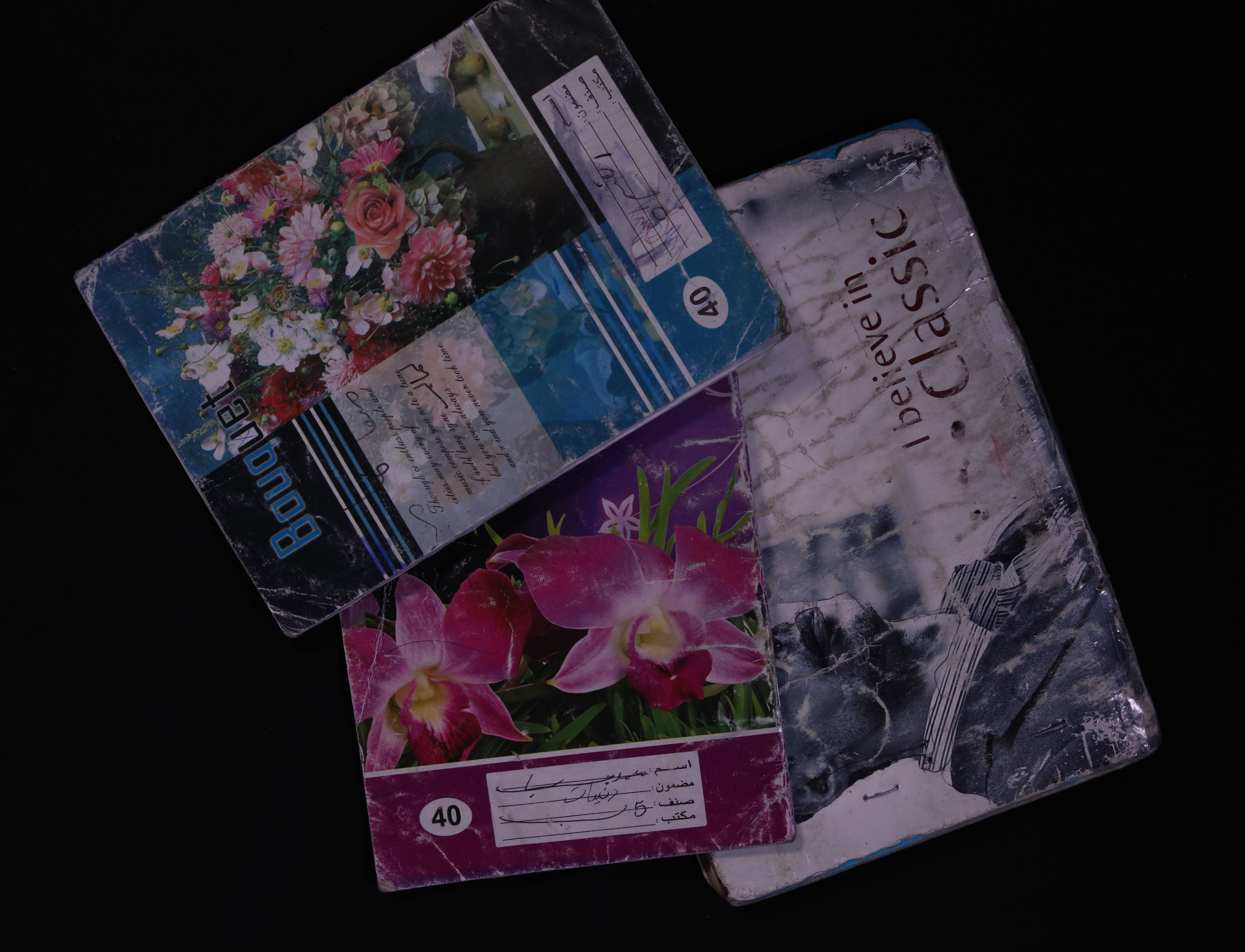
To be honest, last year, Mohammad Jan had started to burn incense to earn money. He made holes in a can of paste and put esfand seeds in it. It was winter and he said he wanted to earn money by burning incense so he could get his younger sister a pen and notebook. He told us not to worry. I always told him he shouldn't do that as someone might not like incense smoke. I was afraid, God forbid, that people would beat him up again. He told me, “No, mother, I can get my sisters a notebook and pen with the ten Afghani I earn from the incense.” He used to get 20 or 30 Afghanis working and would put it in a piggy bank he had prepared. He kept the piggy bank until the new year. On New Year, when he broke it, he had saved almost two or three hundred Afghanis.
He used the money to buy a pen, a pack of notebooks, and school supplies for his sisters. The only thing he could not buy them was a bag. He reassured them that it was okay, they should not worry, he was going to keep going to school and working in incense smudging [spiritually purifying with incense smoke].
By spring, I would not allow him to continue with incense smudging any more. I told him, “My son, don't go to work. Go to school. You should study.” Just this year, when school started up again, he found a job in a tailoring shop. He came home and said that he found a job. He said he would be a tailor’s apprentice and that his salary would be 100 Afghanis a week. I was very happy and said it was better than being on the streets all day. It was good because it was fun for him and he could spend some of the money he earned on himself. With the money he had saved, he bought pens and notebooks for his little sister, whom he loved very much. He used the money he had earned to buy a birthday cake from Pole-Sorkh for his sister. With the help of his sister, he found a small table, spread a woven tablecloth on it, and celebrated his sister's birthday. Only one video of him is left on the mobile phone, in which he shouts he wants to eat the decorative flower of the cake. He repeats that, laughs, and waves. That beautiful day passed and spring arrived.
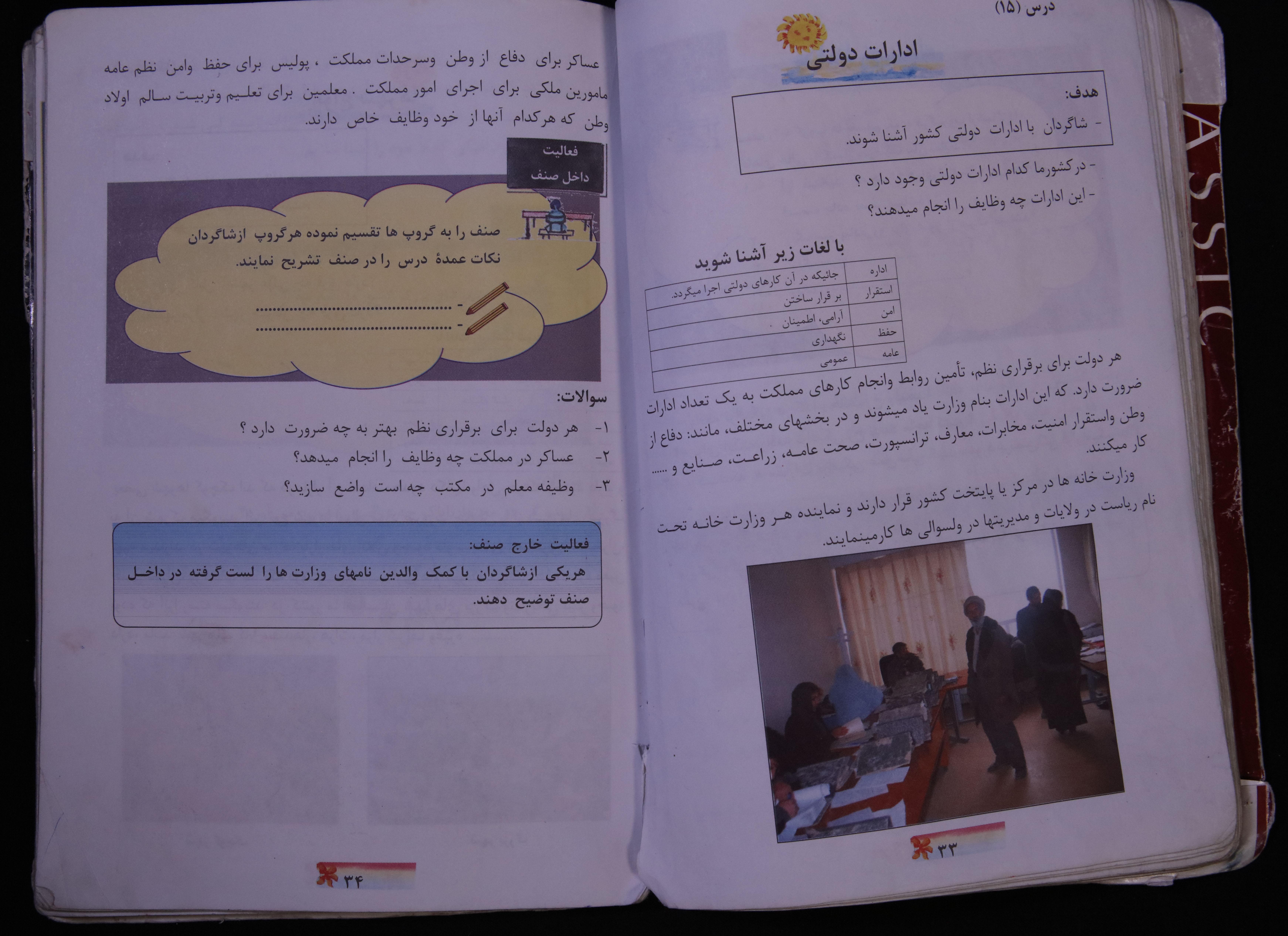
At at a young age and with very little money, he had fulfilled his sister's wish and bought her a pen and notebook. He would go to school at 6 am and would return at 10. After that, he would go to the agricultural fields. One day he came home and said, ”Mother, I have found a new job”. I asked what job. He said, “My chief is called Kaka Zalmai. I go to his lands and pick leeks. He gives it to me and wants me to take it to the back alleys to sell it and we will halve the money.” His income level varied. Sometimes he would earn ten or twenty or even fifty Afghanis. With his money, he would buy burgers or boiled eggs and bring them home and eat them together with his little sister. Ramadan passed like this. It must have been my negligence that I let him go. Then I told him not to go to the fields anymore, saying “You are still very young and not old enough to take responsibility for the household.” He was still trying to earn that little extra money. He would always do his work on time and was never lazy. He tried hard to earn even a small income to help his father, and did not stay idly at home. I did not have my dream come true. I have cursed this unjust world that has influenced a child in such a way that he felt he must work and thought about ways to earn some halal [legal] money. I always told him, “My son, pursue your studies so that you can achieve your dream.” He always said, "Mother, I am studying, then I want to join the National Army." I also encouraged him by saying that serving in the Army was good and it was an honorable decision that in the future he wanted to keep people safe and secure.
He had a pair of pants with camouflage patterns. He liked them very much, and would always wear them, and took good care of them. I still have many memories of him in my mind and heart. He was very fond of football. On the day before he was martyred, he slept from 10:00 am to 1:00 pm. When his sisters came home from school at 1 o'clock, I called him, “Mohammad Jan, wake up my son, your sisters are home”. On that day, he asked one of his sisters to cook rice for him, as he only wanted to eat rice. His sister cooked the rice, and I am happy my son did not leave home hungry or thirsty. That day, he ate two plates of rice and drank two glasses of water. Going out of the house, he had a green handkerchief around his neck. I did not see him but his sisters said he smiled when he left the house. Before he left the house, I had said to him, "Mohammed Jan, where are you going? The situation today is not good, and God forbid there could be a suicide attack.” I even locked the gate and put the key out of reach, fearing he might go outside to play football. He wanted to get out through the roof-top. Our roof is connected to the roof of the neighbor's house, and Mohammad Jan wanted to get out through their bathroom. The girls told me, “Mother, Mohammad Jan has put up the ladder and wants to leave the house through the roof.” That day, I was very sick and my blood pressure was high. That's why I was sleeping. I work as a janitor at the local mosque. Mohammad Jan took the key from where I had put it. I noticed him and said, “Where are you going, my son?” He said, “Mother, please let me go play football with my friends today.” I said “My son, your friends are not there today.” But he said, “If my friends are there, I will go and play football with them.” He even told me the names of his friends and said, “If they don't go to play football, we will just gather in the alleyway and talk together for a while.”
We live near a grassy field, and that’s where he went. Once there, he did not find his friends. Someone told him, “The Hazaras are demonstrating in Dehmazang. Aren't you a Hazara? Why are you walking around here?” He was a very daring boy, and on the suggestion of this person, he did go to Dehmazang. The moment he arrived there, the explosion happened. I felt like the glass of the room broke over my head. I quickly got up and ordered my daughters to go and see in the alley to find out where the boy was. The poor girls were afraid and checked the alley, but Mohammad Jan was not there. I put on my clothes and went to Dehmazang in a pair of flip-flops. No matter how much I looked for Mohammad Jan, I couldn't find him. It was horrible; human flesh was everywhere. I saw everything except the hands and feet. At that time, I could not understand anything because of fear, sorrow, and shock. I was just running here and there; I did not even notice a camera next to me. Later, my daughters said they had seen me on TV, running around like a crazy person who had lost her mind.
As I was searching desperately, I thought about the pieces of cloth thrown over the dead bodies. The tents of the demonstrators were lying on the street. I couldn't believe that these were pieces of human flesh, covered by a simple piece of cloth. I didn't even comprehend whether these were stones or lumps of flesh. When I passed by them, I wasn't in a normal state at all. I didn't know whether I was on the ground or in the sky. I was just running here and there, completely distraught. As I searched for my son, I started at the Esteqlal Hospital. I searched all the hospitals around Dehmazang, but I couldn’t find Mohammad Jan. I finally found him at the Wazir Mohammad Akbar Khan Hospital at 11:00 PM.
Martyrdom must have been his fate. I always thank God for trusting me with the gift of a son, and I gave the gift back to him. I say to my God that he made the son of a mosque janitor meet martyrdom. I am sure he has not forgotten us. As the mother of martyr Mehr Ali says, I thank God that my son was not killed on a bad path, God forbid, for theft or adultery. He was the son of a mosque janitor and a labourer. My son had not even reached the age of prayer and had never sinned. God accepted this gift from me. But I will never forget that day and night when I had only one thousand Afghanis. I took 500 and his father took another 500. I was tormented by the idea of burying my son in such poverty and neediness in front of other people. So I borrowed seven thousand Afghanis from someone to prepare my son's shroud and coffin. I went to someone and pleaded, “For the sake of God, give me a loan to bury my son. I will pay your loan back as soon as possible.” May God bless him, he gave me the money and I used it for my son’s burial.
I will never forget the ill treatment by the staff of Wazir Muhammad Akbar Khan Hospital during my visit there. As I went there to identify my son's body, the person in charge of the morgue was opening and closing the mortuary cabinets so angrily that I lost my strength. I was overwhelmed with sorrow and I asked him to stop that behavior. I told him, “Those are the pieces of bodies of the martyrs, why are you acting like that? They, too, are the children of Muslims. So, open and close the cabinets slowly and with respect. Imagine yourself as the parents and family member of one of these martyrs. Is it right that you are behaving like this?” He didn't say anything. I found my dear Mohammad there. I brought him home alone with great sadness and with the help of his father, we bathed him. No matter how much I washed his head, the blood would not go away. His head was so badly hurt. With tears, sighs, moans, and sadness, I covered his head with plastic to prevent blood from spilling. Then I put cotton on it to reduce the flow of blood. We buried him alone and in loneliness. Our government is responsible for this great crime.
Khalili and Mohaqeq, who shamelessly encouraged the people and the youth [to participate in this protest], are the main perpetrators of this crime. They traded the lives of our innocent and educated youth and should be punished for their conduct. They must know that the curse of all of us is upon them. Now, everyday when it is the end of the school day for Muhammad Jan, the only thing I can do out of sadness is to pray for him. Even my little daughter sometimes tells me how much Muhammad is missed everywhere, at eating time, at the table. My tears are flowing, but I talk of my son as a martyr and as eternal, so that my husband does not feel too sad and to boost his spirits. Physically, my son is no longer with us, but his memory will last forever and he sees us. We must pray for him to rest in peace.
But the one thing that always bothers me is that I had dreamed of buying Mohammad Jan new clothes, which would have made him happy. This dream of mine is shattered now, with Mohammad Jan gone. I will never forget that Mohammad Jan never once tried on new clothes. He always helped and supported us as if he were an adult. He was concerned about his family's difficult financial situation. He worked so that his little sister was able to study and has a pen and notebook for school.