Mohammad Hussain Jamshidi
- Photo of Victim

- Gender
- Male
- Ethnicity
- Tajik
- Description of incident
On January 21, 2018, Mohammad Hussain Jamshidi and three young adults from a village in Rabat Sangi District of Herat Province decided to illegally cross the border into Iran to find jobs to support their families. Abdul Qadir Jamshidi, the older brother of Hussain, accompanied them to the center of Rabat Sangi District and saw them off with ten others. They all boarded into a large sedan known as 'Sarachah' in Afghanistan. As they departed toward the border, Abdul Qadir decided to return back home. However, in a matter of moments, Abdul Qadir received a call informing him of his brother's death in a roadside mine explosion. The explosion also killed the other eight co-passengers, leaving only one survivor. Their vehicle had encountered an anti-personal mine near Faizabad Village in Rabat Sangi District.
Abdul Qadir recalls, "He took them on board, I said goodbye to them, they left. I returned home. Before I got home, I got a call. I did not get out of the car yet. From Sarachah, they said, 'the car of these children has been hit by a mine.' I asked where. They said in Faizabad. I did not call anyone else but my two brothers. We didn't call anyone because of the panic and fear we had."
- Witness/Survivor Statement
The Death of my Young Brother Broke my Back
Abdul Qadir Jamshidi is a man with a gray beard, whose forehead wrinkles show more than ever when he talks. He is the first narrator of the incident and he narrates what he saw carefully and in detail. He uses his hands, face, and body a lot while speaking, making his speech beautiful and spectacular. Therefore, there is no blind spot in his speech and he can very easily tell what he has seen. His catchphrase is "Insha'Allah" which is used in cases where it is thought that the sentence is wrong, but it is not and the sentence has its own meaning if it is considered as a catchword.
Narrator: Abdul Qadir Jamshidi (brother)
Victim: Mohammad Hussain Jamshidi (18-years-old)
Time of the incident: January 21, 2018
The place of the incident: Faizabad area, Haftwalaf Village, Rabat Sangi, Herat Province
Type of incident: Roadside mine explosion
I am from Herat, Rabat Sangi District, Yaka Dokan Village. My name is Abdul Qadir. I am 29-years-old. I am busy with my life and in our region, most people's occupation is agriculture like cultivating wheat and barley. My own job: I transport passengers, commuting, taking passengers, I do such things. I go from Herat to Rabat Sangi, which is my village, in the morning and return in the evening. That is my main job.
We are six brothers, our younger brother is a martyr. I am not a big brother either, I am the fifth brother. The sixth is older than us, but the martyr was our younger brother, whose name is Hussain. To support life and find a morsel of bread, Hussain wanted to go Iran, but did not cross the border of Nimroz to Iran. Recently, a new way has been opened from Islam Qala itself, which they say is on our side. From there, people are taken to Iran with a cost of 5000-10000 AFN per person.
Four of our children left the village together for Iran. They rode in a white care (a white Sarachah) from Rabat Sangi. From our village, I brought them to Rabat Sangi by my own car. I returned home and 20 minutes after their departure, we received the news of the martyrdom.
He took them on board, I said goodbye to them, they left. I returned home. Before I got home, I got a call. I did not get out of the car yet. From Sarachah, they said, 'the car of these children has been hit by a mine.' I asked where. They said in Faizabad. I did not call anyone else but my two brothers. We didn't call anyone because of the panic and fear we had.
We only meant that, God forbid, it's a landmine, if it had exploded, the car might be needed there. We should arrive sooner. God forbid, if one or two of them are wounded, they don't lose blood, and we can help them. We said it would be too late to call others in the village. We moved to Faizabad, from Faizabad to Alaf, from Alaf to down in the valley. There is a pass in the middle of Faizabad and Alaf. Going by the pass, we noticed the car. When we reached it, there were ten people inside the car.
Among the ten people in the car, there was a child, not more than ten-years-old. The child's home was in Herat. He had gone to the border area to see his relatives. Even that ten-year-old child was inside the car. One of the ten people survived. The others, nine others, I collected the pieces of their bodies myself.
People were afraid that, God forbid, we couldn't go around them as there may be mines, but we didn't know. I was thinking of getting there early to see how many people were still alive. Someone may have needed help getting the people to a car, or to the clinic, or to the city hospital. I was saying to myself and addressing the driver: "What are you crazy about? You don't have the right to go there, even the government people didn't bother themselves to go there."
They are much closer than us. Their distance [from the accident site] was ten minutes; It took us an hour to get there. They had arrived earlier than us. The government people feared that, God forbid, there were mines around or that the opponents, if we got closer, may attack us. We did not understand this. We reached the car. When we arrived, there was nothing from the car. The mine exploded in the middle of the car. There was nothing of the seat, the gate, not even the steering wheel. There was a bit of the car's pose and a bit of the trunk left. Others parts of the car were torn to shreds. Nothing was found in that car.
I looked around. There were parts of bodies everywhere. I thought that they could be not collected like that. All cars had a tarpaulin to sit on in the Sarache stall. I took it and collected the bones one by one and brought them together. Whenever a mine exploded, parts of body were thrown about one hundred to two hundred meters away. I found bodies from the waist above, while their waist down did not exist. Even one of our son-in-laws, Morteza’s father, Khair Mohammad, may God have mercy on him, only half of his face and head existed. Half of the forehead, from between of the eyebrow, the right side of head.
I didn't recognize him until I turned him around. When I turned his face away, I saw his head and brain... that this Muslim is Khair Mohammad, may God forgive him. All these nine people who had died, I collected all of them one by one. There was no car, but a flying couch. I lifted the chairs and brought them to Rabat Sanghi clinic. I said that their relatives should not go the incident site; the situation is not safe, lest there be another misfortune.
I said, since we already went to the site, let's take all of these to the clinic. It is both the base of the government and under the control of the government. Their relatives would take the corpses from the clinic. That's where we took them and went to Rabat Sangi again. Two to three thousand people gathered near the corpses of our people. It was very terrible. My prayer is that, God, no one should die young! It's hard.
Oh, not to forget, there was a second car following the car that exploded. There were all women and children in the second car. There had been distance between the first and second one. When the first car hit the mine, the second car stopped and called the relatives about the incident. A person by the name of Ghulam Nabi called me, so I went to the incident site.
Twenty minutes by car, two hours on foot. Faizabad is in the hands of the government. The same area where the incident happened is mostly in the hands of the government; Taliban traffic is very low. Be informed, they said, that the TAPI project will be passed from there. At that time, it was said that the government was looking to have that area in its hands. On the other hand, the Taliban was also thinking that it had that area in its hands. Let the TAPI project not be launched, God willing. The Talib in that area will be guided by Iran, who will lead them, and even Iran support them financially.
For this reason, they started a war, a fight, and put mines there - so that the TAPI project doesn’t start. These young people were killed by these Muslims. The government says they don't know, the Taliban also say they don't know; no one has given us an answer yet. We wandered and did not understand. We have no more prayers, God, we have entrusted everything to you. We have no strength and no force anymore. Neither Taliban nor the government took responsibility at the end.
I think 100% that if they [the victims] were government staff, the Taliban would claim that they did it to get the story to the media, and take responsibility for it. Because they were not government men, and they were innocents, the Taliban did not take responsibility. Four of these corpses were ours, which I took to Yaka Dokan with my car among my people. There were nine corpses. Five others were from Herat City, from the Babahaji neighbourhood,
It has had a lot of effects on our family. For example, we have a father who was paralyzed due to grief. Two years have passed from the incident, and my father can’t survive without medicine and without a doctor, there is no other way. Our mother is also crazy and nervous. I brought a coat, a full-blooded coat, that Mullah did not allow to be buried with the body. A piece of his clothes remained clean as it was stained with dirt but there was no blood. My mother took it and hit it on her face and head for an hour. Her nerves were broken. We haven't seen a good day in our house since the day he left.
There were six of us. Now there are five of us. After the incident, people's uneasiness has led to judgement whether we have become addicted to drugs or what other calamity has befallen us. The young men who used to be stout, now have gained strength, they don't even weigh 10 kilos. Believe me, dying young is very difficult. May God not show this calamity to anyone. Those who have young people die suffer the most. Ground from the fourth heaven, and our strength is over, and the only thing I can say is that, God, I am satisfied with your satisfaction.
My brother had very good manners. He always treated his elders with respect. If you advised him for hours, he would listen with full attention. Believe me, I had scolded my brother many times, but he always just laughed in response and said nothing to me out of respect. When we review his memories and history now, I say to myself that he was not meant to stay.
I am sure that the example of this young man is no longer in our village. The four people who were martyred were all from the same village and all of them were of the same age. Among these four people, Khair Mohammad was married and the others were single. Khair Mohammad had four children, one born after he passed. Two daughters and two sons. When he passed away, his wife was pregnant. It's been eight months since his son was born, but he hasn't seen his father's face, and his eldest son is in charge. Our family takes care of them.
My message is that until we fraternize with each other, the stranger will not. A foreign country never wants us to live together as brothers. My point is that until we unite in the name of Afghanistan, the war of fratricide and dying young will not end. My prayer is that God, if my prayer is accepted, then no one will see the death of their young family members. Our youth are our future.
For Hussain himself, I have this message: No matter how sad we are, we love you and remember you as long as we are alive. You were a good brother and good son to your parents.
Sultan Ahmad Sohrab
- Photo of Victim

- Gender
- Male
- Ethnicity
- Pashtun
- Description of incident
Sultan was released in 1988 after spending 12 years in prison. At that time, we were in Pakistan. I was also released from prison and could not live in Kabul. After 25 days of freedom, Sultan went to Peshawar. On January 5, 1990, he was arrested by one of the Gulbuddin's [Hekmatyar] kidnappers. We still have no information about him.
- Witness/Survivor Statement
I have lost six brothers
Note: Mr. Aref has been a teacher for many years and has lost thirteen members of his family during the wars and violence in Afghanistan. He himself has the scars of violence on his body.
Narrator: Aziz Ahmad Aref (brother of the victim)
Victim: Sultan Ahmad Sohrab
Time of the incident: 1980
The place of the incident: Polygon of Pol-e Charkhi
I am 56-years-old. We were thirteen brothers and one sister. I am the ninth brother and Sultan Ahmad was six years older than me. Sultan Ahmad was born in 1953 in Kabul. He attended elementary school in Bamiyan, Parwan, and Kabul. He joined Habibiah High School in 1967 and graduated from Habibiah High School in 1974. When he was at Habibiah High School, it was considered the brilliant era of intellectual struggles and political parties of different tendencies were formed. These parties were formed in two main ways, one of which was the new democratic tendency, which founded the Progressive Youth Organization under the leadership of Akram Yari. Its members were Sadeq Yari, Engineer Osman, Dr. Hadi Mahmoudi, etc. Sultan Ahmad was also a member of this organization. Sultan Ahmad joined the Faculty of Literature and Human Sciences in 1973 and graduated from the history and geography department in 1976. When Sultan was in university, Dawood Khan had banned political activities. Also, Shoalah Javid, a political party, had split. At that time, he was a member of the revolutionary group of The Peoples of Afghanistan. In 1978, with the cooperation of Akram Yari, they founded the Organization for the Liberation of the Peoples of Afghanistan (Sorkha), which published the first night magazine and a book called 'The Growth of Bourgeoisie in Afghanistan,' written by Akram Yari. Later, almost all the members of this organization were arrested and executed in February 1978.
In June 1979, there were four left and national parties and organizations united under the name 'Afghanistan National Fighters' Front.' On 05 August 1979, they revolted against the Khalq & Percham's regime. Sultan Ahmed was arrested because they did not recognize him, but he was soon released. In 1979, he founded the Fight to Save Afghanistan organization, in which he was in its leadership. The government of that time broke into this organization and in 1980, almost all the members of the organization's leadership were arrested and sent to prison. They were first sentenced to death. Later, the death sentence was reduced to twenty years of imprisonment. I must say that one of the leaders of this organization named Hakim Tawana surrendered to the then government. When he was released from prison, he had written books against the movement of intellectuals.
Sultan had been severely tortured in prison and had spent months in solitary confinement, as a result of which his back and neck vertebrae were dislocated. In 1988, after spending 12 years in prison, he was released while we were in Pakistan. I had also been released from prison and could not live in Kabul. Sultan went to Peshawar. On January 5, 1989, after 25 days of freedom, he was arrested by Golbudin Hekmatyar kidnappers. We still have no information about him.
One of his friends wrote in his memoir: "I met Ustad Sultan in Peshawar and jokingly told him that your security situation is not good and you should go to Europe. He said with a firm tone, 'My friends are being executed one by one, how can I leave this country? I will die any horrible death you want. I will not accept this brutish life.'"
My brothers and I tried hard to find him. After a lot of research, we came to the conclusion that the Sultan was kidnapped by Hizb-e-Islami with the help of ISI, the Pakistani intelligence. Sultan had a passionate life. In addition to being my brother, he was like a leader, guide, and teacher for me, and he was a very close friend. We had a football team where we were almost all brothers. Sultan Ahmad was a master historian, poet, and professional writer. He remained loyal to his ideals until the last drop of his blood. When he was in prison, I was also in prison. Unfortunately, the conditions were so tight that I could not meet him. I only managed to meet him twice. A brother of mine named Shakur was also imprisoned with me.
We were playing volleyball in the prison, so we decided that Shakur would not play volleyball and sit in the audience [so that he could meet Sultan]. Ten minutes later, the intelligence/Khadists realized that the two people were not allowed to meet. They separate them with humiliation and punches and kicks.
Inside the prison, the prisoners were subjected to mental torture. For example, beating my brothers in front of my eyes. In addition, sleeplessness, pulling nails, and beatings with cable were considered common daily tortures. Sultan was in a solitary confinement for eight months. The lock-up cell's room was 1.2 meters. This room was humid and never had sunlight. In July 1979, four of our brothers were imprisoned: me, Shakur, Sharif, and Dawood. From the four of us, they executed Dawood, whose name is on the Exa list.
In Pakistan, Shakur, Sultan, Mahmood, and Mirwais were kidnapped by Hizb-e-Islami. Shakur and Sultan were also imprisoned in Kabul, and Karim was martyred in the attack by the Russians in Noor Valley District.
I have many memories of Sultan. We played in the same team and he was my teacher, both during education and school and in relation to political issues. I have learned many things from Sultan, from eating bread to social etiquette. One day, Sultan and I were walking in Makrorian area and it was snowing heavily. A young girl slipped and fell to the ground. I laughed. Sultan advised me not to laugh because this girl needs help now and we should never offend anyone. And always in all cases we must think humanly.
At that time, Sultan was about 25-years-old, but he adapted his approach to time and place. Sultan was always aware of all family members and took care of them. I learned from Sultan never to waste anyone's rights and how to defend my rights. Sultan taught me to know the rights of others and to defend our rights. These are a series of apparently small issues, but they are of great spiritual value. This issue of who is the main person responsible in this matter is very complicated. But as for who is to blame, that issue is as clear as day. The people objectively and mentally were not ready for the reform that the People's Democratic Party of Afghanistan had imposed. This party massacred its opponents without cause.
While in the first months we did not show any opposition, they called us their main enemy and put us in prison, tortured, and killed us. It is possible that the opposition was limited to pen and paper, but they used ropes and guns against pen and paper and killed our people. So naturally people revolted against them, which is still going on. Everyday, we witness the killing of a large number of our compatriots.
I have spent my whole life in the struggle for justice. If anyone takes a step, even a small one, I will accompany them for the right to reach the rightful. Those who oppressed/persecuted the nation should be punished. While my hand is completely empty, I am not disappointed in the fight for justice.
Rajab Ali
- Photo of Victim

- Gender
- Male
- Ethnicity
- Hazara
- District geolocation of incident
- Kabul: 34° 31′ 1″ N, 69° 8′ 60″ E
- Description of incident
In the winter of 1979, Haji Abdul Ali was arrested by local police and intelligence officials affiliated with the Communist regime of the People's Democratic Republic of Afghanistan. The arrest was made under the charge of hanging guns at Haji Abdul Ali's home. The next day, the authorities returned and arrested six more men from the same family. All seven men were taken to Kabul, but they never returned. When they entered the house, they said, "Haji, what weapon do you have at home?" My father said, “Tow hunting guns, a big and small one. Both are hanging on the wall of the house." The officers took the guns and said, "Haji, we will take you to the police station and then we will return you early morning." They took my father that night and we waited until morning for him to return, but he did not return.
On the day of Eid, all the family members, relatives, and friends gathered together to celebrate Eid as we waited for my father's return. It was time for lunch when the armed men came to our house again. They did not bring my father. We were very worried. This time, they took 6 other members of my family with them: Qurban Ali (my uncle), Sultan Hussain (son of my father's uncle), Mohammad Hasan (grandson of my father's uncle), and Mohammad Nabi (son of my uncle), as well as Ghulam Abbas and Ali Ahmad (grandsons of my uncle).
- Witness/Survivor Statement
Even If a Hundred Years Pass, You Will Not Be Forgotten
Narrator: Ali Shaheer
Victims: Haji Abdul Ali, son of Paiwand Ali (father), Haji Rajab Ali, son of Piwand Ali (elder uncle), Qurban Ali, son of Piwand Ali (younger uncle), Sultan Hussain (son of father's uncle) Mohammad Hasan (grandson of father's uncle)
Time of the incident: 1979
The place of the accident: Pol-e Charkhi Polygon, Kabul
I was a primary school student at that time. It was the night of Eid al-Adha, during the reign of Hafizullah Amin. I was not able to sleep that night because of the joy of Eid and wearing new clothes. Few families had TV at that time. We did not have a TV at home. But my uncle - who was living with his family in same house as us - whose young son owned a houseware store, brought a black and white TV for Eid nights. Their house was separated from our house by a partition. On Eid night, we went to my uncle's room to watch TV. That night, on the occasion of Eid, a movie called "Nawi da yaw Oshpe" (Bride for One Night), in Pashto language, was broadcast on TV.
At the insistence of my uncle and my uncle’s son, my father sat next to us and we watched the movie together, although he was not interested in watching TV or movies. My father knew Pashto and understood the story of the movie well. He was impressed by the scenes of kindness and chivalry in the movie and watched the movie till the end. That night, my siblings and I were eagerly waiting for the movie to end and for my father to henna our hands. After the movie, my father hennaed our hands.
It was late at night and my father was about to sleep when someone knocked on our door. At the same time as the door was knocked on, someone shouted loudly, "Who is Haji Abdul Ali? Come out of your room and open the gate." Some armed people were surrounding the gate. The voice shouted two or three times and wanted my father. Annoyed by their screams in the middle of the night, my father told them, “Keep your voices down. What's going on in the middle of the night? So much screaming! You know that everyone is sleeping! I am Abdul Ali. Now I will open the gate. What do you want me to do?"
When they entered the house, they said, "Haji, what weapon do you have at home?" My father said, “Tow hunting guns, a big and small one." Both are hanging on the wall of the house." The officers took the guns and said, "Haji, we will take you to the police station and then we will return you early morning." They took my father that night and we waited until morning for him to return, but he did not return that night.
On the day of Eid, all the family members, relatives, and friends gathered together to celebrate Eid as we waited for my father's return. It was time for lunch when the armed men came to our house again. They did not bring my father. We were very worried. This time, they took 6 other members of my family with them: Qurban Ali (my uncle), Sultan Hussain (son of my father's uncle), Mohammad Hasan (grandson of my father's uncle), and Mohammad Nabi (son of my uncle), as well as Ghulam Abbas and Ali Ahmad (grandsons of my uncle).
Fear and worry filled the atmosphere of the house. In the evening of the same day, Haji Rajab Ali, my elder uncle who was older than my father, came to our house and comforted us and said, "Don't worry, by God's hope, they will all come back. Don't worry as long as I am there." He said to my mother, "I will come tomorrow first thing in the morning. I will bring whatever food and other basic necessities you lack at home." It was as if he sensed that my father would not return soon. But the next day, my elder uncle did not come. He was also taken from his house in Chindawol that night.
The nights and days of Eid passed as we waited for my father and uncles to return. During the time of Babrak Karmal's leadership, Muhammad Nabi, Ali Ahmad, and Ghulam Abbas were released in general amnesty. But the others never came back. My brothers, sisters, and my uncle's children and I were nine in total, all small children a year apart in age. We used to ask our mothers every day why my father and uncles didn't come back. In the same way, my elder uncle had two children, a boy and a girl the same age as us. My youngest uncle, who was taken away, still had no children.
Our mothers waited that night, bitter days, and long years for their husbands. They shed tears and prayed for their return until they were old and their hair turned white. This wait lasted 35 years. When the Polygon victim list was released, we found the names of five of our family members on it. The wait was over and our hope had collapsed. All the family members were crying.
One day, we went with a number of friends and one of my uncle's sons to the hill of Polygon’s victims in Pul-e Charkhi. When I was walking on the soil of Polygon, I was busy with the question of what my father and uncles said to each other in those heavy moments before death and what their last words to each other were.
After we learned what had happened to my father and uncles, we honored them, their memories, and other victims by organizing a program with a title written in bold: "Even If a Hundred Years Pass, You Will Not Be Forgotten."
Mohammad Faisal
- Photo of Victim

- Gender
- Male
- Ethnicity
- Pashtun
- District geolocation of incident
- Kabul: 34° 31′ 1″ N, 69° 8′ 60″ E
- Description of incident
On the March 29, 2015, at 6:00 pm, a truck loaded with explosives exploded in the Shah Shahid area of Kabul, leaving seven dead and four hundred injured. It is said that in the last 13 years, such an explosion had not happened in the country. It caused huge financial and human losses to the local residents.
- Witness/Survivor Statement
Mother's Breadwinner Went
Note: He has lost everything. He says, "My name is Zabihullah, son of Abdullah, a resident of 8th District, Tang Shah Shahid 1st street. Anyone who comes to the first road should ask: where is the place a suicide attack has happened? Where is Zabihullah’s house?"
Zabihullah is a disabled person who has no hands and no eyes. “I have neither hands nor eyes, and my legs are secured with skewers.” These are the same phrases that Zabijullah expresses in his introduction, and shows the summary and clear results of the war to everyone. No more explanation is needed about him. What he says is the truth that the war has put on him and his family.
The story starts from the point where we ask him for permission to film and take pictures of the interview. He gives permission and tells his story in a strange, constant, and current dialogue that goes on always between all people. A conversation between him, his sister (Zhila Abdali), and his wife (Adela), who are sitting together in the interview session, continues and forms the meaningful thread of the narrative. In addition to how Faisal and Ahmadullah were victimized, the life of the narrator is also mentioned and said. If we pay a little attention, the corner of the life of five people is expressed in a dialogue that is sometimes accompanied by anger and insults.
Zabihullah's physical condition is such that he cannot move without his wife and sister. These two women are also narrators who have their own account of the incident. Although a large part of the speech is from Zabihullah, they also speak their words, each of them recorded in their own place. We have not changed the structure of the narration, and we have recorded it in the order in which they spoke.
Narrator: Dagarwal Zabihullah
Victims: Faisal and Ahmadullah
Time of the incident: 29 March 2015
Place of the incident: Kabul City, Shah Shahid
I say, take a hundred photos, scare someone from taking a photo who really is scared of it. Today, you brothers who are working for human rights, who defend human rights firmly and stubbornly in our homeland - today you come to talk to us. You seek info about the martyrs, you interview their heirs. I thank you on behalf of the families of the martyrs of Shah Shaheed and district eight, district nine, and district ten of Kabul City. I am extremely grateful of human rights activists. I am especially happy for the branches that have opened offices in every corner of the city, making them ready to reach the problems of all districts and people of Afghanistan regarding human rights. Your efforts are appreciated.
We are the family of two martyrs (actually four martyrs; two martyrs belong to the distant past), the two school students who were killed on 29 March 2015 as a result of a suicide attack in district 8 in front of Abdul Ghafoor Nadim pharmacy. One of them was Faisal, my son, a ninth-grade student at Sirat private school. The second one was Ahmadullah, my niece, whose mother is here with us. Both of them were in the same school.
They used to go to private school at 6 in the morning and come back at one o'clock. Then they would go to the pharmacy. There, they would do their homework and work until eight in the evening. They had a 2.5 to 3000 AFN salary per month. They were killed on 29 March 2015, and the funeral ceremony was held on the 30th March 2015, at Eidgah Mosque. Then they were buried in their eternal home.
Today, when we see people shouting about democracy, they are talking about human rights. We are not pessimistic about both; we are half pessimistic. What kind of human right is this? Today, when one commits theft, looting, murder, and fights against the government, and human rights activists stand against the government and say don't torture or execute this person, don't kill them, human rights say this? Today, as a result of a suicide attack on a Member of Parliament (MP), our children were killed. How come human rights organization and activist do not investigate and ask about them? We remember the Siyasang incident; how many people were killed, how many people lost their lives. They were our brothers and they are no longer with us. We are the educated people of Afghanistan, we are matured Afghans: Tajiks, Turkmen, Uzbeks... We live under the flag of Afghanistan and are subject to one human right, not ten human rights. America has its own human rights, England has its own, Canada... Well, four continents of the world have human rights, but we only know the human rights that work on a global level. Today, we request that the families of the martyrs, those who have no home, no place, and no life, not only my children, all victims, I say, do not give me anything. Human rights organization and activists should have a consideration in this regard. Let the leaders understand that martyrs have no age, brother!
A ten-years-old, twelve-years-old martyr is the breadwinner of his family. What does the Martyrs and Disabled Ministry say? "A boy should be 18-years-old, a girl should be 16-years-old", while this is the age of marriage in the Afghan Civil law and in the Afghan Constitution, it is not the age of martyrdom?! You might have seen, among those who are killed, most of them are young children. They work as car washers, newspaper sellers, plastic collectors, or those kids who help the taxi drivers calling for passengers, calling the routes so that people know and get on board; they are breadwinners. These are the innocent and pure children who are killed by the cruel. They are killed by those who do not fear God, the foreign enemies of Afghanistan, the hundred-year-old enemies of Afghanistan; they have no mercy in Afghanistan and they are killing our people. They kill our children, kill our daughters, kill our fathers and mothers... it even destroys our journalist brothers and human rights activists. Why are human rights organizations being silent today? For the sake of God, the head of the Afghan Human Rights Commission should stand up, warn, threaten, and sit with the Secretary of the United Nations, saying that they are the head of human rights in Afghanistan and telling of the situation in the country.
Today, I speak on behalf of all the bereaved people of Afghanistan, whether it is my Tajik brother, my Uzbek brother, or my Turkmen brother; we are all Afghans. Right now, in this gathering, we are all members of the same family, we are around the same table. We request the same from human rights organizations to pay a bit of attention to this country. For what oppression and tyranny has been imposed on the people of Afghanistan, this human rights organization should send a curse on them. It should say that they are tyrant, don't fear God, and question why they kill children and their brothers. Today, human right organizations advocate for the rights of a thief, the rights of a murderer. A Muslim girl was stoned to death in Shahe Du Shamshera. Women are killed everywhere in the country.
We demand human rights organizations and activists do not defend the rights of reactionary, tyrannical, treacherous, and traitorous people. For the sake of God, defend the tribes, take our voices to the head of human rights organizations. Say that (swear on what you believe in), Afghan people demand that. Please, keep the war away from our homeland. The head of human rights should discuss this with the elders, with the leaders of America, England, France, with the Secretary General of the United Nations, the President of Pakistan, and the President of Afghanistan. How long will war and killing continue in Afghanistan? How long will mothers suffer? Let the tears dry in their eyes.
The breadwinner of the family has been killed. He had a 6000 AFN income. Their children's funeral costed 300,000 AFN, where can they get this from? Pay attention to these human rights today. We demand human rights organizations to pay attention towards of Afghanistan. We are neither happy with the government nor with human rights if this is not prevented.
This was the pain in my heart that I said on behalf of the people of Afghanistan, on behalf of the martyrs of Shah Shaheed, the martyrs of District Six and District Seven. Today, I brought their voice to you through the media, through the news, through the computer... we request the Secretary General of the United Nations; we have the same request to punish our leaders and elders of Afghanistan! Tell them, you are oppressors. Afghan children are being killed today, and you call the enemy a friend? An enemy never becomes a friend. We never befriend our enemy and never accept this friendship.
This is what we request you to convey to the head of human rights of the whole world. We have a human rights commission chief, there are human rights offices in every province, in every country, but we request you convey the same to the human rights chiefs of the four continents of the world. Come today to defend these human rights.
Don’t defend from the rights of the thief, murderer.... What young people have we not lost? See his picture there (the victim’s picture was on the wall). Just a young child, had just got a mustache, 9th grade of school. I put him to the eternal grave. I don't have anything else to say. Again, I request you and your central office, which serves in Afghanistan, to convey my message to higher levels through your organization. I wish killing and war doesn’t continue in Afghanistan. Afghanistan should not become like Iraq and Syria. We have the same request for the human rights community to make an effort to stay away from the murderers and to try to bring peace and tranquility to the country. If there is a question, I am ready to answer. I shared my pain which was not mine alone; it was from all over Afghanistan.
- Zhila: We also demand the same from human rights...
- Zabihullah: Now listen, Hamid Jan.
- Zhila: ...to stop murder, fratricide, infanticide of mothers. I had a child at the time, only one child. My guardian was my child, he was my hope. I don't have any relatives anymore.
- Zabihullah: Her husband too...
- Zhila: It has been ten years since my husband left me. He disappeared from Kandahar. I am a teacher and I live only with a small income. I have no house, no place, no life. I wonder what to do with my life. I completed the twelfth grade of school and three years in a faculty… They take me as nothing, they say I am nothing.
- Zabihullah: It was not completed well.
- Zhila: Yes, it was not complete. I got married and went to Kandahar while it was war in there. After, I became a teacher. I am a literacy teacher in the 16th district. I receive seven thousand AFN per month as salary. I can’t do nothing with that salary. I swear, my brother is a witness that my salary dose not suffice... A week ago, they cut off my electricity because I couldn't pay. There are many expenses, like food and water, electricity, school… I request human rights organizations stop these bad things. Why did those who have enemies come to the area? It was just his personal issue. Yet, if you had a meeting, why didn't you close the pharmacy and all the shops?
- Adela: They should have informed police in the area.
- Zhila: ...the oppressed and the poor would not have been killed, my thirteen-year-old child, at 7th grade, was martyred. Now I am left with two daughters who are in 5th grade. What will happen to my life? I am worried about this life every day. I am thinking about how my daughters will be. I have a heart problem; the walls of my heart are enlarged. My brothers are taking care of me. I can’t treat myself with my salary, my dear brother.
- Zabihullah's wife: There are some Members of Parliament (MPs) in Shah Shaheed, they must...
- Zhila: These MPs should leave the area.
- Zabihullah: No, the MPs have their house, they should live in their houses.
- Zhila Why?
- Zabihullah: But they should hold their meetings somewhere else.
- Adela: Should be coordinated with police in the area.
- Zabihullah: They are having this meeting again...
- Adela: Even if they hold their meeting secretly, the suicide bombers will come to them if they get news.
Zhila: Well, personally, I am not happy with this government. Because I voted for Ashraf Ghani myself, I regret that my child was killed for this vile person. Let my voice reach them, no matter if they like it or not. I am not afraid, even if I would be executed.
- Zabihullah: I served in the government for almost 28 years. In the course of my service, my hand was cut off. In the service of the Holy Askari, this leg of mine was hit by a bullet. You see, my legs are supported with skewers. This is clear, and after that I worked hard. I raised myself from the second rank of Tharni to the rank of Samunvali. In the last five years, my eyes became blind, my nerves dried up, I got heart disease, I got pollen, my nervous pressure increased, and my diabetes became severe. It's been five years since I lost my eyes during this Karzai government.
Five years ago, I worked as the commander of the 101 Asmai Zone of Kabul. I lost my eyes and after that I was hospitalized. My heart was not treated, and then I went to Pakistan. I lost my eyes while I was in the police hospital and after being treated for a while, since I was not able to see, I faced serious problems in my daily life. For example, going to the toilet. I am sorry.
They forced me to retire, I was paid 40,000 Afghanis a year, while I was included in the reform process and had succeeded it. My salary was 20 thousand Afghanis per month. They give only two months of my salary for one year, which they give now. I have no breadwinner anymore; my child was the only breadwinner. I have another son who has finished 12th grade. He is jobless. I am afraid of his future. What if he became addicted to something? What if he...
This is my wife who works as a teacher in one of the schools in Kabul. My daughter is studying in Darul Uloom Bibi Ayesha Siddiqa and my second daughter is in the 10th grade of school, my third daughter is in the 6th grade of the school. I don't have any land, house or apartment in my name, or in the name of my wife or children.
When I became disabled, no one supported us. While there were billions of monies and many houses, ah, in came the Martyrs and Disabled Ministry. They distributed houses and other supports to their friends, but we were not included.
- Zhila: We didn't see anything.
- Zabihullah: They gave those houses to the thieves. There is a person who has received six flats so far. Human rights organizations should consider this thing, the human rights of those countries that support Afghan disables through the Ministry of Disables and Martyrs. They support that disabled families live peacefully like in other developed countries of the world.
- Zhila: When we go, they don’t answer us.
- Zabihullah: You may have heard about Mr. Sarwari. He received lands for 200 houses, which were divided among ten people of his own. They have committees, they take money, lands, and flats.
- Zhila: Yes, I wrote a petition on behalf of my husband. They said to bring my husband's ID card. They didn't register anything, no.
- Zhila: He looked at me and said: get out. He said: It is fake. I said: is it fake?... I went to my brother's house and told him. My brother said: Go sister, you have honor and dignity...
- Zabihullah: This is for the sake of the children...
- [Zabihullah] I went because of my martyred child. I went to Aziz Rasa, because of him and my children.
- Zhila: I still have his number, his card.
- Zabihullah: We went there to register our petition. He said: You can go for now and come after Eid al-Adha. After Eid al-Adha, we visited him, and he said: your child was under 18 years old. Yes, he was under eighteen and was a good breadwinner for us. If he had become 18 years and beyond, he would not work at the pharmacy, wash cars, or sell newspapers.
- Zhila: Yes, wash the car.
- Zabihullah: Or stand in the square, calling out for passengers to get on the car of a certain route. For example: Kote Sangi, twenty rupees only, Kote Sangiiii Kote Sangiii. These are the children who became breadwinners. The grown-ups, who made themselves millionaires in this 13 year... Mr. Karzai started from zero. Half of Afghanistan was looted by Mujahidin. Not the real Mujahidin, I do not insult the real Mujahidin. Those who joined the real Mujahid later for their personal interests and picked up arms and looted, did not act as real Mujahidin. I have never seen the true Mujahid do bad things. I have a due respect to real Mujahid, and I am proud of them for doing Jihad. Mujahidin who gathered from the city of Kabul, from alleys and markets, stole half. Talib stole other half, but Karzai started from scratch and prepared the government.
Everybody has armored cars and armored land cruisers. The ministries, the water supply system, the canalization, and the electricity has been fixed and today the National Unity Government is ruling. Now the Government of National Unity, may God destroy the intention of those who work as civil servant... in which constitution of Afghanistan is it stated, in which law of human rights, in which civil law of Afghanistan is it stated that: the age of the martyr(boy) should be eighteen; and sixteen for girls if they are killed? We demand human rights organizations to make these things clear to the leaders. Why are ministers are doing this?
If I have 10,000 AFN, I would give it to the martyrs and the disabled. I will not see the age, neither eighteen nor seventeen. Indeed if I have ten thousand rupees.
To see my real life, I will take you to my house right now. It has been cold in the winter; we have no firewood in the house. I have three children. We have no firewood or heating, what else I should tell you from my pain? What can I do with seven thousand (my wife's salary)? The government only gives me forty thousand a year. Forty thousand! While I have spent three hundred thousand in the death ceremony of our children...
-Adela: Niece...
- Zabihullah: This amount was consumed for my niece, her mother borrowed it... We couldn't do it alone and we were six families.
Zhila: Once I pleaded with Golpacha [the MP who was attacked] that I am in debt. He is a religious person. I said, "Brother! My children were killed because of you, yet you didn't come to our house to share sorrow with us... I was like your sister... It's okay, but please support me with something now; my debtor has put me under pressure." I called him a couple of times. On the third day, he calls shamelessly on the phone, "Hey crazy! Don't call again! If you call, I'll come right now and kill you. Also, if your brother says something, we will arrest your brother and put him in prison."
- Zabihullah: This is an MP, he works in the House of the People. Please let the head of the Parliament hear that a parliamentarian...
- Zhila: ... calls me ... crazy woman. It's crazy woman that you have this power and...
- Zabihullah: Curse on you. First myself, my wife, my sisters, my brother, and my brother's wife voted for you, and made you an MP because we know you and you are our neighbour. But you threaten my sister that you will assassinate her and put her brother in prison. While you are the killer of our children, you are cause for the martyrdom of our children Golpacha Majidi!
- Zhila: Golpacha is the real killer... it was his personal matter...
- Zabihullah: He had not informed the police in the area, had not informed the intelligence, under the name of bodyguard. He receives the salary and living of twenty people from the government. He did not even take his own security measures and due to that, our children are not alive today. A suicide bomber will not come for me, who am I? I am neither minster nor an MP.
- Zhila: A thief will not enter our alley if it is open from evening to morning.
- Zabihullah: I have a good property. Let him see the house, you also come to see how I live. I am living in a heritage. My sister's electricity is cut off, my other sister's electricity is also cut off, mine was also cut off, I reconnected it.
-Zhila: My children tease me that I am living in my father's house.
-Zabihullah: But this is our father’s legacy, everyone has the right. We find some money. I have nothing else. Although I had worked with the government, I was not a traitor and I am not afraid.
Dear Hamid, the representative of human rights, who you were assigned by the head of human rights of Afghanistan to talk to us, listen to us. So these were the pains of our family, I shared them to you. These were our secrets and needs, this was my personal secret and need. And it was about martyrs; this is about our personal lives as we told you. If there is any other question, I am ready.
Mir Ahmad
- Photo of Victim

- Gender
- Male
- Ethnicity
- Hazara
- District geolocation of incident
- Mazar-e Sharif: 36° 41′ 38″ N, 67° 6′ 48″ E
- Description of incident
On August 7, 1998, following renewed conflict with the Northern Front, Taliban forces entered Mazar-e-Sharif in Balkh Province. In the initial days, they detained and executed thousands of civilians, primarily Hazaras. Taliban forces declared a general massacre, targeting the city's Shia population. According to witnesses, the scale of the violence left bodies strewn across the streets, requiring days for the bodies to be removed to undisclosed locations.
Jawad Zohak
- Photo of Victim

- Gender
- Male
- Ethnicity
- Hazara
- District geolocation of incident
- Ghorband: 34° 59′ 12″ N, 68° 42′ 5″ E
- Description of incident
On June 3, 2011, while travelling towards Bamiyan from Kabul, Jawad Zohak was captured by the Taliban in the Sia Gard area in Ghorband District. He had just participated in a conference in Herat which was for all Provincial Council chairs. He was killed on June 7, 2011, after five days in captivity.
- Witness/Survivor Statement
Bamiyan Exists in the Government’s Blind Eye
Mohammad Zohak, as explained in the beginning of his speech, has graduated as a sociology major from Bamiyan University. He is a calm man. While talking, he speaks in a calm manner and explains the incident in all its details from memory. He has profound respect for his uncle, Jawad Zohak, and therefore, uses honorific words such as “Eishan” and “Raees Sahib” constantly while talking about him. To avoid repetition, we have omitted these words from the text below, except in few instances. At the time of the incident, all responsibilities fell on Mohammad Zohak's shoulders. Consequently, he has experienced a difficult time. He mentions those incidents and happenings in his life with confidence.
Narrator: Mohammad Zohak (victim’s nephew)
Victim: Jawad Zohak
Date of incident: June 7, 2011
Place of incident: Pul Rangan, Ghorband Valley, Parwan Province
My name is Mohammad and my surname is Zohak. I have a bachelors degree in social sciences and have graduated from Bamiyan University’s sociology major. I was born in Qufqool Village, Yakaolang District of Bamiyan Province. I am married with one child. I am the nephew of martyr Jawad Zohak. When he passed away, he was 44-years-old. He was also born in Bamiyan’s Yakaolang District in Qufqool Village, which is part of Sia Dara. Sia Dara is a zone and Qufqool is a village.
He was the chair of the Provincial Council and the people’s representative. Jawad Zohak had studied until twelfth grade. He had participated in the night-time Kankor Examination but did not succeed, unfortunately. His place of study was in Dasurkh High School in Yakaolang District. He was married and had three children: two sons and one daughter. His eldest child was his daughter and at that time, she was around 14-years-old. His two sons were 12 and 10-years-old. His daughter’s name is Freshta, his eldest son is called Farhad, and the last child is named Milad. At the time of the incident, all three were students at the center of Bamiyan. Their residence at that time was in Bamiyan, Zargaran area of the Safa Shahrak. We were there together.
On June 3, 2011, while travelling towards Bamiyan from Kabul, Jawad Zohak was captured by the Taliban in the Sia Gard area in Ghorband District. He had just participated in a conference in Herat which was for all Provincial Council chairs. He was killed on June 7, 2011, after five days in captivity.
He left Kabul around four in the morning or even earlier. Around six thirty, he was stopped in that area by the Taliban. He was with other passengers.
It was a Friday that day. It was June 3, 2011, when he was passing by Pul Rangan. They took him to the other side in Qumchaq Village. When the vehicle he was originally traveling in reached Shaikh Ali area, then since the people knew him, they informed the Provincial Council that the chair of the council was taken by the Taliban. We were informed around seven o’clock. Half an hour. Only with a half an hour delay. They had taken him to Qumchaq Village. He was kept there until his last living days.
I was informed later since there was no network where I was. The passengers and the driver he was with informed the Provincial Council. Then, the council informed our family. In just an hour or an hour and a half, even the television networks were informed. Tolo News had a news ticker that the Bamiyan Provincial Council chair was taken by the Taliban. Some news outlets had released a short news segment about the incident. Almost all of the family and relatives got to know about the incident through TV news channels.
No, they had not taken anyone. They had not taken anyone else but him. They had stopped just the car that the Provincial Council chair was in and let all the other cars go. When I got network connection, I was informed that my uncle had been captured in Pul Rangan in Ghorband. Unfortunately, I could not take any action. Naturally, in a state where a person like him is captured – that too by a brutal, terror group – it is difficult to manage yourself normally. It is difficult to manage yourself in those circumstances. Even now that I am talking about it, explaining it is difficult for me. Later, the local people, Bamiyan Provincial Council, other influential figures in Bamiyan, and some friends gathered in a mosque and decided that a team should go negotiate with the people in Sai Gard of Ghorband District about the reason why a people’s representative was taken and what they want from him. He is neither part of the military nor the government, he is a civilian. He is the representative of the people. If they [the captors] are against the government, then he, too, as a civil activist (despite people saying all kinds of things about him) has criticized the government and called it incompetent as part of his civil activities. So... what is it that you want?
In the end, six people were selected and they negotiated for around three or four days. At first, we would get good news. The negotiating team did not hear from him [Jawad] on the first day. Until the team found the elders of their community and got in touch with them to get [my uncle] released on the second day. I remember precisely that it was seven in the morning when they said that they would return the chair of the Provincial Council. We prepared to go to welcome him back. Well, we prepared around four o’clock to go to Ghorband and bring raees sahib. However, they called to inform us that his release was delayed and it might happen tomorrow instead. The people from the team of representative that were selected by the people to negotiate my uncle’s release called, which caused our family to wait until tomorrow in hopelessness. The next day, we were told that around nine, nine-thirty, or ten o’clock, raees sahib would be released. However, just like the previous day, his release was cancelled. On the fourth day, we did not hear any news about his release. There were rumors that Zohak was not even alive and that they were lying about releasing him. He had already been killed.
The members of the negotiating team and other influential figures who left Bamiyan were assured that the chair of the Provincial Council was still alive. They once again contacted to ask what the captors wanted from them and whether it was money that they wanted. They shall give them the money. If this person [referring to the victim] has harmed you in anyway, we shall compensate the harm. This continued on until the last day, when they said they would release him. He was supposed to be released at seven in the morning but then it got cancelled to eleven o’clock. And then, it was cancelled again. They said he would be released at seven in the evening.
It was around 11:30 PM. Around that time, the news outlets announced that the Taliban killed Bamiyan’s Provincial Council chair. The next day, they had thrown his body by the side of the road and sadly, planted land mines around him. Until that time, we still had a bit of hope because we wanted to wait until the body was identified and his death could be confirmed. There were land mines around his body so no one could get close until an expert team of bomb diffusers came to Shaikh Ali area from Parwan’s military unit. The people had zoomed on his face with their camera but they said his face could not be seen so it was not clear whether it was Zohak or someone else. After the team came and diffused the land mines, they identified the body as the chair of the Provincial Council. After that, we took the body to Parwan. From there, it was transported to Bamiyan via a helicopter. It was around four in the afternoon when we brought the martyr’s body to Bamiyan.
No, they did not ask for any ransom or anything like that. Like I mentioned previously, there were days when they would say he was going to be released. Some days, they said this two times and on the last day, they said it three times. From seven in the morning, to eleven in morning, and seven in the evening, they were saying he would be released. [They said] now that the people and influential figures came from Bamiyan, we will let him go. They were killing time like this until, unfortunately, we lost him.
One of the people who negotiated with the Taliban directly – I do not remember his name – was the focal person between the people of Bamiyan and the Taliban. He would deliver their word to us and ours to the Taliban. That person used to say that the Taliban will release raees sahib. After everything was over and raees sahib became a martyr, we were told that the Taliban had asked their elders – who were either part of the Quetta Shura or something, or were inside Afghanistan - whether to release him. But they decided that he would not be freed.
The negotiating team did not meet with Zohak at all. The Taliban did not even allow the team to talk with the victim on the phone. Also, even when one person from the family agreed to go there and see the victim just once to be sure he was alive, that was not allowed. No such thing happened. They took his life in a short span of time. If they had told this beforehand, more effort could have been taken at that time. Unfortunately, as I mentioned previously, you cannot manage yourself normally in such a situation because it is very difficult. We are a big family of around 18 to 20 people living together in a house. Trying to calm his family and children and other members of the family was a difficult task.
Under those circumstances, each relative gives a certain advice and one says to do this while the other says to do that, which puts you in a crossroad. At that time, we were not able to manage the situation as we should have or would have. As a result, they [the captors] also came to the conclusion that if this situation gets dragged longer, they might get calls from the higher ups and be forced to release him. Since he was the chair of the Provincial Council and had spent admirable years during the Jihad, he also knew many politicians, be it from Tajiks, Pashtuns, or Hazaras. He had met and interviewed many politicians up the ladder in the government. He had served as the people’s representative for two terms in Bamiyan. All in all, he was well known, so that is why the captors decided to finish the job quickly.
Unfortunately, there were many injuries on his body which indicated torture. It is very difficult for me to say this. His skull bone had become completely soft. His whole body was covered in bruises and injury; he was tortured. There was bullet wound and traces of torture. His bones were broken. The majority of his face was not recognizable. He did not have any kind of animosity with the Taliban. He was the people’s representative, not police or the army. He always traveled through land between Kabul and Bamiyan, although air travel was not available at that time. The airport in Bamiyan was not like it is today and the runway was unpaved. The airlines operating in Bamiyan today did not operate at that time. There was one airline called ‘Pactech’ but everyone preferred land travel over traveling on their airplane. I also have a memory of it. I came to Kabul on that airplane. As though it was going over the land like a car. Air travel was not available at that time as it is today, except for UNAMA which had a helicopter that came to Bamiyan sometimes. The heads of provincial offices, members of the provincial councils, and parliament members travelled with the help of their colleagues in UNAMA. Other than that, there were no airline companies which had scheduled flights during the week. In general, Jawad travelled on land. In addition, there were no such incidents on the Kabul-Bamiyan, Ghorband, and Maidan Wardak routes. You could say that it was completely unprecedented and such thing had happened for the very first time. Other than that, it is not known who had reported him as everyone said something. Certainly, the Taliban have people in all the paths between one province to the other. The other passengers with him and the car which came to deliver his bag to us said that only their car was stopped to pull raees sahib out, and the rest were told to leave. They said the captors came directly towards Zohak while he was in the passenger seat. As they spotted raees sahib in the car, they pulled him out of the car and told everyone else to leave. From what the driver said, it is evident that his whereabouts were reported. It was not an accident.
[Mohamamd Zohak stays silent in response to the question about the condition of Zohak’s wife and children upon receiving his body] Well, it was a difficult time. Although death is inevitable, the sudden death of a loved one who had traveled and you were waiting for his return, is difficult. The fact that the loved one’s body is returned to you is difficult. Although I was not at home at that time, I got a call from Parwan. From what I remember, Parwan’s governor had called the family that the body of raees sahib was transported to the airport in Parwan. He had informed the family that two helicopters will bring his body to Bamiyan. After that, deputy of the minister of defense, General Jawhari – he was a deputy back then – also called that he will reach Bamiyan in an hour. We were busy with these things back then. The airport that you saw, at that time, was unpaved and a helicopter landed. From there, the people accompanied the victim’s corpse to Rahbar Shaheed mosque inside the market area. Yes, on foot... Then, it was decided to not bury him on that day. The elders of Bamiyan and the council made the decision to bury him the next day because many government officials were coming from Kabul. The president’s representative and the provincial council representatives were to come the next day. After a small ceremony, we took the body to the hospital and kept it in the mortuary fridge. By the time we got back home, it was around 7:30-8:00 in the night. It was dark outside when we reached home. The situation in our house was unimaginable and uncontrollable. I was not very old or mature when Zohak died and I became the caretaker of the family. I am around 30-34 years old and this incident took place about 8 or 9 years ago. Managing the household was difficult. His wife, sons and daughter, and my sister and mother, all of us were part of the same household. Although he was a boss and the chair of a provincial council, with his family and extended relatives, he was always like a friend. Without him, we are around 7-8 brothers. With our sisters and other family members, he was always very nice. But when this incident took place, everyone was shocked. It is hard to describe how the situation was at that time.
Still, with whatever little ability we had, we managed ourselves. That night was a very difficult night. By the next day, when the representatives of the provincial council were supposed to come, a number of representatives from Herat, Mazar, and Bamiyan came for the funeral. The next day, we were busy with the funeral and burial of our martyr. As the head of the family, in a way, all of the responsibility for the funeral and burial was on my shoulders. We had funeral ceremonies one after the other. There were ceremonies here and in Yakaolang. After the ceremony in Yakaolang, we had another funeral ceremony in Kabul. I was responsible for the family as well as all the funeral ceremonies. We were busy with those and so was the rest of the family. Well, he was an important and big person. Despite all the difficulties, his death was unbelievable for us. Meaning, it was difficult to bear it. On the other hand, we were obliged to follow the customs and traditions of our society. We were busy with these things until the fortieth day of his passing.
Regarding the reason why this incident happened, he had a saying, if you have heard it, that if the government does not have the money to pave the streets in Bamiyan despite it being an important province and the center of tourism in Afghanistan, then the people will do it themselves. He paved the street in Bamiyan’s market area, all of the streets there. This was a form of civil protest against the government’s neglect. He was protesting for the streets, drinkable water, and issues of electricity. We have a roundabout in Bamiyan called Alakain roundabout. Zohak, along with his other civil activist colleagues, decided to install a lamp so that Bamiyan becomes illuminated. He had a famous saying during Karzai’s term that went like, ‘One eye of the government is blind and unfortunately, Bamiyan exist in the side of that blind eye and that is why they get no attention from the government.’ He was always a critic of the government in a way. However, on his last trip to Herat, two representatives from each provincial council were present. The conference was important in terms of its accountability towards people. Since provincial councils are bodies that observe the government’s actions, even in the conference during his speech, there were some problems and it was about to get cancelled. That was his last engagement with the government. In my opinion, the government was capable – the government has that much power to free the chair of a provincial council from few Taliban members – to save him under those circumstances, as the protection and security of the people is the responsibility of the government. I can say in confidence that the government was negligent. They were so negligent that even the defense deputy minister had posted on his Facebook page that even foreigners were asking for the release of the provincial council chair. They had requested the government for one or two people who could rescue him as foreign nationals were not allowed to use aircrafts and send people to rescue someone who was not their fellow countryman. They had even found the place where raees sahib was held and told [the government] that he was kept in a room with another person. They requested for one or two people to be sent there via a helicopter to rescue Zohak.
The government did not respond to this matter either, unfortunately. I want to say there is a sort of collusion between the government and the Taliban. In all the issues of districts collapsing; the conflict in Kunduz; the conflict in Baghlan; in the assassination of Burhanuddin Rabbani and other assassinations; even Karzai’s brother, who was the head of a provincial council, was assassinated; in all these matters, the government is aware and there is a collusion between them and the Taliban. Those who criticize the government in any way, they are not allowed to succeed and are not tolerated. I am certain that in the assassination of martyr Jawad Zohak, there was some sort of collusion between the government and the Taliban. Both parties cooperate with each other in such matters.
The impact of this incident was that we lost our family [member], he was everyone’s hope and someone we always relied on. I can say that after losing him, our family no longer has been able to be happy in the true sense of it. We sent his wife and children abroad because guaranteeing their safety was beyond my capability, whether they lived in Bamiyan or Kabul. Although I could also go with them through their [asylum] case, I did not leave. I could not go. I could not let go of this place. [His death] definitely left a negative impact on our lives. Especially on his children, who lost their father and their friend at such a young age. The impact will be felt throughout all their lives. It is difficult for all of us, truly difficult. His children and widow do not have any financial or security problems, but we all have mother and fathers and losing such a great father in such a young age is difficult. For us, the loss of such a significant person has left a huge void in our lives.
We took a lot of initiatives, even submitted a petition to the United Nations. We also sent a copy of it to ten other reputable embassies in Kabul. I submitted the petition to the office of the president myself. I delivered the petition to the deceased former vice president, Marshal Fahim, and personally gave another copy to the second vice president, Mohammad Karim Khalili. As for human rights organizations, we sent a copy to the Afghanistan Independent Human Rights Organization chaired by Ms. Samar. This was all we were able to do but unfortunately, we have not received any response. In 2017, we submitted a complaint to the International Criminal Court in the Hague through your organization but we have not gotten any result so far. Getting a response for such an incident is difficult in Afghanistan but we will still pursue it. Although I am very disappointed, I will still pursue it. We shall participate in such issues. We hope that we will get a result, although the person we lost cannot come back to life. Still, we hope that all our effort will lead to a possibility of bringing these criminals to the court. We shall participate in that. Inshallah just as such atrocities have happened in other countries like in Europe, Latin American, and even the United States, and after years of the people advocating, the perpetrators were brought to justice. We constantly hear from the media that this dictator or that group has been sentenced to life imprisonment or death. We also hope that these people who have committed such acts shall be dragged to the court and be brought to justice. They shall be asked what right they had to make three children without a father and make a family without their guardian. Who has given you such a right? Certainly, it is not God. We are hopeful that one day they will be brought to justice. Just as you explained before and showed a video, we definitely want a part of his [Jawad's] memories to be there [in the museum] although it is part of our customs that when a person becomes a martyr, their clothes and other items are given to poor people and their personal possessions like wristwatches, rings, pens, mobile phone and such are distributed among the close relatives. The ring is given to this person and the wristwatch is given to that person, like the brother or his children. Just like that, after his passing, everything. We even sent some of his personal belongings to his sister abroad to keep as a memory. However, we have a few of his clothes which can be displayed in the [memory] boxes. We shall place his pictures there which are part of his memories. Aside from that, we have kept his shoes which he wore the very last time. It is still at home and we have not given it to anybody. Yes, we have kept it with us. We are willing to place some of his items with his pictures in the [memory boxes]. How can we not be willing?
Although Jawad Zohak was the youngest child from my grandfather, they were eight brothers in total. Only two of his elder brothers are currently with us but the rest six of them, including Jawad, have passed away. He has two sisters. One of them is here in Bamiyan and the other lives abroad, both of them were elder to Jawad. From among our relatives, only the nephews and nieces are left, two of my aunts and uncles. The country they went to as political refugees provides for their expenses. His children study and his widow is busy taking care of them. They are currently studying. One of his sons is in high school and his daughter, who is also the eldest child, is a first-year college student.
All of us had that one house and we still have it now. My grandfather’s house is in Yakaolang but after the end of the Taliban regime and start of the new government, we came here and built this house.
We remember his behavior almost every evening. He had a busy job as the head of the Provincial Council of a whole province and was occupied with meetings with government officials and the people (part of his responsibility was accountability toward the people). He was very fond of nature and even if he could not do it daily, he still took the whole family out to tour around in Bamiyan valleys whenever he had the time. Sometimes he would tour for only an hour and once time, it was just for half an hour. He was very fond of touring around. One of his best characteristics, besides loving the nature as I explained before, was that he played sports and he would always encourage all of us, one way or the other, to exercise. Although at the end times, because he had sustained an injury, he was not very physically strong and because of that injury, could not do heavy sports. He was very capable in three sports which were Taekwondo, Kung Fu, and gymnastics. In his recent times, when he could not do heavy sports, he was interested in playing tennis. He liked playing tennis but there were not many facilities at that time but there was a table tennis inside a hall in Telecommunications Directorate and he always played there. His other good feature was that he never had any bad intentions toward other people. Whenever I would say that this person is not a good person, all from lack of experience, he would tell me, “No, you might not have the experience or the age to pass a judgement on whether a person is good or bad. This might just be your opinion of that person that they are but in reality, they could be good people.” He would tell me that that person might be good but your impression of them might be bad. It is also possible that the other person also has a negative impression of you but that does not mean that either you or that person is bad. He would also tell me that these all are the judgements that we make about people. In general, he did not like improper judgements of people.
He would advise us that such a characteristic was not good. He would always want the good of the people and even today, if you ask the people of Bamiyan, they would tell you about his good behavior. Issues of language, ethnicity, and identity did not matter to him. He would say that we all are humans and that all of us should find a way to live a life that is worthy for a human being. Definitely, all people were not created in once place and all of us belong to a certain district and area, but such issues like a person’s background did not matter to him. He had good behavior. He was very kind to all family members and most of people. If he wanted someone to realize that they had made a mistake, he would do it with humor and in a joking manner. His humorous nature is well known among the politicians, whether they are in Kabul or Bamiyan.
Qasim Abozar
- Photo of Victim

- Gender
- Male
- Ethnicity
- Hazara
- District geolocation of incident
- Sayyad: 35° 52′ 25″ N, 68° 25′ 51″ E
Hassan Kamali
- Photo of Victim

- Gender
- Male
- Ethnicity
- Hazara
- District geolocation of incident
- Kabul: 34° 31′ 1″ N, 69° 8′ 60″ E
- Description of incident
On July 23, 2016, two suicide bombers denoted their explosives among the protesters at Dehmazang Square in Kabul, the capital city of Afghanistan. The protesters, who were primarily Hazaras, were part of the Enlightenment Movement. They were protesting against the diversion of the TUTAP mega power project which would cause the project to bypass Hazara-dominated areas. At least 84 protesters lost their lives and 260-400 others were injured. The Islamic State of Khorasan Province (ISKP), the regional branch of ISIS, took credit for the attack. However, ISKP later refuted their involvement in the attack.
The Enlightenment Movement, also known as Junbesh-e Roshnayie, was a grassroots civil disobedience movement started by Hazaras in Afghanistan in response to a change in the Fichtner GmbH & Co. KG proposed Energy Supply Improvement Investment Program, unofficially called TUTAP project plans. The change in the project plans would cause it to bypass Hazara regions. The move was seen as perpetuating long-standing anti-Hazara discrimination. Throughout 2016 and 2017, the Enlightenment Movement coordinated large-scale demonstrations against discrimination both domestically in Afghanistan and abroad.
- Witness/Survivor Statement
Two Bullets Had Hit Him in The Back
Narrator: Hussain Farahmand (brother)
Victim: Hassan Kamali
Date of the incident: 23 July 2016
Location of the incident: Dehmazang, Kabul City
I am Hussain Farahmand, the brother of martyr Hassan Kamali, who was an engineer. My brother was born on 28th February 1993 in Temran. He attended elementary school at Shalizar School and completed middle and high school at Temran Boys High School. When he was in 11th grade, alongside being a student, he started teaching other students. There was a shortage of teachers in that area at the time. So even as a child, he served as a teacher. In addition to going to school and teaching others, Hassan worked in the local pharmacy in the afternoons to help our father by earning money. Hassan was a very hardworking, social, good-tempered, and humorous boy. He was not obsessed with money; his only goal was to improve his life. In 2012, he passed the university entrance exam and was accepted into the engineering department of the Mining Industry Polytechnic University. My brother scored very high on the entrance exam, with a score of 322 points.
During his school years, he received many commendations from educational centres and even from the university. He came second and third in his class as a first and second-year student. In his third year of university, he worked so hard that he was the top student in his class. He received his letter of commendation in 2016 and phoned to tell me he was top of his class. I was very happy and congratulated him.
When the incident happened on July 23rd, I was in Herat and did not know the details. On the same day, I was in the park to study for my final exam. In the afternoon, I returned to my room to rest and sleep. I had slept for half an hour when my friends reported on Facebook that a suicide attack had happened among demonstrators in Dehmazang, Kabul. One of my roommates knew about it, but I did not.
One of our relatives, who worked at a money exchange office in Kabul, called me and asked, “Do you know where Hassan is?” I immediately called both of his numbers. The phone rang for about 5 minutes but no one picked up. I called my cousin and asked about him. He said that he was in his room until 11:30, and had taken an exam, and he was probably in Kote-Sangi, not at the demonstration. I called the other friends of his I knew. They also said that Hasan had not participated in the rally.
Once he had visited Kote-Sangi, one of his classmates had told him, “You and I got cards yesterday; we must participate in the demonstration."
Mohammad Jawad Alipor
- Photo of Victim

- Gender
- Male
- Ethnicity
- Hazara
- District geolocation of incident
- Kabul: 34° 31′ 1″ N, 69° 8′ 60″ E
- Description of incident
On July 23, 2016, two suicide bombers denoted their explosives among the protesters at Dehmazang Square in Kabul, the capital city of Afghanistan. The protesters, who were primarily Hazaras, were part of the Enlightenment Movement. They were protesting against the diversion of the TUTAP mega power project which would cause the project to bypass Hazara-dominated areas. At least 84 protesters lost their lives and 260-400 others were injured. The Islamic State of Khorasan Province (ISKP), the regional branch of ISIS, took credit for the attack. However, ISKP later refuted their involvement in the attack.
The Enlightenment Movement, also known as Junbesh-e Roshnayie, was a grassroots civil disobedience movement started by Hazaras in Afghanistan in response to a change in the Fichtner GmbH & Co. KG proposed Energy Supply Improvement Investment Program, unofficially called TUTAP project plans. The change in the project plans would cause it to bypass Hazara regions. The move was seen as perpetuating long-standing anti-Hazara discrimination. Throughout 2016 and 2017, the Enlightenment Movement coordinated large-scale demonstrations against discrimination both domestically in Afghanistan and abroad.
- Witness/Survivor Statement
The Phone Was Burnt in The Incident, but the SIM Card Remains Intact
Narrator: Soghra (wife)
Victim: Mohammad Jawad Alipour
Date of the incident: 23 July 2016
Location of the incident: Dehmazang, Kabul City
My husband was born in Mashhad in Iran. When he was 10, he and his family returned to Afghanistan, to the district of Ghorian, in Herat Province. They started working and studying in a compound with some agricultural lands attached. He lived there until he was 17, but they abandoned their land and moved to Herat during the first period of Taliban rule. At the age of 17, he traveled back to Iran and lived there until the age of 22. His family lived in Herat city, and we were acquaintances who had known each other since childhood. Later, they proposed to me to marry their son. At the age of 22, when he returned to the country, we got married immediately. Eight years have passed since our wedding, and we have three children: two boys and one girl. My eldest son is seven-years-old, my second son is four-years-old, and my daughter is three-months-old. She was born after her father’s martyrdom. In Iran, he operated rebar machinery. When he returned to Afghanistan, he lived with us for almost six months. He then joined the National Army. He served in the National Army for nine months in 2010. He was dispatched to the border with Pakistan and his work there was dangerous. Sometimes, he could not even contact us.
His father suffers from cardiovascular disease, so he was concerned about my husband’s health. Following that period of ten months, he didn’t allow his son to continue serving in the national army. Out of respect for his father, he quit his army job after he left hospital [following an injury]. When he returned home, my eldest son was three months old. Once again, my husband had to go to Iran to look for work. He stayed there almost a year and a half. Following his return from Iran, he partnered with one of his friends and started doing welding jobs, and he was still doing this up the time of his martyrdom. One of his dreams was to invent a device. He would always tell me that he wished he had studied more and that our economic situation was better. Then he would make a device that would be recorded as part of the story of his life. I always encouraged him and said, "God is great, and our living situation will improve one day."
He was very interested in reading and read many religious books. He did not have many friends and spent most of his time on Fridays with us and reading books. After finishing Friday prayer and returning home from the mosque, he would always recite the Holy Quran. He has three brothers, but they are not like my husband. Because of his good morals, his father was very fond of him; he was happy with him. When his son was martyred, he was not in a good state of mind. We even moved from the house where we had lived to a different place. His father used to say, “At the time of the morning Azan [call to prayer], I feel my son calling me for prayer and saying: ‘Dad, I have prepared water for you to do your ablutions.’”
In fact, his dream came true as he always wished to become a martyr. In his diary, he detailed the hardships and problems he faced in his childhood, for example, the difficulties he encountered when he was smuggled abroad, and the bitter times he had weaving carpets as a child. After my son was enrolled in kindergarten, my husband would always help him with his homework, despite being very tired after he came home from work. He would say that he had suffered a lot and would leave no stone unturned to help his children educated. Even though I would help my son with his assignments, he was thrilled when his father encouraged him. He would always tell me to set aside a room for our children so that they could study peacefully and become people of influence later in life. I have decided to be an excellent mother to my children until the very last moments of my life. I even try to fill the void left by their father’s death, so that they never feel unprotected and lonely. His caring nature has influenced my own behavior, and made me decide this. He never spoke to me harshly in the eight years of our married life, not even once. Sometimes it was I who was harsh, but he always stayed calm and encouraged me not to get enraged because it was not worth living a sad life.
At night, when chatting with me, he would say, “Soghra, just think for a moment about the resurrection, the grave, and the other world. This world and life are not worth being greedy for or unhappy about.” I used to tell him, “Do you act as you say?” He would say, “Yes, before I go to sleep, I close my eyes for a moment and think about the Day of Resurrection, about the grave, and about good behavior. Once I gain serenity, I easily fall asleep.” Now that we have lost him, I think of his words before going to sleep. I cry and laugh simultaneously at his simplicity and honesty. When I think about him, I miss him greatly. When I recall his words, I fall asleep despite my sadness. May God bless him. We have no bad or unpleasant memories of him; we have only good memories, a lot of them. He used to take me with him for Friday prayers, and after praying, he would call me not to go home alone. He was waiting for me when I came out of the women’s section. On Muharram nights, he would wait for me and we would walk home together, while some people used to go home individually.
On Fridays, he would take me, especially my children, to the park or special shrines to have fun. Because conditions in Afghanistan, especially in Herat, were not good. He used to advise me not to leave the children unattended in the alleyway. He used to say that the kids should have fun. Sometimes his father would worry about us. My husband would secretly take the children to parks and remote areas when it was nice weather so they would not feel distressed. In the last days of Ramadan, he traveled from Kabul to Herat and stayed at home with us for a week after Eid. A day before he returned to Kabul - I don’t know what he was thinking - he took the motorcycle out early in the morning and gave the kids and me a ride across Herat City. He told us, “I want you to see nice and beautiful places in Herat. Maybe I will never return home this time.” Lately, he talked about death and did not let us have a bad time. Every time I recall his actions and approaches, I feel sad, and my heart breaks.
Some people demonstrated in Herat in support of the mandate of the Enlightenment Movement. He wanted to participate but his father did not allow him to, saying he had a bad feeling about it, and would not let him sacrifice himself. But he told his father, “I must participate. We have to support the Hazaras. If we stay home, other people will also stay home, and then who will be at the demonstration, which is our right?” He had a book he would often read, entitled ‘Hazara History.’ He believed the Hazara should be proud.
When he went to Kabul, he didn’t tell us about the July 23rd demonstration. We did not even know he might take part in it. The only person he told that the was going to the rally was his work partner. After finishing work in Kabul, he bought a return ticket to Herat. A few days earlier, he had hurt his foot at work. At 11 o’clock on the day of the incident, I called him and asked him why he had not been more careful, and asked him how he had hurt his leg. He said: “No, it’s fine. My foot was not hurt badly, it is much better now.” He was working in an industrial zone in Kabul. When I asked him where he was, he said he was going to Dehmazang but did not tell me that he was going there to join in the demonstration. That was our last call. After he said goodbye, we never talked to each other again.
Almost 12 days had passed since we’d seen him before he travelled to Kabul, and his work was not finished yet. His cousins, who were working with him, had already returned to Herat on Friday. But he had booked a ticket to return home on Saturday. His cousins had even urged him to go home with them on Friday, but he refused to go on Friday, saying he would return to Herat on Saturday instead. Mainly, they worked in Herat, and their work included cutting, metals, PEB structural sheds, and welding. He had two cutting machines, one in Kabul and the other in Herat. He had gone to Kabul to install this machine.
Whenever he talked about martyrdom, I would immediately stop him and argue against it, saying, “Don’t yearn for martyrdom because if you die one day, what should I do with two sons and the little girl on the way?” He used to say that a person should not grow old because his sins also increase as he ages. He said my children have God, and he knows how to help them and to help me. He would tell me to think of how much he could help us if he became a martyr. He really believed it was not worthwhile living a long life.
After my husband’s martyrdom, my sons always ask about their father. I teach tailoring. On that day, I was in the classroom teaching students when my mother-in-law called me and asked if I knew about Jawad. I told her I had called him, but his phone was switched off. She asked if I had watched TV, and I said no. In the afternoon, the children sleep, and we don’t turn on the TV until their homework is finished and their grandfather has watched the news. Again, she said, go home and turn on the TV. I went home and turned on the TV. TOLO News was airing live footage from Dehmazang. I felt terrible, and my worries increased. My two sons and I did not know about his martyrdom until three days later, when his body was brought to Herat. We did not have anyone to transfer my husband’s body. His brothers and cousins had departed that night [to get his body] but they did not inform me. When I asked them, they said they had not found him. Of course, they had found him, but they wouldn’t tell me anything because of my condition. I was pregnant with my daughter at the time. I just sat all day on the dirt in the front yard, holding the phone in my hand, unable to do anything else. When I cried, my children frequently brought me water. My eldest son said, “Mom! When you cry, I get thirsty.”
When I recall those moments, my heart is on fire; I just shed tears because of this great sorrow. Once I learned about it, the family said that his children shouldn’t see him because it would impact their mental well-being, but I said that it was wrong because if they don’t see their father, they will always wait for him to come. My husband always called my children at night before they went to bed, spoke with them, and asked them what they wanted him to bring them from Kabul. They told their father to get them a bicycle. That’s why I told them it’s better to show them their father’s face.
My younger son didn’t believe that the body was his father’s. When my eldest son saw his father, he said, “Alas, my father sleeps forever.” When my eldest son completes his homework, he tells his little brother every night that their dad has become a butterfly and gone to the sky. He points to the brightest star in the sky and says it is their dad. If my little son makes noise, his big brother will tell him, “Didn’t daddy say don’t bother your mother? If you annoy my mother and me again, he will not forgive you, but since he has become a spirit, he will not return to us.” Even while eating, he says to my younger son, “Didn’t daddy always tell you that you should sit cross-legged at the table?” He recalls his father all the time, and quotes my husband’s statements to his little brother.
I was teaching tailoring from 3 to 6 pm. I got ready at 2:30 and went to the class. I was in my classroom until 5. There was an hour left when my mother-in-law called me and told me to go home. The moment she said her call [to my husband] did not go through, believe me, my hands and feet started shaking. I told my students that I was going home and left the class. When I got home, I turned on the TV. Seeing the painful scenes of Dehmazang, I was crying and kept calling, hoping that an acquaintance might locate my husband. My husband was missing for two nights. My sister-in-law is studying in Kabul, and she tried to find him through Facebook, but every time I called her, she said she did not find anyone named Jawad Hossaindad, and if she did, they belonged to other provinces. My poor son-in-law went to Kabul from Mazar-e-Sharif and started looking for him. I kept phoning his number, and kept asking him about my husband. The poor guy would sometimes not answer my calls when he started to become frustrated with his fruitless searching.
On the day of the incident, when my husband was martyred, somebody had found his phone, taken out the SIM card from his burnt phone, and put it in his own mobile phone. The only number that had appeared on the SIM card was the number of my husband’s uncle. He had contacted the number and had asked whose phone number it was. My husband’s uncle had said that the number belonged to his nephew. Then, the caller said that the phone was burnt in the incident and only the SIM card was left intact. Hearing the news, my husband’s uncle became disappointed and realized that Jawad had been martyred. After hearing the news, he informed my brother-in-law and my brother-in-law booked a ticket and went to Kabul the same night. But they did not tell me anything. Then they spent two nights in Kabul, and on the third night, they said that Jawad was fine and they would return to Herat. I was so happy. I asked why he didn’t call me or talk to me if he was okay. Why didn’t his phone ring? Whenever he went to Kabul, we had made an arrangement that he would call me at 9 in the morning because I was at home in the morning doing tailoring. Then in the evenings, at 6 o’clock I would wait for his call, and once my eldest son finished his homework, he would talk to his dad.
He was not like some other men who treated kids harshly when they got home. When he got home, he would play hide and seek with his children. Children love a happy father; they were always pleased to play with their father. I frequently told him to show some seriousness, but he would say it would be okay if children were guided to the right path through smiles and happiness since they will never be taught by hitting and cursing. One day before the incident (i.e. on Friday) he called and said he felt extremely sad. He asked his children to read him the poems they had learned in kindergarten and school. I feel despondent when I remember what he did on the Friday. When I heard about my husband’s martyrdom, I didn’t eat or drink anything for two days and two nights. When my sisters saw me, they insisted I ate something and said since I was pregnant, if I didn’t eat food, I could become dehydrated, and the baby would be damaged. I told them I had lost my appetite.
The day they found Jawad, his brother called me and said they had found him, he was injured lightly, and they would bring him to Herat. That morning, I was thrilled. I had breakfast, and it was so luscious that I still remember the taste of it. After having breakfast, as soon as I folded the tablecloth, I noticed two vehicles in front of our gate, and all our close and distant relatives were coming through our gate. When they entered, I asked my mother why they had come. My mother said they were there to visit Jawad. As soon as I had eye contact with my brother, my heart trembled. This brother of mine had been friends with my husband since childhood, and he loved him very much. My brother had cried a lot, and his eyes had turned all red. When I looked at my brother, I immediately realized the truth of what had happened. My brother could not look me in the eye. We ran towards each other when I saw him and we cried a lot. I don’t recall those moments clearly. I didn’t know where I was.
In the afternoon, the body was taken to the mosque. I kept comforting myself, hoping that maybe there had been some mistake and that this body was not Jawad. When I looked at my husband’s face, I told myself it was him, but I still comforted myself and wished it was all a terrible mistake. Even now, I think he has gone to work. I don’t believe he was martyred. I visit his grave on Fridays, talk to him and open my heart. I regularly think about the things he used to do. I comfort myself and say that it was his wish to be martyred, and that it’s good that he got what he wanted. Now God is with us. Every person, male or female, has dreams for his life and for his children. I try to fulfill my husband’s wish to educate my children. I try to provide for them through work and tailoring, until they can stand on their own two feet. So that they don’t feel that void left by their father’s death.
My eldest son is a brilliant and kindhearted child. He always talks about his father but never asks me about him. When his little brother asks me about his father, his older brother advises him that I will get upset and that he should stop talking and asking about their father. My little son asks so many questions! We buried my husband in a shrine campus in Jibra’il District. Because my husband’s grave is far from our house, my younger son kept asking questions and misbehaving. He asked questions like: “Why did you bury my dad? Who told you to put him under the ground? Dad will be spoiled there.” The following day, when we visited my husband’s grave, we found another martyr buried next to him. My younger son walked over to his grave and then jumped on his father’s grave and said, “Dad, why did you sleep under the ground? Why can’t I see your hands and feet?” He kept asking why his father’s shirt was not visible. He yelled and asked to dig up the ground and get his father out. Until Eid al-Adha, he was hopeful that his father would come back home. When my nephew talked to him about his father, my son would also say, “My father, too, will come and bring me a gift from Kabul.”
His grandfather always watches the news on TV. When my son hears news of a suicide attack, he says, “My father, too, was martyred in a suicide attack.” In the month of Muharram, when I was taking him out, he would be afraid of the police and say they killed his father. He would cry and say they had killed his father and he would hide under my chador. I have no other demands to make of the government. I just want them to know that they need to pay attention to the children of martyrs. I ask human rights organizations to assist the martyrs’ families. They should provide educational opportunities for the children of martyrs, because if they don’t have access to work and education, they may end up in adverse situations. Economic conditions are an important issue. If youth have access to employment and education, they will never turn to drugs. We all know that poverty is a crucial reason for delinquency among teenagers and youth. I hope my children can study and have a bright future. Sometimes, when I think about how I lost my husband and a life partner at 27, I comfort myself, believing I am not alone and should stay strong.
Reza Ebrahimi
- Photo of Victim

- Gender
- Male
- Ethnicity
- Hazara
- District geolocation of incident
- Kabul: 34° 31′ 1″ N, 69° 8′ 60″ E
- Description of incident
On July 23, 2016, two suicide bombers denoted their explosives among the protesters at Dehmazang Square in Kabul, the capital city of Afghanistan. The protesters, who were primarily Hazaras, were part of the Enlightenment Movement. They were protesting against the diversion of the TUTAP mega power project which would cause the project to bypass Hazara-dominated areas. At least 84 protesters lost their lives and 260-400 others were injured. The Islamic State of Khorasan Province (ISKP), the regional branch of ISIS, took credit for the attack. However, ISKP later refuted their involvement in the attack.
The Enlightenment Movement, also known as Junbesh-e Roshnayie, was a grassroots civil disobedience movement started by Hazaras in Afghanistan in response to a change in the Fichtner GmbH & Co. KG proposed Energy Supply Improvement Investment Program, unofficially called TUTAP project plans. The change in the project plans would cause it to bypass Hazara regions. The move was seen as perpetuating long-standing anti-Hazara discrimination. Throughout 2016 and 2017, the Enlightenment Movement coordinated large-scale demonstrations against discrimination both domestically in Afghanistan and abroad.
- Witness/Survivor Statement
He Rebuilt the School Building
Narrator: Amin Dadfar (brother)
Victim: Reza Ebrahimi
Date of the incident: 23 July 2016
Location of the incident: Dehmazang, Kabul City
My brother was 15-years-old when we lost our father. My other brother, Mohammad Juma, was older than Reza Ebrahimi. Mohammed Juma used to live in Iran and was the breadwinner of the family. This elder brother worked in a field in Iran two days per week and did the hard work assigned by the land owner. He worked there for four years to help the family and left for Iran at the age of 18. The journey was arduous and on the way, he was taken hostage by thieves and imprisoned in the Tal-e Siya prison near the Iran-Afghanistan border. He was kept in jail for two months. They held my brother hostage with ten other people but released his friends and told them to send money when they arrived in Iran to buy my brother’s freedom. Two months later, my brother was finally released and managed to go to Iran.
When he arrived in Iran, he was determined that all his younger brothers should attend school and live a comfortable life. He provided us with money and other necessities of life. One of my brothers, younger than Reza, was not that interested in school. But my older brother and I continued going to school. The second thing Mohammed Juma did for us was to repair and renovate our house in our hometown. During his time in Iran, he engaged in sports. Within five years, he became a sports trainer. After five years in Iran, my elder brother returned to Afghanistan and travelled to our hometown. Reza left for Europe. He traveled with five of his friends and was the group leader. During their journey, they suffered a lot. When a smuggler gave them a boat in the Greek [Aegean]sea, he had to take control of it. He was fearless and helped everyone. One of his friends had become seasick, and he encouraged him to carry on. When they had come across a whale, again, he had comforted others, and they managed to cross the sea.
When they had landed on the coast by morning, one of his friends, who had been very tired, had laid down on the beach but the tide washed him away and my brother immediately jumped into the water and saved him. Then he encouraged everyone to move away from the coast, even though they felt weak. They had to tear up the boat they had sailed in, so they were not put on board the same ship and returned if the police arrested them. When the police approached the island, my brother fled and took refuge in a green, densely wooded area.
My brother described his experience: “After the police left the area, I stayed there until the surrounding areas became quiet. Only then I noticed that a giant dog was standing near me. I stayed still; the dog stood there for 20 minutes and then went away. I was exhausted, hungry, and thirsty because I had not eaten anything at night. I was on the run when the police arrested me. They asked me where my friends were. I told them I was alone. They didn’t believe me and said you must have a companion, or maybe you are a smuggler. I was imprisoned for five days. Then, they released me and took me to Athens, the capital of Greece. After a month, I found my friends.”
My brother, Reza, was a very active person. He lived in Greece for two years and worked in agriculture. In the third year, he went to England with his three friends. On a rainy night, my brother and 15 other people, including 8 Pakistanis and 7 Afghans, tried to hide in a stream but the Pakistanis did not allow the Afghans to hide there. Angry at this, my brother threatened to beat some Pakistanis. He was athletic and strong, and when the Pakistanis saw this, they decided not to mess with him. My brother had taken his friends out of the stream and they had hidden somewhere else. Later, they moved to France and stayed there for six months. Their journey was very challenging. He said they had to cling underneath trailer trucks to hide and move from one city to another. They would use their clothes bags as pillows when they slept during the night. They had no idea where the trucks were headed: Africa, Europe, Australia, or even Pakistan. So they arrived at their destination, England. He lived in England for two years but was not accepted because he was an adult. So eventually he returned to Afghanistan. He worked hard and was always popular with people.
Reza got married in our hometown and then was nominated and elected as head of the community council. One of the public works he did for the people was constructing a road that connected our area with a neighbouring region. He also upgraded the elementary school into a high school and renovated its building. He was very good-tempered and treated people with care and respect.
One of my brothers is older than me. He graduated from twelfth grade in the same year. Reza told him to study any field he likes and not to worry about tuition. Taking part in the university entrance exam, my brother was accepted for the two-year electrical engineering course, but in the end, he didn’t enjoy it and said he wanted to work in national security instead. After two years of struggle, he was offered a job in national security and returned to Daikundi. When the incident happened on July 23, I was at the Institute. I kept calling my brother’s number, but he didn’t pick up. I called his friends, but they didn’t give a concrete answer. I left for Kote-Sangi. I then realized I should call the driver of the vehicle in which my brother rides. When I called him, he told me, “Reza Ebrahimi is with me, and I have just come out of Esteqlal hospital and want to go to Wazir Mohammad Akbar Khan hospital.”
I recall him calling me several times a day for the entire year I had been in Kabul. He asked me where I was, what I was doing, and whether I had attended classes. He was very kind. I felt disappointed because he would never have left my calls unanswered, so if he did not answer, he must be in a bad way. When I arrived at Wazir Muhammad Akbar Khan hospital, his condition was critical; one of his legs was broken. I approached his bed. As soon as he saw me, he grabbed my feet. I tried to stay calm and not to cry. I told him he would be fine. Then, we transferred him to the 400-bed hospital. After he regained consciousness, he started cracking jokes with a friend of his who was a policeman, who had also been injured.
Reza asked me how I did my exams. I said I had only one exam left. He wanted me to get an inquiry letter and finish the exam. Following that, he talked to my brother, who worked in national security. He assured Reza not to worry about home. He told me I should not lose patience and stay focused on my studies after he is taken to India for medical treatment. “I have asked our brother to send you money from Daikundi.” He was taken to India with other wounded people on Friday. I was thrilled that he would recover in India. I attended classes on Saturday and Sunday. On Monday, I spoke with him. He sounded sad compared to the first days. A friend of his was with me. They talked a lot and he seemed happier talking to his friend. At 8 p.m., I went to my room; my friends had prepared food. I had dinner and wanted to call my brother Reza. I turned my mobile data on. One of my brothers, who lives in Iran with his family, was online and sent me photos of his sons. He asked me how Reza was doing. I said, “Thank God, he will be fine.”
In the meantime, my brother’s friend Abbas sent me a message asking how I was doing and what updates I had. The guy texted me again and said, “How are you? What is going on at home?” I said I was fine and so was the family. The person who was with my brother, his friend, was called Abbas. I asked him if Reza was fine. He said, “He is fine. Pray for him, and God willing, he will be fine. Make a vow for him.” I said, “I do pray, and now I will pray some more.” Following that call, Abbas’s phone and internet were turned off. Ten minutes later, a person named Hashem called me and said, “Dadfar, can I tell you something?” I said yes, tell me. With a lump in his throat, he said it was God’s wish. God took Reza Ebrahimi from us. I was shocked and immediately asked him what had happened. Hashem said, “Reza had a heart attack, and the doctors could not save him.”
I hung up the phone and informed my elder brother in Iran. He cried a lot over the phone and told me he would leave for Afghanistan the next day. My other brother, who was on duty, said he would go to Daikandi tomorrow. My other brother, who lived in Herat, only knew about Reza’s injury. He was in Iran, too, and arrived in Kabul on Monday. Upon the arrival of Reza’s body from India, we transferred it to the morgue in the 400-bed hospital because the high temperature could have impacted the body. When everyone arrived in Kabul, we moved to Daikundi on Tuesday and laid Reza to rest. He departed this life and left us alone in grief.
Jawed Haidari
- Photo of Victim

- Gender
- Male
- Ethnicity
- Hazara
- District geolocation of incident
- Kabul: 34° 31′ 1″ N, 69° 8′ 60″ E
- Description of incident
On July 23, 2016, two suicide bombers denoted their explosives among the protesters at Dehmazang Square in Kabul, the capital city of Afghanistan. The protesters, who were primarily Hazaras, were part of the Enlightenment Movement. They were protesting against the diversion of the TUTAP mega power project which would cause the project to bypass Hazara-dominated areas. At least 84 protesters lost their lives and 260-400 others were injured. The Islamic State of Khorasan Province (ISKP), the regional branch of ISIS, took credit for the attack. However, ISKP later refuted their involvement in the attack.
The Enlightenment Movement, also known as Junbesh-e Roshnayie, was a grassroots civil disobedience movement started by Hazaras in Afghanistan in response to a change in the Fichtner GmbH & Co. KG proposed Energy Supply Improvement Investment Program, unofficially called TUTAP project plans. The change in the project plans would cause it to bypass Hazara regions. The move was seen as perpetuating long-standing anti-Hazara discrimination. Throughout 2016 and 2017, the Enlightenment Movement coordinated large-scale demonstrations against discrimination both domestically in Afghanistan and abroad.
- Witness/Survivor Statement
My emotional state was very bad and I didn’t know what to do
Narrator: Ishaq (cousin)
Victim: Jawad Haidari
Date of the incident: 23 July 2016
Location of the incident: Dehmazang, Kabul City
Jawad was born in the province of Bamyan in 1992. During the period of Taliban rule, his father was hired as a farm worker in the Tah-ghar area, working only at night due to the security situation. If he worked on the farm during the day, the Taliban would kill him. One day Jawad’s father attempted to go plough his field early one morning, hoping the Taliban would not notice his presence. The Taliban saw him and took him to back his home, where they behead him. When the Taliban came, Jawad hid in a corner of the family house and his mother ran away. Four other neighbors who had worked with Jawad’s father came out of their homes, thinking that the Taliban had gone away. Unfortunately, all four were found and also beheaded.
My father and I worked as shepherds in an area called Dara-ye Nura (Nura Valley). Since the area was not secure, my father would go to the area for 20 days and farm only at night so the Taliban would not see him. I was little and fled to the mountains along with my family [after the Taliban came to our house]. We learned only three weeks later that my uncle had been killed by the Taliban. Jawad’s mother lived in my uncle’s house for 3 months until one of our relatives said: “She is a young woman. One of your brothers should marry her so that she is not without a guardian.” Then one of my cousins married her. Unfortunately, my cousin had a defective eye. He worked for a while until he earned enough money to send Jawad to school. Jawad went to school until eighth grade. At the time, conditions at school were not good, so Jawad was sent to Kabul and started working in the Now-Bahar Hotel in Kot-e Sangi. I recommended that he should work with me [as I already worked there].
After some time, in 2011, he joined the national army and worked for six months. His duty station was at the airport but he left his job due to insecurity. Later, we bought wheelbarrows and started working in Mandawi market. My wife and I got him engaged to a girl last year. A clergyman in Karte Sakhi officialized their marriage contract so Jawad could easily go to his father-in-law’s house. He had planned to hold the wedding ceremony in the fall of this year but his fiancé’s family had problems, and so he had to wait until their problems were resolved. Unfortunately, he was martyred in the summer. His family was not here - he lived with us. Only on Fridays would he go to his fiancé’s house. Due to the problems with the road, his mother came to Kabul only once, which was for his engagement party. Our economic situation was not good. In the run-up to Eid, we would try to save some money from work, and my wife and I would bring an Eid present for Jawad’s fiancé.
Jawad’s dream was to escape poverty and misery. Sometimes he would say with a smile, “Cousin, will there ever be a day when I have a wife, a life and children?” I would always respond the same way, saying, “Don’t lose hope and have faith in God’s grace and generosity.” Jawad was very honest, good-tempered, brave, and hard-working. We would participate in most of the Junbish (Movement) programs together. I had guests at my house on the day of the demonstration on July 23rd, but Jawad went to Dehmazang. My aunt had died a short while before, and some of our relatives had come to our house to pay their condolences. On the morning of the incident, Jawad went to Dehmazang along with some youths. I called him at 12 o’clock and told him to come back home because the weather was very hot and he would get sick, and he should come eat and drink water. I asked my wife to prepare more food because Jawad would also be coming home. I called him again and asked him again to come home, but he said that he was still in Dehmazang and that all the roads to the city were blocked off. I told him to come home through Guzargah. Our house is just behind Ibn-e Sina Hospital. He said he did not know the Guzargah route and that he would wait a few minutes for the demonstration to finish. I was worried and again called him to ask him where he was. He said he was waiting on the street, that people were going to eat and a few people had erected tents. We were waiting at home for Jawad before starting to eat. At around 2:30 p.m. the sound of an explosion was heard, and dust rose from the Dehmazang side. My house is near the top of the mountain, so the city landscape is vividly visible. I got out and started running towards Dehmazang anxiously, but when I neared the bridge, a soldier stopped me. I tried to pass toward the Pul-e Artal bridge when a second explosion happened. Gunfire was heard. The people around me were saying that there was fighting in Dehmazang. Yazdanparast, the representative of Chendawul, had put some injured people in his car. I asked his bodyguards what had happened. They replied that there had been an explosion in Dehmazang. However many times I called Jawad, he did not answer the phone.
When I arrived in Dehmazang Square, I saw a police vehicle picking up the injured. But Jawad was not among the injured in the police vehicle. I rushed to Ibn-e Sina Hospital but did not find him there either. I called his phone again and someone else picked up and said the owner of the phone was in Isteqlal Hospital. I called my friends and relatives and told them he had been injured. When I arrived at Isteqlal Hospital, I was very confused and in a very bad condition. I went to the female ward without realizing it.
My emotional state was so bad and I didn’t know where I was or what I was doing. There were three or four dead bodies on a bed and the hallways were full of the injured and the bodies of martyrs. Of the three dead bodies on one of the beds, one had green pants. I looked at the bodies more carefully and then I recognized Jawad. There was a doctor there. I was angry with him, and said that they were playing with the life of the injured, and did not care who was alive and who was dead. The doctor said that Jawad had died even before he arrived at the hospital. There were two holes in his shoulder, his hand was wounded, and there had been blood flowing from his mouth. The hospital didn’t give me the body that night, but moved it to Wazir Akbar Khan Hospital.
The following day, I received the body at 11 o’clock and took it to the mosque, and performed ghusl (full-body ablution) at 12 o’clock. I rented a car and took him back to Bamyan where we buried him. At that time, no one was in a good emotional state and we didn’t know about Tepa-ye Shuhada (Martyrs Hill). I didn’t have money, so I borrowed 10,000 Afghanis from a relative to pay for his shroud, funeral, and memorial service. We arrived in Bamyan close to sunset and because the weather was bad, the mullah of the area performed namaz-e janazah (Islamic funeral prayer). We buried him at night.
Jawad’s mother and my uncle insisted that we bury him in our own home area and next to his father’s grave. We still go to Jawad’s fiancé's house. Unfortunately, after Jawad’s martyrdom, she suffered from deep emotional problems. She fainted constantly though luckily with some treatment, her condition is improving. If the Junbesh [Enlightenment Movement] invites me to, I will attend their meetings. We follow our martyrs’ path. Jawad’s family now faces a myriad of problems. His mother is old and they have numerous financial problems. We only received support from the Junbesh and have not received any ikramiya (death benefits) from the government at all.
Khadim Hussain Hussaini
- Photo of Victim

- Gender
- Male
- Ethnicity
- Hazara
- District geolocation of incident
- Kabul: 34° 31′ 1″ N, 69° 8′ 60″ E
- Description of incident
On July 23, 2016, two suicide bombers denoted their explosives among the protesters at Dehmazang Square in Kabul, the capital city of Afghanistan. The protesters, who were primarily Hazaras, were part of the Enlightenment Movement. They were protesting against the diversion of the TUTAP mega power project which would cause the project to bypass Hazara-dominated areas. At least 84 protesters lost their lives and 260-400 others were injured. The Islamic State of Khorasan Province (ISKP), the regional branch of ISIS, took credit for the attack. However, ISKP later refuted their involvement in the attack.
The Enlightenment Movement, also known as Junbesh-e Roshnayie, was a grassroots civil disobedience movement started by Hazaras in Afghanistan in response to a change in the Fichtner GmbH & Co. KG proposed Energy Supply Improvement Investment Program, unofficially called TUTAP project plans. The change in the project plans would cause it to bypass Hazara regions. The move was seen as perpetuating long-standing anti-Hazara discrimination. Throughout 2016 and 2017, the Enlightenment Movement coordinated large-scale demonstrations against discrimination both domestically in Afghanistan and abroad.
- Witness/Survivor Statement
Now That He is Gone, My Sorrows Have Increased a Thousand Times
Narrator: Shirin Gul (aunt and godmother)
Victim: Khadim Hussain Hussaini
Date of the incident: 23 July 2016
Location of the incident: Dehmazang, Kabul City
Khadim Hossain was orphaned when he was six months old. Thenceforth, I assumed his guardianship. Years ago, Khadim’s father went out hunting with some other people and was buried by an avalanche. Only in autumn could they dig him out of the snow. His mother suffered from an anxiety induced mental breakdown triggered by her husband's death. Consequently, she also died. Since then, I had assumed guardianship of Khadim Hossain. I raised him until he was 20-years-old. He had just turned 21 this year.
Last year, his uncle [the narrator’s husband] was paralyzed due to high blood pressure. I went to all the hospitals in Kabul to find him a treatment and basically met every doctor. After we were disappointed with his treatment in Afghanistan, the doctors gave me a note to take him to Pakistan, where he could be treated. I borrowed money from my relatives and took him to Pakistan. Once Pakistani doctors examined him and conducted the initial treatment, they said he should be hospitalized for two months and would be fine after two months. He was hospitalized in Pakistan for almost 25 days. When calling home, Khadim Hussain would assure me that he, the house, and the children were all fine.
He said, “I am at work in the morning, return home in the evening, and all of us are together.” One evening, I called him, but his phone was off. I got worried and told his uncle that I had called Khadim Hossain, but his phone was off. His uncle told me, “It is okay. He is young; either his phone is dead, or he is at work and has turned it off, or maybe he has lost it.” I was still worried. I called my brother and asked him how he was. I told him I had heard there was a demonstration in Kabul. “Are you all well?” I asked. He said they were all fine. I asked him if he knew about Khadim Hossain and that his phone was switched off. He said, "Well, I don't know, sister." I asked him to call or find out why his phone was turned off. I explained that there are little children at home, it is not clear what has happened, and to let me know so that I could stop worrying. My brother said, “Okay. I will find out about him and let you know.” His own uncle was in the hospital.
During the day, I was taking care of my husband, and at night, I would stay at the house of my husband's cousin who lived in Pakistan with her family. That when, I saw on TV that smoke was rising from Dehmazang Square and numerous ambulances were carrying the wounded and dead. It was a terrible situation. Looking at that, I became apprehensive and said to myself, "God, what has happened?" From early evening, I continued calling Khadim until late at night, but he did not answer.
Early next morning, I called my brother and told him, “I tried calling Khadim Hossain's phone at night, but it was switched off. You told me you would find out about him and update me. You did not, so what happened?” He said, “Sister! Be patient. I will find out about him and call you.” Once again, I asked my brother, “Please go check the house, since there are only a few houses of our people there. There are one or two Hazara families, three Sayyid families, and the rest are all Pashtuns. Check on my children and see what has happened to them.” At around 11:00 or 12:00, my brother called back. When I picked up the phone, he said, "Sister, your son took part in the demonstration. We are looking for him but we cannot find him. It is up to you whether you come back or decide stay there." I went to talk to the head of the hospital. Although I didn't know their language, I managed to make them understand that there was a problem back at home. I said they had to dismiss my husband as we needed to return to Afghanistan. But they told me that I had to leave the patient there for two months and that I was not allowed to return to Afghanistan because the patient’s medication would not be sufficient. I went to my husband’s cousin's house and told him I had received a call from home, but the hospital won't dismiss his cousin. I asked him to go and talk to the hospital administrators to solve our problem.
He called my brother. My brother told him, “All I know is that he took part in the demonstration, but despite our endless searches after the incident, we have not been able to find him. My sister can either stay there with her husband or return.” We returned to the hospital, and my husband’s cousin pleaded with them until they allowed the patient to leave. We waited at the border crossing in Torkham for two days and then travelled to Kabul. When I arrived home, I asked my children where Khadim Hossain was and what had happened.
My eldest daughter, 13-years-old, said, “Mother! He came back from work in the evening and his employer called him to see if he had arrived home. Khadim Hossain said yes, he is at home. He woke up early in the morning and said that he was going to work. He went outside and came back.” Because he was working in a mosaic factory and his work clothes were very dusty, he had told my daughter, “Heat some water and wash my clothes, they are very dusty. I will not go to work today.”
He was having breakfast when somebody knocked on the door. Someone named Abbas, who was also later martyred in the demonstration, came to see him to ask him to go to the demonstration. Khadim asked for his clothes and got ready to participate in the rally. He said to my daughter, “Sister, if I am late, either go to your uncle’s house and tell him to come and stay with you at night, or call the lady who always visits us so that you are not alone before I arrive.” My daughter explained that they waited until evening but Khadim did not come home. “I went to my uncle’s house and said that Khadim Hossain had not come home yet. My uncle became angry with me and said, 'He will come home. There must either be a traffic jam, or he is just late from work.' I was still worried and went to the neighbours whose house is one or two buildings away, and told his wife that Khadim Hossain had not come home that night. We were all alone and, if possible, could she come and stay with us?" The neighbours knew that Abbas, the neighbour's son, had taken part in the demonstration too. Since Abbas had not returned, Khadim might not come back either.
At night, the neighbour lady stayed with my children until morning. In the morning, my brother went to our house and told my daughter to wake the children up and tidy up the house. He then went to look for Khadim Hossain. My daughter woke her siblings up and organized the house. After a while, a vehicle came to our alley, followed by a commotion. The body of Abbas, who took part in the demonstration alongside Khadim Hossain, had been found and brought to his home. Abbas's mother and wife were beating themselves, shocked by the sudden encounter with Abbas's body. My daughter explained, “I was looking at the crowd in the alley near Abbas's house when my uncle showed up and took us home, we hadn’t realized what had happened.”
When I arrived in Kabul, I met the community representative and asked the local people what had happened. They told me that Khadim Hussain and Abbas had been together, but they didn’t know if they had actually taken part in the demonstration or gone elsewhere. I called his employer who confirmed that Khadim had called to say he would not come to work that day as he planned to go to the demonstration. His employer had later tried to reach him but Khadim’s phone was turned off.
The next day, my brother and I searched the 400-bed Wazir Akbar Khan, the Aliabad, Esteqlal and Ibn-e Sina hospitals, and all the other hospitals in Kabul, but we could not find Khadim. Once I returned home, the community representative said I should consult with Motahari. When I met him, he assigned Jawhari and others to join me at the 400-bed Hospital. There was a burnt body there, but it could not be identified. There were several representatives with me. They asked me if I could recognize the body, but it was completely blackened. The only thing about the body that resembled Khadim Hossain was the height; it was not recognizable in any other respect. I told them that Khadim Hossain was heavy and fat, but this person was slim. Somebody, whom I thought was a doctor, said the body had become thin and black because it had been burned. Jawhari told them that there were pieces of the bodies that had not been identified so far. There were amputated hands, feet, heads, and other body parts. When we went there, there were just pieces of flesh. I told them that the only part of his body I would be able to recognize was his face; the rest of his body, including his hands, feet, flesh, and other parts, would be impossible for me to identify. We returned home.
When Khadim Hossain was still alive, life could go on somehow as normal. Sometimes it was good, and sometimes bad. But ever since Khadim Hossain sacrificed himself for the sake of more rights and justice, his uncle has been paralyzed, and the difficulties in my life have increased tenfold. My children have become like orphans with no caretaker because they are small and there is no one to look after them. Their faces are covered with dust. My husband waits for me to return home and give him a glass of water with a piece of bread. My children are small and have no clue. He cannot take care of his home and his children.
Most brothers and sisters who have lost their loved ones at least have the chance to visit their martyr's graves to calm their hearts. Where can we go? Should I go to Mosala or visit the Martyrs Hill, each of whom has a family and loved one who come to see them? They go through a single pain, whereas I suffer a thousand pains. In the evening, when someone knocks on our door, my heart trembles, and I tell my children to open the door. God is merciful, maybe it could be him, and we could see him again. When the phone rings, I quickly pick it up, hoping it is Khadim Hossain calling. I am stuck in aguish. I may find food for breakfast, but I might not get anything for dinner. And thus, I spend the night and day looking forward to seeing Khadim Hossain again. I am waiting for where God will lead us. Despite all the sorrows, I thank God that I have a healthy body and can work and take Halal food for my family, no matter how much or how little.
When Khadim Hossain was alive, I worked at home since he was working outside and providing for the household. He would help me move his uncle and take him to the doctor. If there was a fatiha and I couldn't attend, I could be confident that Khadim Hussain would attend in our place. He would also participate in other people's happy occasions, and so I felt reassured. Now that he is gone, my sorrows have increased a thousand times.
Kazim Hakimi
- Photo of Victim

- Gender
- Male
- Ethnicity
- Hazara
- District geolocation of incident
- Kabul: 34° 31′ 1″ N, 69° 8′ 60″ E
- Description of incident
On July 23, 2016, two suicide bombers denoted their explosives among the protesters at Dehmazang Square in Kabul, the capital city of Afghanistan. The protesters, who were primarily Hazaras, were part of the Enlightenment Movement. They were protesting against the diversion of the TUTAP mega power project which would cause the project to bypass Hazara-dominated areas. At least 84 protesters lost their lives and 260-400 others were injured. The Islamic State of Khorasan Province (ISKP), the regional branch of ISIS, took credit for the attack. However, ISKP later refuted their involvement in the attack.
The Enlightenment Movement, also known as Junbesh-e Roshnayie, was a grassroots civil disobedience movement started by Hazaras in Afghanistan in response to a change in the Fichtner GmbH & Co. KG proposed Energy Supply Improvement Investment Program, unofficially called TUTAP project plans. The change in the project plans would cause it to bypass Hazara regions. The move was seen as perpetuating long-standing anti-Hazara discrimination. Throughout 2016 and 2017, the Enlightenment Movement coordinated large-scale demonstrations against discrimination both domestically in Afghanistan and abroad.
- Witness/Survivor Statement
His Mother Lost Her Sanity Balance After the Incident
Narrator: Hussain Ali (father)
Victim: Kazim Hakimi
Date of the incident: 23 July 2016
Location of the incident: Dehmazang, Kabul City
My son was born in 1988, in the Varas District. He was five years old when we migrated to the Kerman region, a part of Panjaw District in Bamiyan Province. He was very interested in school and we enrolled him in a local school, which he attended up to grade 7. But due to the lack of facilities and shortage of teachers in his school, he started to lose interest.
Subsequently, he voluntarily went to Iran, where he learned the trade of plastering. At 18, he returned to Afghanistan and married the daughter of one of our relatives. They were married for ten years. Almost a year ago, my son came to Kabul from Panjaw and rented a house in western Kabul. He has four little daughters, but life was not kind to him and his family. On the 23rd of July, he participated in the demonstration and lost his life in a brutal attack by some ungodly people.
After the accident and his martyrdom, his mother lost her sanity, her mental balance. According to the doctors, she has developed a neurological disorder. His wife and four kids live a hard life in the same rented house. I have become old and am also going through financial hardship. He was 28-years-old when he was martyred. Losing a young child breaks a person's back. We have all been downhearted since then.
Reza Akbari
- Photo of Victim

- Gender
- Male
- Ethnicity
- Hazara
- District geolocation of incident
- Kabul: 34° 31′ 1″ N, 69° 8′ 60″ E
- Description of incident
On July 23, 2016, two suicide bombers denoted their explosives among the protesters at Dehmazang Square in Kabul, the capital city of Afghanistan. The protesters, who were primarily Hazaras, were part of the Enlightenment Movement. They were protesting against the diversion of the TUTAP mega power project which would cause the project to bypass Hazara-dominated areas. At least 84 protesters lost their lives and 260-400 others were injured. The Islamic State of Khorasan Province (ISKP), the regional branch of ISIS, took credit for the attack. However, ISKP later refuted their involvement in the attack.
The Enlightenment Movement, also known as Junbesh-e Roshnayie, was a grassroots civil disobedience movement started by Hazaras in Afghanistan in response to a change in the Fichtner GmbH & Co. KG proposed Energy Supply Improvement Investment Program, unofficially called TUTAP project plans. The change in the project plans would cause it to bypass Hazara regions. The move was seen as perpetuating long-standing anti-Hazara discrimination. Throughout 2016 and 2017, the Enlightenment Movement coordinated large-scale demonstrations against discrimination both domestically in Afghanistan and abroad.
- Witness/Survivor Statement
His Clothes and Face Were Covered in Blood
Narrator: Zaher (uncle)
Victim: Reza Akbari
Date of the incident: 23 July 2016
Location of the incident: Dehmazang, Kabul City
I am Zaher, uncle of the martyred Reza. I was working in Iran and learned through the television that a suicide bomber had attacked protestors in Dehmazang.
My nephew Reza lived with his grandfather. We live separated from my father. When I watched the news, I became agitated. I quickly called my father and asked if anyone from our family, relatives, or friends had participated in the demonstration. My father said everyone was at home except Reza, who had come home but had gone out again around noon to join the demonstrators. “I tried to prevent him from going, but he forcefully left the house and would not listen to me." He added that before leaving the house, he told him, “I participated in the previous demonstration, and nothing happened; this time, too, God willing, nothing will happen.”
About eight months ago, my father assigned Reza to be an apprentice in a car repair shop so that he could stand on his own feet and not be dependent on anyone, learn a trade and provide for his expenses and not be a simple laborer like me. Reza had lost his father in a traffic accident at the age of 8 and had suffered a lot. When my father said that, I got even more worried, hung up the phone, and called my friends and acquaintances. I was apprehensive because Reza was the eldest son of his family. I did not get news until the following day. Finally, on Sunday, my cousin called me at 10:00 am and said, "We found someone in the 400-bed hospital, who looks a lot like Reza, but I don't recognise him. If you have a picture of Reza, send it to me so I can identify him.” I immediately shared his photo. Those were terrible moments. At 11 am, he called me again and said that the body was Reza’s and that he had been killed.
That same day, I went to my employer, got some money, left my following payments unsettled, and immediately left for Afghanistan. About eight months earlier, my brother and I had travelled to Iran for work. None of us have good living conditions. Since Reza's martyrdom, my father and his family's living conditions have deteriorated too. I am now unemployed and not in a good financial situation.
Reza had been born in the province of Bamyan Province, Varas District, Shui Qol Village by Payeen Aab. He had yet to start experiencing the taste of life when troubles afflicted him and his family. Reza lost his father in a car accident and was orphaned at the age of 8. At the time of the accident, his sister was two-years-old and his brother was still in his mother's womb. Following that incident, they lived with their grandfather. Reza studied in his village up to grade 7. He moved to Kabul in 2015, worked as a hawker for a while, and then became an apprentice at an automobile repair shop and learned the job well. Some time ago, he told me, “Uncle! If possible, please tell my grandfather to get me a shop so that I can work independently.” Since I noticed his hard work, I decided to get him a shop in autumn so his business would improve.
On the day of the demonstration, his workplace was closed and he had not gone to work. My father explained to me, “No matter how much I told Reza that he shouldn't participate in the demonstration, he wouldn’t listen to me and went to Dehmazang. When I called Reza, his phone was switched off, and the roads were closed. I kept waiting for him until the evening. After we heard about the suicide bombing, I went out with three other people to look for Reza; we searched everywhere until midnight, but we could not locate him. By early morning, after the prayer, we went out again to look for Reza. We finally found Reza at 10:00 am in the 400-Bed Hospital. He was unidentifiable; his clothes and face were covered in blood. Reza came home but with his eyes shut. He has grieved me, his mother, his little brother, and his sister.” My father now lives with my other brother's family. My brother's financial situation is terrible, and my parents are old. My father is 70.
On the 40th day after the death of the martyrs of the Light Movement, which included Reza, my father was seriously sick for almost a week. He was very distressed by Reza's death and would frequently pass out. I called Mr. Behzad to explain that our situation was not good, and he called Motahari, but my father was given no help. Now, my brother has to provide for nine people. I have been unemployed since I returned from Iran, and I cannot help them. I cannot even care for my own family properly. Losing Reza was painful for all of us. My father continues to shed tears and talk about him, may his memory be a blessing. I have asked Reza's heirs to follow in his footsteps so that his blood was not spilled in vain.
Bostan Ali Haidari
- Photo of Victim

- Gender
- Male
- Ethnicity
- Hazara
- District geolocation of incident
- Kabul: 34° 31′ 1″ N, 69° 8′ 60″ E
- Description of incident
On July 23, 2016, two suicide bombers denoted their explosives among the protesters at Deh Mazang Square in Kabul, the capital city of Afghanistan. The protesters, who were primarily Hazaras, were part of the Enlightenment Movement and were protesting against the decision that diverted the TUTAP mega power project by bypassing the Hazara-dominated areas. According to multiple sources, nearly 260- 400 people were injured, and at least 97 protesters lost their lives. The Islamic State of Khorasan Province (ISKP), the regional branch of ISIS, took credit for the incident. However, the same organization later refuted their involvement in the incident. The Enlightenment Movement, also known as Junbesh-e Roshnayi-e, was a grassroots civil disobedience movement started by Hazaras in Afghanistan in response to a change in the Fichtner GmbH & Co. KG proposed Energy Supply Improvement Investment Program, unofficially called TUTAP project plans diverted through bypassing Hazara region. The move was seen as perpetuating long-standing anti-Hazara discrimination. Throughout 2016 and 2017, the group coordinated large-scale demonstrations against discrimination both domestically in Afghanistan and abroad.
- Witness/Survivor Statement
My Son Was Completely Burned and Killed in The First Explosion
Narrator: Khadim Ali (father)
Victim: Bostan Ali Haidari
Date of the incident: 23 July 2016
Location of the incident: Dehmazang, Kabul City
Martyr Bostan was born in Sorkh Parsa district of Parwan province. He was martyred at the age of 23. He finished school in Sorkh Parsa, graduating from Shahid Mortaza High School. He was a decent, friendly and sociable boy. It has been almost seven years since we moved to Kabul. We live in Barchi, Golai Mahtab Qala. Because there were no work opportunities in Parwan Province, he engaged in carpentry after graduating from school. Since the work did not turn out well, we then moved to Kabul. He was still single. Whenever I suggested that it was good to put his life in order and select a spouse, he said he was not ready to get married. He had a calm personality but had good relations with everyone.
His closest friends were martyr Mehr Ali and martyr Rahim, who were also martyred in the same incident. Before martyrdom, they worked in a market; our families used to visit each other. In addition to carpentry, he used to wrestle, and was very interested in athletics. He had been engaged in wrestling for several years. For a month prior to his death, he had participated in the meetings of the Movement. He always went to Mosala. The night before the incident, he cried when he returned home. I asked him why he was sad and crying. He said, “Our activities and efforts failed.” That night, my son and the martyr Mehr Ali went door-to-door to campaign for the July 23rd protest.
They distributed leaflets so people would go to Dehmazang on Saturday and stand up for their rights. The night before, he told us he would participate in the next day’s demonstration. I jokingly said he would do better not to participate, but he firmly stated that he had to be there.
On the day of the incident, he left the house early in the morning, and I followed him at 7 o'clock. He was near Mosala with a small number of people, 15 or 20. Dawood Naji was also there. Noticing me, he said, "Bostan’s dad, you are an elderly man. Please gather a few people to build a larger crowd.” I was holding a flag. By the time we arrived in Pol-e-Sokhta, more people had joined us. We all walked together to Dehmazang. Around noon prayer time, some people and I went to pray at Mohseni mosque, and it was then that the suicide attack happened. I was praying when an intense explosion rocked the seminary building. When I called him, Bostan’s phone was switched off. I believed something terrible must have happened.
One of his sisters lives in Barchi. She called me and said that Bostan was not answering her phone calls. When I returned home at night, I hid it from my family. I told them some protestors were arrested and taken away by security personnel. When I returned to Dehmazang, all the martyrs and wounded were picked up. My son was burned entirely and martyred in the first explosion.
There were a lot of wounded and martyrs. First we went to Esteqlal Hospital, but he was not there. We searched all the hospitals throughout the night but still did not find him. The next day, we went to Sardar Mohammad Dawood Khan Hospital. Two of his friends were there. They knew he was martyred, but they did not tell me anything. They were handing over the martyrs; two boys went in and said my son was there. I received his body at 9 o'clock. The government provided an ambulance. Many of our relatives were there, and with their help we took his body to the mosque. When we brought the martyr's body to the mosque, we showed it to his mother and sisters. I will follow the path and goal of the martyrs until the last drop of my blood. We will participate every time there is a demonstration. His brothers, too, believe that if we remain silent, the martyr’s blood will have been spilled in vain.
Unfortunately, I lost another son in the early days of Karzai's rule. It happened because my son had bought a Mazda vehicle from Herat. On his way to Kabul, robbers blocked his way in Helmand and killed him. After several days of searching, we found his body in a ruined building. Bostan, who was martyred, was my second son. My first son was married, and a year had passed since his wedding. Unfortunately, these days our leaders do not act to support their people; they have remained silent. They did not work on the Martyrs' Hill or pave it. The leaders of the Movement made these promises to the families of the martyrs. They have not done anything so far. Our only request to the Independent Human Rights Commission and the United Nations is to investigate this crime and not to ignore it. We have no expectations of the government because it placed suicide bombers among the demonstrators and killed our youth in order to scare our people and stop the protests. I went to take a lunch break and perform prayer, but did not tell him to take a break as well. Later, two doctors from our hometown said that my son and Mehr Ali had lost their lives in the blast wave, and their bodies were completely burned. He was wearing a camouflage pattern jacket. Only a tiny part was left unburnt. His face and stomach were severely burned.
Mohammad Jan Kazemi
- Photo of Victim
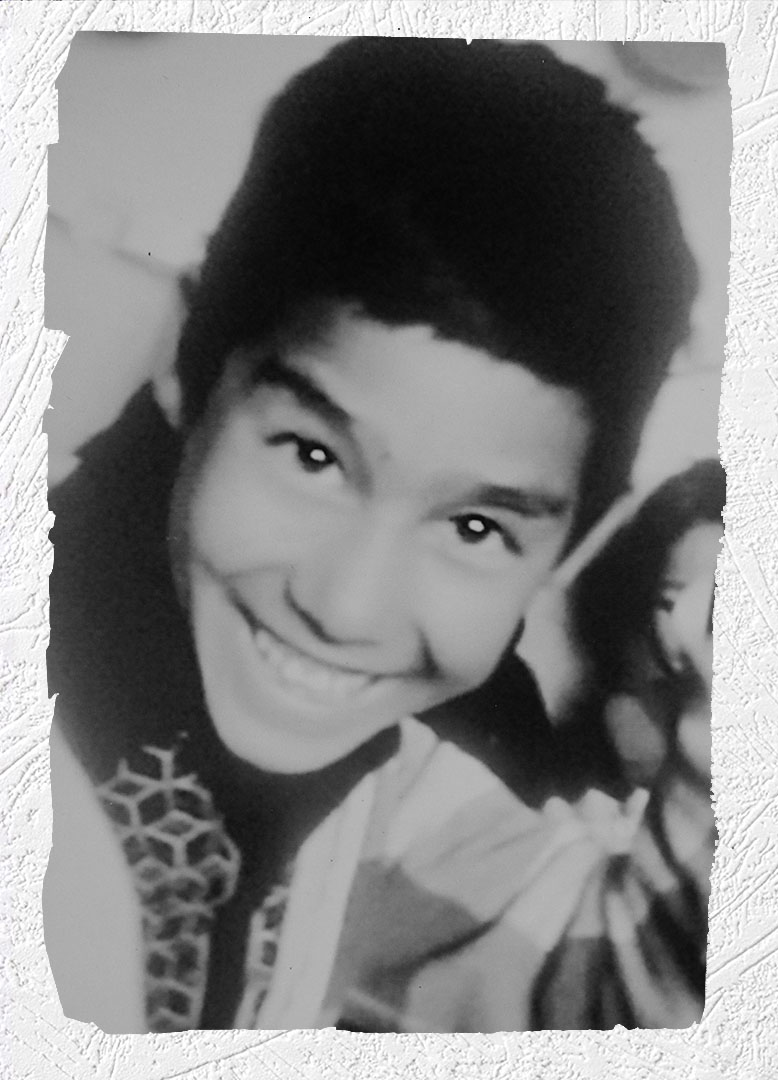
- Gender
- Male
- Ethnicity
- Hazara
- District geolocation of incident
- Kabul: 34° 31′ 1″ N, 69° 8′ 60″ E
- Description of incident
On July 23, 2016, two suicide bombers denoted their explosives among the protesters at Dehmazang Square in Kabul, the capital city of Afghanistan. The protesters, who were primarily Hazaras, were part of the Enlightenment Movement. They were protesting against the diversion of the TUTAP mega power project which would cause the project to bypass Hazara-dominated areas. At least 84 protesters lost their lives and 260-400 others were injured. The Islamic State of Khorasan Province (ISKP), the regional branch of ISIS, took credit for the attack. However, ISKP later refuted their involvement in the attack.
The Enlightenment Movement, also known as Junbesh-e Roshnayie, was a grassroots civil disobedience movement started by Hazaras in Afghanistan in response to a change in the Fichtner GmbH & Co. KG proposed Energy Supply Improvement Investment Program, unofficially called TUTAP project plans. The change in the project plans would cause it to bypass Hazara regions. The move was seen as perpetuating long-standing anti-Hazara discrimination. Throughout 2016 and 2017, the Enlightenment Movement coordinated large-scale demonstrations against discrimination both domestically in Afghanistan and abroad.
- Witness/Survivor Statement
Human Flesh Was Everywhere
Narrator: Laila Kazemi (mother)
Victim: Mohammad Jan Kazemi
Date of the incident: 23 July 2016
Location of the incident: Dehmazang, Kabul City
My son was 14-years-old. I raised him in poverty. In fact, he had just started working so we were all very happy, especially me and his father. His father used to say, “It's good that I have a big son and like a mountain, he has my back.” When his father would go to a party at night and would not return home or go on a trip, he was confident and would say, "Thankfully, my son has grown up and is there with his four sisters and his mother." For a while we lived in Taimani out of necessity. Poverty forced us to live in places where people consider my son alien. We were there for one year, and my son attended the first grade in one of the schools in Taimani. Then we moved to Guzargah, and I enrolled my son in the Abdul Ali Mostaghni school. His sisters attended the same school as it is for both girls and boys. One day in second grade, my son was walking to school alone and was brutally beaten on the street. Some people dragged him into an alleyway and beat him with an electrical cable. He was not someone who would usually complain. When he came home, he simply said to me, "Mother, I was beaten with electrical wires.” They had attacked him for being a Hazara.
I will never forget the moment he came home with bruises on his face and body, and refused to say who had hit him. After that incident, I transferred him to a different school. I enrolled him in a school near Guzargah where he studied up to the sixth grade. He tried very hard not to be a burden. I always said to myself, “Leila, look at how the difficulties of the world have affected a 14-year-old child!” When he was with us at home, he would empathise and say, “I must work to help my father. How long does he have to work? He gets work one day and has no work the next.”
To be honest, last year, Mohammad Jan had started to burn incense to earn money. He made holes in a can of paste and put esfand seeds in it. It was winter and he said he wanted to earn money by burning incense so he could get his younger sister a pen and notebook. He told us not to worry. I always told him he shouldn't do that as someone might not like incense smoke. I was afraid, God forbid, that people would beat him up again. He told me, “No, mother, I can get my sisters a notebook and pen with the ten Afghani I earn from the incense.” He used to get 20 or 30 Afghanis working and would put it in a piggy bank he had prepared. He kept the piggy bank until the new year. On New Year, when he broke it, he had saved almost two or three hundred Afghanis.
He used the money to buy a pen, a pack of notebooks, and school supplies for his sisters. The only thing he could not buy them was a bag. He reassured them that it was okay, they should not worry, he was going to keep going to school and working in incense smudging [spiritually purifying with incense smoke].
By spring, I would not allow him to continue with incense smudging any more. I told him, “My son, don't go to work. Go to school. You should study.” Just this year, when school started up again, he found a job in a tailoring shop. He came home and said that he found a job. He said he would be a tailor’s apprentice and that his salary would be 100 Afghanis a week. I was very happy and said it was better than being on the streets all day. It was good because it was fun for him and he could spend some of the money he earned on himself. With the money he had saved, he bought pens and notebooks for his little sister, whom he loved very much. He used the money he had earned to buy a birthday cake from Pole-Sorkh for his sister. With the help of his sister, he found a small table, spread a woven tablecloth on it, and celebrated his sister's birthday. Only one video of him is left on the mobile phone, in which he shouts he wants to eat the decorative flower of the cake. He repeats that, laughs, and waves. That beautiful day passed and spring arrived.
At at a young age and with very little money, he had fulfilled his sister's wish and bought her a pen and notebook. He would go to school at 6 am and would return at 10. After that, he would go to the agricultural fields. One day he came home and said, ”Mother, I have found a new job”. I asked what job. He said, “My chief is called Kaka Zalmai. I go to his lands and pick leeks. He gives it to me and wants me to take it to the back alleys to sell it and we will halve the money.” His income level varied. Sometimes he would earn ten or twenty or even fifty Afghanis. With his money, he would buy burgers or boiled eggs and bring them home and eat them together with his little sister. Ramadan passed like this. It must have been my negligence that I let him go. Then I told him not to go to the fields anymore, saying “You are still very young and not old enough to take responsibility for the household.” He was still trying to earn that little extra money. He would always do his work on time and was never lazy. He tried hard to earn even a small income to help his father, and did not stay idly at home. I did not have my dream come true. I have cursed this unjust world that has influenced a child in such a way that he felt he must work and thought about ways to earn some halal [legal] money. I always told him, “My son, pursue your studies so that you can achieve your dream.” He always said, "Mother, I am studying, then I want to join the National Army." I also encouraged him by saying that serving in the Army was good and it was an honorable decision that in the future he wanted to keep people safe and secure.
He had a pair of pants with camouflage patterns. He liked them very much, and would always wear them, and took good care of them. I still have many memories of him in my mind and heart. He was very fond of football. On the day before he was martyred, he slept from 10:00 am to 1:00 pm. When his sisters came home from school at 1 o'clock, I called him, “Mohammad Jan, wake up my son, your sisters are home”. On that day, he asked one of his sisters to cook rice for him, as he only wanted to eat rice. His sister cooked the rice, and I am happy my son did not leave home hungry or thirsty. That day, he ate two plates of rice and drank two glasses of water. Going out of the house, he had a green handkerchief around his neck. I did not see him but his sisters said he smiled when he left the house. Before he left the house, I had said to him, "Mohammed Jan, where are you going? The situation today is not good, and God forbid there could be a suicide attack.” I even locked the gate and put the key out of reach, fearing he might go outside to play football. He wanted to get out through the roof-top. Our roof is connected to the roof of the neighbor's house, and Mohammad Jan wanted to get out through their bathroom. The girls told me, “Mother, Mohammad Jan has put up the ladder and wants to leave the house through the roof.” That day, I was very sick and my blood pressure was high. That's why I was sleeping. I work as a janitor at the local mosque. Mohammad Jan took the key from where I had put it. I noticed him and said, “Where are you going, my son?” He said, “Mother, please let me go play football with my friends today.” I said “My son, your friends are not there today.” But he said, “If my friends are there, I will go and play football with them.” He even told me the names of his friends and said, “If they don't go to play football, we will just gather in the alleyway and talk together for a while.”
We live near a grassy field, and that’s where he went. Once there, he did not find his friends. Someone told him, “The Hazaras are demonstrating in Dehmazang. Aren't you a Hazara? Why are you walking around here?” He was a very daring boy, and on the suggestion of this person, he did go to Dehmazang. The moment he arrived there, the explosion happened. I felt like the glass of the room broke over my head. I quickly got up and ordered my daughters to go and see in the alley to find out where the boy was. The poor girls were afraid and checked the alley, but Mohammad Jan was not there. I put on my clothes and went to Dehmazang in a pair of flip-flops. No matter how much I looked for Mohammad Jan, I couldn't find him. It was horrible; human flesh was everywhere. I saw everything except the hands and feet. At that time, I could not understand anything because of fear, sorrow, and shock. I was just running here and there; I did not even notice a camera next to me. Later, my daughters said they had seen me on TV, running around like a crazy person who had lost her mind.
As I was searching desperately, I thought about the pieces of cloth thrown over the dead bodies. The tents of the demonstrators were lying on the street. I couldn't believe that these were pieces of human flesh, covered by a simple piece of cloth. I didn't even comprehend whether these were stones or lumps of flesh. When I passed by them, I wasn't in a normal state at all. I didn't know whether I was on the ground or in the sky. I was just running here and there, completely distraught. As I searched for my son, I started at the Esteqlal Hospital. I searched all the hospitals around Dehmazang, but I couldn’t find Mohammad Jan. I finally found him at the Wazir Mohammad Akbar Khan Hospital at 11:00 PM.
Martyrdom must have been his fate. I always thank God for trusting me with the gift of a son, and I gave the gift back to him. I say to my God that he made the son of a mosque janitor meet martyrdom. I am sure he has not forgotten us. As the mother of martyr Mehr Ali says, I thank God that my son was not killed on a bad path, God forbid, for theft or adultery. He was the son of a mosque janitor and a labourer. My son had not even reached the age of prayer and had never sinned. God accepted this gift from me. But I will never forget that day and night when I had only one thousand Afghanis. I took 500 and his father took another 500. I was tormented by the idea of burying my son in such poverty and neediness in front of other people. So I borrowed seven thousand Afghanis from someone to prepare my son's shroud and coffin. I went to someone and pleaded, “For the sake of God, give me a loan to bury my son. I will pay your loan back as soon as possible.” May God bless him, he gave me the money and I used it for my son’s burial.
I will never forget the ill treatment by the staff of Wazir Muhammad Akbar Khan Hospital during my visit there. As I went there to identify my son's body, the person in charge of the morgue was opening and closing the mortuary cabinets so angrily that I lost my strength. I was overwhelmed with sorrow and I asked him to stop that behavior. I told him, “Those are the pieces of bodies of the martyrs, why are you acting like that? They, too, are the children of Muslims. So, open and close the cabinets slowly and with respect. Imagine yourself as the parents and family member of one of these martyrs. Is it right that you are behaving like this?” He didn't say anything. I found my dear Mohammad there. I brought him home alone with great sadness and with the help of his father, we bathed him. No matter how much I washed his head, the blood would not go away. His head was so badly hurt. With tears, sighs, moans, and sadness, I covered his head with plastic to prevent blood from spilling. Then I put cotton on it to reduce the flow of blood. We buried him alone and in loneliness. Our government is responsible for this great crime.
Khalili and Mohaqeq, who shamelessly encouraged the people and the youth [to participate in this protest], are the main perpetrators of this crime. They traded the lives of our innocent and educated youth and should be punished for their conduct. They must know that the curse of all of us is upon them. Now, everyday when it is the end of the school day for Muhammad Jan, the only thing I can do out of sadness is to pray for him. Even my little daughter sometimes tells me how much Muhammad is missed everywhere, at eating time, at the table. My tears are flowing, but I talk of my son as a martyr and as eternal, so that my husband does not feel too sad and to boost his spirits. Physically, my son is no longer with us, but his memory will last forever and he sees us. We must pray for him to rest in peace.
But the one thing that always bothers me is that I had dreamed of buying Mohammad Jan new clothes, which would have made him happy. This dream of mine is shattered now, with Mohammad Jan gone. I will never forget that Mohammad Jan never once tried on new clothes. He always helped and supported us as if he were an adult. He was concerned about his family's difficult financial situation. He worked so that his little sister was able to study and has a pen and notebook for school.
Qurban Ali Ahmadi
- Photo of Victim

- Gender
- Male
- Ethnicity
- Hazara
- District geolocation of incident
- Kabul: 34° 31′ 1″ N, 69° 8′ 60″ E
- Description of incident
On July 23, 2016, two suicide bombers denoted their explosives among the protesters at Dehmazang Square in Kabul, the capital city of Afghanistan. The protesters, who were primarily Hazaras, were part of the Enlightenment Movement. They were protesting against the diversion of the TUTAP mega power project which would cause the project to bypass Hazara-dominated areas. At least 84 protesters lost their lives and 260-400 others were injured. The Islamic State of Khorasan Province (ISKP), the regional branch of ISIS, took credit for the attack. However, ISKP later refuted their involvement in the attack.
The Enlightenment Movement, also known as Junbesh-e Roshnayie, was a grassroots civil disobedience movement started by Hazaras in Afghanistan in response to a change in the Fichtner GmbH & Co. KG proposed Energy Supply Improvement Investment Program, unofficially called TUTAP project plans. The change in the project plans would cause it to bypass Hazara regions. The move was seen as perpetuating long-standing anti-Hazara discrimination. Throughout 2016 and 2017, the Enlightenment Movement coordinated large-scale demonstrations against discrimination both domestically in Afghanistan and abroad.
- Witness/Survivor Statement
There Were 18 Bullet Wounds on His Body
Narrator: Parimah (mother)
Victim: Qurban Ali Ahmadi
Date of the incident: 23 July 2016
Location of the incident: Dehmazang, Kabul City
I am the mother of the martyr Qurban Ali. He was a hard-working, decent boy who had laboring jobs. He was almost seven when I first sent him to school. After a while, he said, “Mom, I can't continue going to school because I am the son of a poor family, and I have to provide for our living expenses so our life will get a little better.” One day, he didn't come home on time. I looked everywhere but I couldn't find him.
Back then, we lived in Chindawol. I suddenly saw him sweeping in front of a shop near the Behzad cinema. I went to him and asked him what he was doing there. He said, “I have become an apprentice here.” He worked at the same shop for nine years. The shop owner was from Sheikh Ali. He was a charming and kind person. For almost nine years, he did metalwork in his shop. He had mastered the job, was working in different places, and kept telling me that I should get him a shop so that he could start his own business. But I told him he couldn't run the business alone because the rent on the property was high, we could not afford the payment, and he could lose money. So he worked with his elder brother. It had taken us a lot of effort to arrange my eldest son’s marriage. Life used to be good at that time, to some extent. Then, after being married two years, my eldest son's wife died. A year later, my husband passed away. After that, the problems followed one after the other.
As my eldest son, Qurban Ali, grew older, he became quite successful in his profession. He used to make and sell doors and rails. As a result of all his hard work, our living conditions improved. One day, I told him, “Only God knows how long I will live. So let me get you married!” I continued and asked him, “How long do you think you can live in your brother's house? It may not work out for much longer." He didn't say anything. So I decided to mortgage my land in my hometown, cashed in my savings, and borrowed two hundred thousand Afghanis from the bank. With the total amount, I managed to get him married. For a year, we lived with Qurban Ali. Then I made my sons go and live separately. I distributed the debt between them. One of my sons got a house in Chindawol, and the other lived in a different place. I was living with Qurban Ali. He worked and provided for household expenses and continued paying his debt. He always said, “I wish to pay off my debts and then send my mother to Karbala [pilgrimage] because she has worked hard for me since I was a child. Later I will rent a house so that we can all live comfortably [together].” But now, how sad it is that he has gone before his own mother. He has left me alone. I am grateful to have two more sons, but no one can fill the void he left behind.
On the day of the incident, I wanted to go to my other son Mohammad Ali's house. I told Qurban Ali to go to work, but he said he wanted to go and join the demonstration. I told him, “It is none of your business; go to work.” He told me, “I participated in the first demonstration. Last time, they placed containers on our way. I climbed up on top of one of the containers and took photos of people taking part in the demonstration.” I said, “Have you gone nuts? Why did you climb up on top of a container? How is all this even your business?” No matter how much I insisted, he would not agree. I asked him to call me and update me as soon as he got there. As I left for Barchi, I noticed the road was closed. I turned around and went to Mohammad Ali's house via another road, Chehl Soton Road. There is a mosque near Mohammad Ali's house, where I performed prayer before having lunch.
Mohammad Ali’s wife was cracking almonds, and I helped her by separating out the kernel of the almonds from the cracked shells. We forgot all about the demonstration. Suddenly I remembered that Qurban Ali was supposed to be taking part in the rally, so I picked up the phone and called him. His coworker, a Sunni man, had named him Hasib. I called and asked him, “Where are you, Hasib, my love?” He said, "I am in Dehmazang, don't worry!” and I continued working. I never imagined a suicide bomber would get into the demonstration and that my son would be martyred. In fact, I even asked my eldest son why he was not in the demonstration. He told me, “Mom, the roads are closed, so that's why I am staying home.”
I must have gone insane that day! One of my sons was killed, he was martyred, and there I am encouraging the other to go to the same demonstration! The landlord's son told my other son that there had been an explosion in Dehmezang. For a moment, I felt as if I had fallen to the ground from high in the sky. It was like my heart was being squeezed. I kept calling Qurban, but he did not pick up his phone. I told my eldest son that Qurban was in Dehmezang, and called him again, but again he did not answer the call. My eldest son said: "Mother, you worry too much. A suicide attack has happened in Dehmezang. He must be busy helping the wounded and martyrs because many people have died. Qurban Ali will be fine."
When Mohammad Ali and I called again, neither of us received an answer. I was losing my senses, I was so worried. I told Mohammad Ali that I had to go to Dehmazang myself. I left the house and went to Pol-e Khoshk. When I got there, one of my relatives saw me and asked me where I was going. I explained that Hasib had joined in the demonstration and that after the explosion, he wasn’t answering our calls. My relative told me, “Do not worry. Go back home and I’ll go get him.” He took my phone. I don’t know why, maybe he knew that Hasib had been killed. I came out of the house several times between three and six o'clock. I was standing at Pol-e Khoshk bus station and intended to go to the mosque and pray. Up to that moment, I did not remember that I had to perform prayer. I was just wandering around full of anxiety. A mother would prefer to be buried herself than to see her young child die before her.
At that exact moment, I saw another relative, named Ismail, passing by. I ran after him but could not catch up with him. He went into mosque and I entered the mosque but could not see anyone inside. I came out and noticed three relatives approaching me. One of them, named Sarwar, was not feeling well. I asked what had happened to him. He said he had been slightly injured. I asked him if he knew where Hasib was. He said he was coming with Muhammad Ali.
Women have no other resort. That's why I started crying. I was slapping myself and crying. They took me home. When I opened the gate of the house, I saw my niece clapping hands and saying, “What are we going to say to Hasib's mother?” As soon as I heard her saying that, I broke down, slapping my face and pulling my hair, and that’s when I noticed Qurban Ali’s dead body. I was unable to stand. They took him to the mosque and bathed him. Blood was flowing from the stream in front of the mosque.
My other son sat next to me and said, “Mom, please don't cry, calm down.” Eighteen bullet wounds could be seen on Qurban Ali's body. The bone on one side of his head was missing. His hair was stuck to one side of his head, and his leg was broken. It was 10 p.m., and the blood continued flowing from Qurban Ali's body. With all the shops closed, there was no cloth to make a burial shroud. There wasn't even plastic to stop the bleeding. Since the bleeding did not stop, they brought lime from outside and put it on the wounds, but no matter how much lime they put on the wound, the bleeding would not stop. As an ultimate solution to stop bleeding, they mixed cotton with lime and placed it on the wounds, and the wounds were then wrapped in a plastic sheet.
There was no cloth to make a shroud. May God bless my cousin; he brought a shroud. It was 11 pm, and the relatives who had gathered in our house said that it was not possible to bury the body at this time; they would take the body home for that night and bury him the next day. When we wanted to take my son's body home, the landlord would not allow us to take the martyr’s body into the house. So we had to bury him at 11 p.m. that same night.
We returned home at 2 am. I had nothing at home to feed people with. My son was a decent and virtuous man. May God never make any mother grieve for her young child and, for the sake of Imam Hossein, never let any family be dishonored.
Now that he is dead, his children are left without a guardian and his wife has left for her father's house. She was my niece, and her parents took her back to their hometown. The young daughter of my son is now living with me. I am sixty years old, and I take care of his daughter.
I am facing many problems, and I cannot bear the burden alone. I pray for Afghanistan to become peaceful so that I can earn a legitimate income and raise my granddaughter. I raised my son in poverty, but unfortunately he left me alone in my old age and rested in peace himself. One of my sons was killed at 18 during the war under Baba Mazari’s command. I have suffered a lot.
People’s young sons and daughters were martyred. Dehmazang had become a battle-zone in Karbala. It must have been God's will for my other child to be martyred. Once again, God put me to a tough test. I pray to live long enough to witness little Fatima grow up. She is one and a half years old now. I am apprehensive and believe that if I die, Fatima will be helpless. She will have no one to take care of her. The unknown fate of Fatima is as sad as all the sorrows of my life put together, and so is the grief of losing my son. I am just forever grateful to be alive so I can care for this innocent child. Wherever I go, she comes with me and starts crying when she is away from me.
I pray to God to have mercy on us for the sake of this innocent child. Amen.
Enayatullah Asil Tahmasi
- Photo of Victim
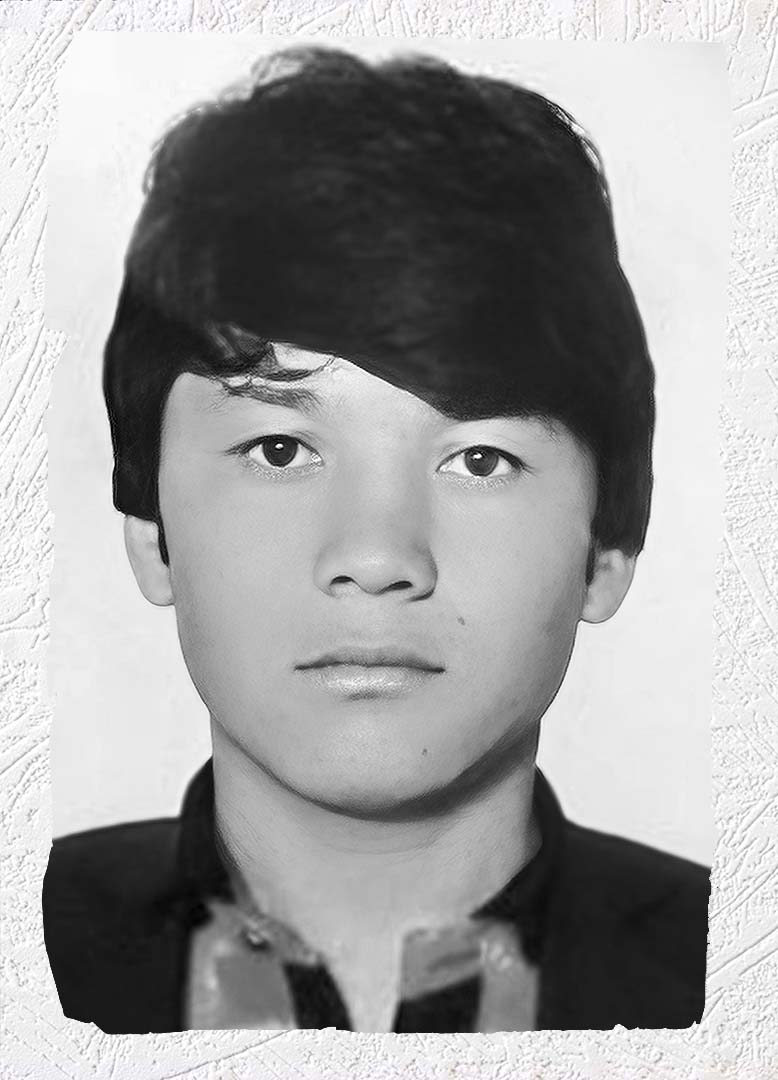
- Gender
- Male
- Ethnicity
- Hazara
- District geolocation of incident
- Kabul: 34° 31′ 1″ N, 69° 8′ 60″ E
- Description of incident
On July 23, 2016, two suicide bombers denoted their explosives among the protesters at Dehmazang Square in Kabul, the capital city of Afghanistan. The protesters, who were primarily Hazaras, were part of the Enlightenment Movement. They were protesting against the diversion of the TUTAP mega power project which would cause the project to bypass Hazara-dominated areas. At least 84 protesters lost their lives and 260-400 others were injured. The Islamic State of Khorasan Province (ISKP), the regional branch of ISIS, took credit for the attack. However, ISKP later refuted their involvement in the attack.
The Enlightenment Movement, also known as Junbesh-e Roshnayie, was a grassroots civil disobedience movement started by Hazaras in Afghanistan in response to a change in the Fichtner GmbH & Co. KG proposed Energy Supply Improvement Investment Program, unofficially called TUTAP project plans. The change in the project plans would cause it to bypass Hazara regions. The move was seen as perpetuating long-standing anti-Hazara discrimination. Throughout 2016 and 2017, the Enlightenment Movement coordinated large-scale demonstrations against discrimination both domestically in Afghanistan and abroad.
- Witness/Survivor Statement
His Goal Was to Raise His Voice for Justice and Peace
Narrator: Mahdi (grandson of uncle)
Victim: Enayatullah Asil Tahmasi
Date of the incident: 23 July 2016
Location of the incident: Dehmazang, Kabul City
I am the grandson of martyr Enayatullah Asil's uncle. His immediate family lives in Ghazni. Because they could not participate in the Memory Box program, I consider it my duty to participate. Enayatullah was born in 1997. He completed his secondary education at Kariz Patu school, in Jaghori District of Ghazni Province. When he passed the university entrance exam, he got a good mark and was admitted to the Faculty of Journalism. He was only in his first semester when death took away his dreams. He was a very active and sociable person. He had won many awards during his school time. He was going to send me his biography, but unfortunately, he was martyred and his death made us all sad. He always believed that one should work hard and fight for their rights. His only intention in participating in this peaceful demonstration was to raise his voice for justice and peace. So many people like him sacrificed their lives for this cause. We follow in their footsteps so that their blood is not spilled in vain.
Enayatullah's life was full of ups and downs. He was not yet born when his father went to Iran and then Europe. He stayed there for ten years, but could not get citizenship, so he returned to Afghanistan. Then his father moved to Europe again, and it was when he was in Europe that his father heard of Enayatullah’s success. He was very proud. When he heard about his son's martyrdom, he couldn't bear it and returned to Afghanistan. He suffered a lot; Enayatullah was his father's only hope. Nothing could console him or heal his pain. Thanks to the Afghanistan Human Rights and Democracy Organization for providing this opportunity to share our painful stories with others. We must remember to never give up and follow in the steps of the righteous martyrs.
Jawid Haidari
- Photo of Victim

- Gender
- Male
- Ethnicity
- Hazara
- District geolocation of incident
- Kabul: 34° 31′ 1″ N, 69° 8′ 60″ E
- Description of incident
On July 23, 2016, two suicide bombers denoted their explosives among the protesters at Dehmazang Square in Kabul, the capital city of Afghanistan. The protesters, who were primarily Hazaras, were part of the Enlightenment Movement. They were protesting against the diversion of the TUTAP mega power project which would cause the project to bypass Hazara-dominated areas. At least 84 protesters lost their lives and 260-400 others were injured. The Islamic State of Khorasan Province (ISKP), the regional branch of ISIS, took credit for the attack. However, ISKP later refuted their involvement in the attack.
The Enlightenment Movement, also known as Junbesh-e Roshnayie, was a grassroots civil disobedience movement started by Hazaras in Afghanistan in response to a change in the Fichtner GmbH & Co. KG proposed Energy Supply Improvement Investment Program, unofficially called TUTAP project plans. The change in the project plans would cause it to bypass Hazara regions. The move was seen as perpetuating long-standing anti-Hazara discrimination. Throughout 2016 and 2017, the Enlightenment Movement coordinated large-scale demonstrations against discrimination both domestically in Afghanistan and abroad.
- Witness/Survivor Statement
He Became a Victim of The Injustice of Our Corrupt Government
Narrator: Salman Ali Haidari (father)
Victim: Javid Haidari
Date of the incident: 23 July 2016
Location of the incident: Dehmazang, Kabul City
My child was born in the village of Alghu-e Haidar in Jaghori District in Ghazni Province. Since childhood, my son has been very interested in getting an education. He was enrolled in and graduated from the Faiz Mohammad Kateb School in Jaghori District. Approximately five years ago, he started coming to Kabul for education. In the summer, he would go to Jaghori for his school programs, and in the winter, he would return to Kabul to prepare for the university entrance exam and learn English.
A man raises his child, having thousands of hopes and dreams, and struggles to help his kid achieve success, but his dreams and achievements can be shattered in the blink of an eye. It is very difficult for a person to lose his young child. One can only be patient and not protest God’s will.
He graduated from school last year and was successfully enrolled in the aviation department of the military university. My son’s enrollment in university was announced just a few days before the incident. He was informed he must register within three days to be allowed to attend classes. His university was located within the Kabul airport campus. Then the Dahmazang incident happened and shattered all my son’s dreams. I buried my youth.
He studied hard and dreamed of graduating from the military department and serving his people and country. My family and I moved to Kabul almost three years ago to live in tranquility with my son. In addition to his studies, he also played sports and was very fond of football. He was a sociable and well-mannered young man who participated in the Movement programs and believed in equal rights for people. Given the dire security situation, I forbade him from attending Movement meetings. He responded, “Dad, if I don’t take part and somebody else is afraid for their safety, who else will defend our rights and advocate for the oppressed?” On the day of the incident, I called Jawid at 11 o’clock, and updated him about Khalili and Mohaqeq’s withdrawal. I asked him where he was. He sounded sad, and said, “I am in Dehmazang, don’t worry about me, and please don’t call me again. I am fine, nothing will happen.”
Before the July 23rd demonstration, he would always say: “Hazaras are an oppressed and suffering community, and the government is trying to deny the rights of Hazaras. We shall not remain silent. We need to stand up and fight for the rights of our people.” In response, I said those words were precious to me, but in this country, to seek one’s rights comes at the cost of one’s life, so he would do better to look after his own life and his education, and avoid putting himself in harm’s way. But he insisted and said, “Dad, it doesn’t matter if our problems are not addressed today. Maybe the next generations will benefit from our advocacy and action because they will, at least, realize that we fought for justice.”
Some time ago, I spoke with my son and said we wanted to select a good girl for him to marry and start his life. He told me, “Dad, now is not the right time, I have many plans, and I had better address my personal and educational problems first.” All he was concerned about was education, but he became a victim of the injustice of our corrupt government. I gave my young son to the earth and to God. As long as I live, this sorrow will not be lifted from my heart.
Ali Mohammad Babaee
- Photo of Victim

- Gender
- Male
- Ethnicity
- Hazara
- District geolocation of incident
- Kabul: 34° 31′ 1″ N, 69° 8′ 60″ E
- Description of incident
On July 23, 2016, two suicide bombers denoted their explosives among the protesters at Dehmazang Square in Kabul, the capital city of Afghanistan. The protesters, who were primarily Hazaras, were part of the Enlightenment Movement. They were protesting against the diversion of the TUTAP mega power project which would cause the project to bypass Hazara-dominated areas. At least 84 protesters lost their lives and 260-400 others were injured. The Islamic State of Khorasan Province (ISKP), the regional branch of ISIS, took credit for the attack. However, ISKP later refuted their involvement in the attack.
The Enlightenment Movement, also known as Junbesh-e Roshnayie, was a grassroots civil disobedience movement started by Hazaras in Afghanistan in response to a change in the Fichtner GmbH & Co. KG proposed Energy Supply Improvement Investment Program, unofficially called TUTAP project plans. The change in the project plans would cause it to bypass Hazara regions. The move was seen as perpetuating long-standing anti-Hazara discrimination. Throughout 2016 and 2017, the Enlightenment Movement coordinated large-scale demonstrations against discrimination both domestically in Afghanistan and abroad.
- Witness/Survivor Statement
No statement
Amir Mohammad Rahimi
- Photo of Victim

- Gender
- Male
- Ethnicity
- Hazara
- District geolocation of incident
- Kabul: 34° 31′ 1″ N, 69° 8′ 60″ E
- Description of incident
On July 23, 2016, two suicide bombers denoted their explosives among the protesters at Dehmazang Square in Kabul, the capital city of Afghanistan. The protesters, who were primarily Hazaras, were part of the Enlightenment Movement. They were protesting against the diversion of the TUTAP mega power project which would cause the project to bypass Hazara-dominated areas. At least 84 protesters lost their lives and 260-400 others were injured. The Islamic State of Khorasan Province (ISKP), the regional branch of ISIS, took credit for the attack. However, ISKP later refuted their involvement in the attack.
The Enlightenment Movement, also known as Junbesh-e Roshnayie, was a grassroots civil disobedience movement started by Hazaras in Afghanistan in response to a change in the Fichtner GmbH & Co. KG proposed Energy Supply Improvement Investment Program, unofficially called TUTAP project plans. The change in the project plans would cause it to bypass Hazara regions. The move was seen as perpetuating long-standing anti-Hazara discrimination. Throughout 2016 and 2017, the Enlightenment Movement coordinated large-scale demonstrations against discrimination both domestically in Afghanistan and abroad.
- Witness/Survivor Statement
It Is Our People’s Right to Have Electricity
Narrator: Nasrin (wife)
Victim: Amir Mohammad Rahimi
Date of the incident: 23 July 2016
Location of the incident: Dehmazang, Kabul City
In the name of God,
I am Nasrin, the wife of the martyr Amir Mohammad. I have 5 children, two girls and three boys. We come from Bamiyan Province, in the district of Shibar, from Shanbal Village. We currently live in Kabul. Amir Mohammad was 45-years-old when he was martyred. However, I found out his age was recorded as older than that on his Tazkira (National ID Card).
Hamed, The Martyr’s Son:
My father was born in Kabul in 1970. He attended the Asif Mayil High School in Qala Nazer up to the 12th grade. My father had very good manners and morals and always encouraged us to do good deeds.
The Martyr's wife:
He studied up to the 12th grade. After that, he did not continue with his studies because of his difficult financial situation, and he started working. Sixteen years had passed since our marriage. He behaved very well with everyone and was a sociable and friendly person. He was very benevolent and calm. At home, he treated me and my children well. He always told us that we should defend our rights. Before the 23rd July demonstration, he would go to Mosala to participate in social events, especially those related to the Movement. He used to participate in the early meetings of the Movement and when he came home, he would talk about the right of our people. He used to say: “Electricity is a right of our people and we will stand up against the government if it violates our rights.”
He was self-employed. In the winter season, he worked with his cousin who had a store, selling Turkish stoves in Qala-e Nazer. My husband was literate and his cousin was illiterate, that's why he managed the finances of his cousin’s store. His cousin was the store owner and Amir Mohammad managed the store’s financial affairs. His dream was for his children to get an education. He was always kind at home and believed that there should not be a tense environment at home when life was already so difficult. When the issue of the 23rd July demonstration came up, I did not consent to him going to Dehmazang. I told him I did not want him taking part in the demonstration because an attack might happen. He answered, “We belong to this land and it is the right of our people to have access to electricity. We must defend the rights of our people and stand up against injustice.”
Hamed, The Martyr’s Son:
At first, it was decided that he would not go and take part in the demonstration. We tried to prevent my father from going, but his enthusiasm and his love for the people made him go to Dehmazang. We were watching the Dehmzang demonstration live on TV when the suicide attack happened. We immediately called my father to know where he was. He said he was in Dehmzang and had been injured. He was taken to Imam Ali Hospital. We got to the hospital. Since it was very crowded at this hospital and it was not possible for the staff to take care of all the patients, we transferred him to the Imam Zaman Hospital in Barchi.
The Martyr's wife:
His back was wounded, but he was not hurt severely. When we took him to the Imam Zaman Hospital, the doctor could not operate on him properly. At first, we didn't notice anything. But after a few days, his condition worsened. He suddenly had a seizure. We took him to the Rahel Hospital. They explained that all the fluid in his head was leaking into his body, and this was causing a problem with the lack of fluid in his brain. He was operated on again, but did not recover. The bullet had hit his back, but his spinal cord was not hurt.
Hamed, The Martyr’s Son:
First, we took him to Naser Khosrow Hospital. They told us there was a good specialist at the Imam Zaman Hospital in Barchi who could operate on the wounded, that's why we took him there and the doctor at this hospital operated on him.
The Martyr's wife:
When we visited him, Amir Mohammad said, "A police pick-up truck came in Dehmazang and I got on the back of the truck.” There were other wounded with him and that is how he got to the hospital.
Hamed, The Martyr’s Son:
At that time, his condition was not so serious. His legs were hurt, one leg was fractured, but it was not severe. In the Square, he wanted to find my cousin who was there at the demonstration, but he could not find him, and so he managed to get into the pick-up truck and get to hospital.
The Martyr's wife:
We took him to another hospital. Following the surgical operation, his legs stopped moving. Before the first operation, his leg was simply fractured due to the blast that had thrown him onto the ground. The doctor was dishonest; he didn't tell us before the operation that he didn't have the ability to perform the surgery. It would have been better if we could have transferred him to a better hospital or take him to Pakistan or India for the operation. After the operation, Amir Mohammad remained in a coma for four days. He never again opened his eyes. He repeatedly had seizures, and his brain fluid leaked through his back. He was hospitalized for four days in Rahel Hospital.
Hamed, The Martyr’s Son:
Preparations were made for taking him to India; we wanted to take him abroad for treatment, but he died before that could happen.
The Martyr's wife:
After my husband’s martyrdom/death, I went to the doctor to file a complaint. I asked him why he had performed such a critical operation when he lacked the know-how. He had nothing to say. When he met me, he held his head down; he was clearly embarrassed. I said to the doctor that he should have told us to take him to India or Pakistan for treatment. “Why did you do something that was beyond your ability?” Every time he examined my husband, he said, “It is okay, let this fluid come out of his body, because this is pus.” White fluid like milk came out of his back. Sometimes he could not straighten himself up easily; his back could sometimes not move. My husband died because of the negligence of this doctor. His leg was slightly fractured in the incident, and if the operation had not been done in that hospital, he could still be alive today.
I will never forgive this doctor because he ruined our life. After my husband’s martyrdom, my brother-in-law has been helping us because my son has to go to school; he can’t work. Now we have no other choice. God took my husband from us and we cannot do anything other than remain patient.
I ask the government to pay attention to the families of the Martyrs. The independent human rights commission should investigate this crime. My children are all young; my youngest son is just three years old. Now they are helpless. Their uncle can only help us for one year. The economic situation in the entire country is already bad without one family having to support another family for a long time. Since my children are young, I can't work and leave them alone. So, if there is any sewing or embroidery opportunity that I can do from home, I will definitely start working. My children must get an education and have a bright future.
Sayed Baqer Mosawi
- Photo of Victim

- Gender
- Male
- Ethnicity
- Sadat
- District geolocation of incident
- Kabul: 34° 31′ 1″ N, 69° 8′ 60″ E
- Description of incident
On July 23, 2016, two suicide bombers denoted their explosives among the protesters at Dehmazang Square in Kabul, the capital city of Afghanistan. The protesters, who were primarily Hazaras, were part of the Enlightenment Movement. They were protesting against the diversion of the TUTAP mega power project which would cause the project to bypass Hazara-dominated areas. At least 84 protesters lost their lives and 260-400 others were injured. The Islamic State of Khorasan Province (ISKP), the regional branch of ISIS, took credit for the attack. However, ISKP later refuted their involvement in the attack.
The Enlightenment Movement, also known as Junbesh-e Roshnayie, was a grassroots civil disobedience movement started by Hazaras in Afghanistan in response to a change in the Fichtner GmbH & Co. KG proposed Energy Supply Improvement Investment Program, unofficially called TUTAP project plans. The change in the project plans would cause it to bypass Hazara regions. The move was seen as perpetuating long-standing anti-Hazara discrimination. Throughout 2016 and 2017, the Enlightenment Movement coordinated large-scale demonstrations against discrimination both domestically in Afghanistan and abroad.
- Witness/Survivor Statement
His Face Was Covered in Blood and One of His Hands Was Stuck Behind His Back
Narrator: Masouma (mother)
Victim: Sayed Baqer Musavi
Date of the incident: 23 July 2016
Location of the incident: Dehmazang, Kabul City
I am the mother of the martyr Sayed Baqer. He was born in 2003. He was a sixth grader at Gulkhana school in Barchi. My son grew up in hardship; he had seen difficult things. In the evening before the demonstration, martyr Baqer told me that the next day, he wanted to take his ice cream cart to the demonstration site to sell ice cream to people. I told him to stay at home instead and not go out so that I could wash his clothes and he could take a bath.
The next day, I was busy with the household chores. I didn't notice when Sayed left the house at 8 o'clock. Before his martyrdom, he either sold ice cream or gathered passengers for the minivans under the flyover. His father had a stomach ache the night before the incident and went to bed without eating dinner. The next morning, his father still had a stomach ache. He has been sick for a long time, so he was sleeping. I woke him up twice during the day, asking him if there was a demonstration happening. He said no, the demonstration had been cancelled. So I felt reassured and believed there was no demonstration and that Baqer had gone to work. I was just finishing washing clothes and was supposed to rinse them when Sayed Baqer’s father came to me and said a suicide attack had happened in Dehmazang. He asked me where Baqer was. He wanted to go to Dehmazang. I was worried and angrily asked him what he was waiting for and wanted him to go there immediately. His father left the house while I continued with the household chores. I rinsed the clothes and hung them on the rope in the sun.
After finishing, I went to the room and turned on the TV and tuned into Tolo network. It was broadcasting news of the Dehmazang attack and the critical situation, showing the dead bodies. I saw a boy with a blue jacket and black pants on TV, and for a moment I thought he was Baqer, but he was not. I moved away from the TV. His grandmother was also at home. She asked me where I was going. I couldn’t tell her I was going to Dehmazang. To avoid her questions, I told her I was just going to the mosque. Wearing my prayer veil, I went to the mosque. From there, I went to a shrine near Pol-e-Sokhta. A mullah was sitting in the shrine. I went to him and asked him to do a Stikhara [consult the Holy Quran]. He told me, “Mother, don't cry, go make a vow and pay alms on your son’s behalf and he will come home by evening.” From there, I made it to the flyover, but I did not see anyone there. I went to the Barchi taxi station. I had reached Gulai when his father called me and asked where I was. I said I was at Gulai. He told me to go to the ice cream distribution center and ask if Sayed Baqer had retrieved ice cream for sale that day. I went there and asked them about it. The owner told me “He got ice cream yesterday but didn't come to get ice cream today.” From there, I went home, sat in the front yard for a few minutes, but I couldn't take it. I left the house again. By the time I arrived at Gulai, the Mullah called for the evening prayer.
I called his father and asked where he was. He said, “I searched Dehmazang square. Our son is not there; now I am going to the Esteqlal Hospital. You should go to the Hospitals in Pol-e Khoshk because they took some of the wounded there.” So, I visited the Alami and Watan Hospitals. They told me in Watan Hospital that a person named Baqer was in Ferdous Hospital in Pol-e Sokhta. I left for Pol-e Sokhta and arrived at 7:00 PM. When I entered the hospital, they told me that there was no one named Baqer in that hospital. They said three wounded had been taken there, but were later transferred to the Wazir Akbar Khan Hospital. They wanted me to go to Mawla Ali Hospital in Kot-e-Sangi because many of the wounded were there. I visited Mawla Ali Hospital. They too told me they had transferred the wounded to Wazir Akbar Khan Hospital; Baqer's name was not on their list. There were a few people there who told me to go to Karte Sakhi. They said they had taken the bodies to the mosque there. When I got there, it was very quiet and the gates of the mosque were closed. Someone told us that they had not taken the martyrs there. He said wherever the wounded were taken, that was where the martyrs would also be.
From there, I went to Pul-e Sorkh where I called his father. He had gone to Wazir Akbar Khan Hospital. He told me he was going to Ibn Sina Hospital and wanted me to join him there. We went there and searched. Our son was not there either. We also visited the Maiwand Hospital, and he was not there either. At Maiwand Hospital, we were told a 13-year-old boy was in a coma and they had taken himto Wazir Akbar Khan Hospital. So we went back to Wazir Akbar Khan Hospital, but when we got there and saw the 13-year-old boy, it was not Baqer. From there, we went to the Jomhoriat Hospital, but he was not there either. Following that, we visited the Emergency and Aliabad Hospitals where we searched for Baqer, but still we could not find him. We continued searching until around 1:30 AM but did not find him. At 2 am, his father and I returned home. When we got home, I asked his father if he had seen his boots in Dehmazang. He said, “A slipper was lying on the ground with a hole in the sole.” The day before the incident, he told me, “Mother! My slipper is torn and my feet get dirty.” I told him, “Use it for one more day. Your father will buy you a new pair tomorrow.” Remembering the slipper and his words, I felt terrible. I thought my son Baqer must have been torn into pieces because we found him neither among the dead nor among the injured.
By early morning, I asked his father to take me to Dehmazang so that I could see his slippers closely so I could recognise them, as I know them. Right at that moment, his aunt came and the three of us went to Dehmazang together. When we got there, we found out that people had gathered the belongings of the wounded and the martyrs and taken them away by 2:30 am. The municipality workers and the passing traffic was washing the blood off the road. I did not see anything except a piece of human flesh lying on the road. We had not checked two last hospitals, that's why we then went to the Afshar and National Security Hospitals. Sayed Baqer was not at Afshar Hospital. When we went to the National Security Hospital, his father started searching. A few moments later, he came back to us and asked, “Did Baqer have a scarf with him?” I said no, he had not taken a scarf. His father said, “Baqir is here, they have placed a scarf on him.” I asked him if he was alive. He said, “No, he has been killed.” He asked me if I wanted to see him. My answer was yes. I went near the gate but the police would not allow me to enter the room. They said his aunt could enter but I was not allowed. His aunt went in and came back to ask what Baqer was wearing. I told his aunt he had on a blue jacket and black trousers.
I passed out right away. They had to take me home in a car. After I left the hospital, they took his body to the mosque. When I regained consciousness at home, I cried and mourned a lot. I begged them to let me see him even if his body was not intact, even if there was just one fingerer left, or even if there was not even a finger left, at least let me see his clothes. They lis-tened to me and brought him home. There was a wound on his back. He had been bleeding from his nose and mouth. His face was covered in blood and one of his hands was stuck behind his back. All his clothes were burned. Only fragments of his shirt and pants remained. His hair was completely burned as if you set a sheep on fire. This sorrow will never leave my heart.
If it was a competent government, why would our children become martyrs in such a way that their pain burns through our whole life? We live with that sorrow every day and every moment.
Qurban Ali Barati
- Photo of Victim

- Gender
- Male
- Ethnicity
- Hazara
- District geolocation of incident
- Kabul: 34° 31′ 1″ N, 69° 8′ 60″ E
- Description of incident
On July 23, 2016, two suicide bombers denoted their explosives among the protesters at Dehmazang Square in Kabul, the capital city of Afghanistan. The protesters, who were primarily Hazaras, were part of the Enlightenment Movement. They were protesting against the diversion of the TUTAP mega power project which would cause the project to bypass Hazara-dominated areas. At least 84 protesters lost their lives and 260-400 others were injured. The Islamic State of Khorasan Province (ISKP), the regional branch of ISIS, took credit for the attack. However, ISKP later refuted their involvement in the attack.
The Enlightenment Movement, also known as Junbesh-e Roshnayie, was a grassroots civil disobedience movement started by Hazaras in Afghanistan in response to a change in the Fichtner GmbH & Co. KG proposed Energy Supply Improvement Investment Program, unofficially called TUTAP project plans. The change in the project plans would cause it to bypass Hazara regions. The move was seen as perpetuating long-standing anti-Hazara discrimination. Throughout 2016 and 2017, the Enlightenment Movement coordinated large-scale demonstrations against discrimination both domestically in Afghanistan and abroad.
- Witness/Survivor Statement
No Statement
Sayed Hussain Nawrozi
- Photo of Victim

- Gender
- Male
- Ethnicity
- Sadat
- District geolocation of incident
- Kabul: 34° 31′ 1″ N, 69° 8′ 60″ E
- Description of incident
On October 24, 2020, around 4:30 p.m., a suicide bomber detonated an explosive device inside the Kawsar-e Danish Educational Center in the western area of Kabul City's PD-13 neighbourhood in the Pol-e-Khoshk District. The educational institute provided coaching for high school students preparing for university entrance exams. The attack resulted in the deaths of at least 43 students. 72 others were injured. The attack occurred in a primarily Hazara neighbourhood in Dasht-e-Barchi; the majority of students attending the tuition centre were Hazara. The Islamic State of Khorasan Province (IS-KP) claimed responsibility for the attack
- Witness/Survivor Statement
They Have Not Acknowledged His Death Yet; They Think Hussain Is Stuck in A Traffic Jam on His Way from The Educational Center
Narrator: Sayed Mohammad Hussain Sajjadi
Victim: Sayed Hussain Nawroozi
Date of the incident: 24 October 2020
Location of the incident: District 13, Kabul City, Pul-e Khoshk, Dasht-e Barchi, Kausar Danesh Educational Center
I am Sayed Mohammad Hussain Sajjadi, a cousin of martyr Hussain Nawroozi and his brother in-law. You may wonder why an immediate family member isn't here for the interview. In the previous session, my wife was interviewed by Miss Fatema Alavi. However, she was unable to continue due to the profound distress it caused her. As I was present in most interview sessions, I am familiar with the process.
I hold a Master’s degree in TESOL, teaching English, and am 33-years-old. I spent most of my life in Iran before moving to Kabul two years ago. I had a close relationship with Hussain Nawroozi’s family. I got married seven years ago, during which time I visited Kabul but returned to Iran. For the past seven years, I have maintained close contact with this family. I was born in Waras District in Bamyan. About 32 or 33 years ago, my family immigrated from our village to Iran. Like many other immigrants, we faced restrictions and struggled to obtain immigration cards and passports to enroll in university. After earning my Master’s degree and entering university, the situation improved.
I visited Afghanistan several times before relocating here. My first visit to Kabul was in 2011, where I stayed in search of opportunities for eight months before returning to Iran. During that time, I got to know my uncle’s daughter. In 2014, I returned for marriage, and we agreed. Subsequently, I came back in 2017. After multiple visits, I decided to move to Kabul, and I have been working in the Toefl House for two years now. I initially worked as an English Language teacher in an educational center and later became the manager of the English department in one of the branches. Currently, I serve as the academic coordinator of all branches of the Toefl House. Presently, I live on the edge of Barchi, towards Bist Metra, Qala-e Naw, near my father in-law’s house. I am blessed with two daughters.
My wife is the eldest child of the family, 22-years-old. Her family lived in Bamyan until she was seven or eight before moving to Kabul, where she completed her schooling. I believe Hussain Nawroozi began attending school in Kabul around that time.
Hussain Nawroozi spent his first 5 or 6 years in Bamyan, in Borlak village. They moved to Kabul by the time he had to enroll in school. He attended Barch schools from grade 1 until the time he was killed. The last school he attended was Homayoon Shahid. He died aged only 21. His focus was on his school activities. Besides attending school, like many youths in western Kabul, he spent day and night going to educational centers. I believe he began learning the English language when he was in 7th or 8th grade. He graduated from the Star Educational Society. I think he spent four or five years learning English, including the teacher training course.
When I got a job at Toefl House, Hussain’s family requested that I refer him as a teacher to Toefl House. We asked him to take a test. Someone else was serving as General Manager. After assessing his language capabilities, he was approved for his English skills, but it was noted that he was only 21 and needed to spend some time at the institute before taking on a teaching role. We organized a series of capacity-building classes. I was at Salim Karwan English Department of Toefl House. I invited him to join the teachers and take capacity-building courses to learn teaching methodology and other skills. He participated in a few sessions but mentioned that it conflicted with his time at Kawsar Danesh. I suggested he change his schedule. He used to get dismissed at 5:30 or 6:30, so I encouraged him to come earlier so he could attend the class at the Institute. Unfortunately, it was either the first or second day after he rescheduled his classes that the incident happened. It has been very difficult for me. I wish I had not asked him to reschedule his classes. I could not share my sense of guilt with the Hussain's family. I did not want their feelings for him to change. I shared it only with my wife. I told her I felt so guilty for asking him to change his schedule. I try to calm myself by justifying that I made the best decision under those circumstances as he needed a job, and I was trying to help him. Feelings don’t conform to logic. In a deep emotional crisis, reason fails, and emotion prevails.
I feel guilty without having fault; don’t the people who committed the crime feel guilty and sinful?
This has been bothering me. My goal in sharing this story is that Hussain was just beginning to travel the path that every young man takes to build a career. It makes it more difficult to cope as I think that he was not an ordinary person. He was a driven young man: preparing for the university entrance exam, learning English at a young age, and his struggle to get a job. The saying applies here: “nature is brutal and takes away what is best.”
On the day of the incident, I was at Salim Karawan School. My wife called me to say there had been an explosion at Kawsar Danesh, and Hussain was not picking up his phone. She asked me to call him and find out what was going on. I called him several times, but nobody picked up. I got anxious. Most teachers at Salim Karwan knew Hussain because they had become friends during capacity-building training. They, too, were worried. I had another class to teach, and I asked a substitute teacher to take over. I got a car, and along with some other teachers, we departed for Barchi.
On the way, Hussain’s father called and said he had been taken to the Alimi Hospital, Hussain was uncouncious and that I had to get there quickly. That hit me so hard. I dont remember the road we took, as we passed Bagh-e Bala, Silo Road, and Barchi. At Haji Nawrooz Square, my wife called me and said I should not worry; Hussain was fine, they had taken him home; she said he had injuries on his hands. I was happy but I could not understand why my father-in-law had said something so different. I thought to myself that he might have been under shock and given me the wrong information.
I ran from Haji Nawrooz Square to Rasoul-e Akram Mosque where their home is located. I thanked God that Hussain was okay and I was happy. As I entered the alley, I noticed the crowd. The door was open. It appeared like there was a Quran recitation ceremony going on. It dawn on me that something terrible had happened.
Hussain’s father works in the Shahrak-e Etifaq neighbourhood, at a wood and coal selling point. He said he received a call from home and was told there had been an explosion at Kawsar Danesh and that Hussain was not picking up his phone. My father-in-law, who is also my uncle, got a taxi from Shahrak-e Etifaq to go to Pol-e Khoshk. On the way, he noticed the crowd in front of the Alimi Hospital before reaching the educational center.
He got down there instead to see if he could find Hussain. But he could not find him among the wounded, and found him among the dead. He had recognized the Hussain by his shoes. Unlike other families, his father located our martyr quickly. In the meantime, his mother and siblings were on the way to the hospital. His father went to the hospital and found some relatives standing in front. He asked them to not let Hussain’s mother and siblings in, but to say that he is only injured and Hussain will be brought home. It was at the same moment that my wife called and told me Hussain was only injured. So, that is why I got two different stories.
You might wonder why I'm taking my cousin's death so seriously, considering I only lived with him for seven years and not since childhood. Hussain was related to me in several ways: first, he was my brother-in-law; second, he was my cousin, and most importantly, he was supposed to be my colleague. Working together can bring you closer than being family members. Being colleagues often leads to friendship. When I compare my life with that of his parents, I realize they're going through an even tougher time.
When I saw the martyr's body, all his body parts were intact; there were no injuries or burns. This indicated that shrapnel had hit him from the front in critical areas like his chest, kidney, and other parts. On the front, the injuries were small, about the size of shrapnel, but on the back, they left larger wounds. The shrapnel seemed to have been spinning. I believe that's what caused his death.
I heard that he was alive until he reached the hospital and was crying heavily. I wish we could go back to that moment. The most important thoughts cross our minds at that last moment. I can't imagine why Hussain was crying; surely, it wasn't because of pain, perhaps he had wishes and unfinished tasks. It could be a lot of things that made him cry.
Civilians had taken him to the nearest hospital, Alimi, before the military and doctors arrived at the scene. From the extent of the injuries, I imagine that Hussain had likely survived no more than 10 or 15 minutes after the explosion, due mainly to the wound in his heart. One of his friends, named Sadiq, is paralyzed on one side of his body and remains at home.
Hussain was laid to rest in the public cemetery located in Haji Nabi Township, and not on the hill known as Tapa Shohada where other martyrs were interred. Whether the notion of a collective burial for martyrs was discussed but poorly coordinated or simply overlooked remains uncertain. In such moments, coordination is complicated.
I'm not portraying him as a legend, but one of his aspirations was to support his father financially. He always had this goal in mind, feeling the responsibility of being the man of the household, especially since his father worked as a laborer at a wood selling point. He wanted a professional career and he likely saw my path as an example to follow. With his strong English skills, our conversations often revolved around teaching methodology and related topics. I have several photos of his writing reflecting his dreams, both in English and Dari, which I will gladly share with you. Additionally, I plan to photograph his books and notebooks, as they offer insight into his aspirations and thoughts.
Character-wise, he was always calm, although he appeared less social compared to his classmates. However, this same quality endeared him to his family members, as traditional communities prefer that over those who are more adventurous.
Our region did not witness a civil war, but like all Afghans, we were impacted by the broader conflict. However, Hussain was shielded from direct exposure to war. For our family, he marked the first casualty of war. While our fathers had experienced war during their military service, this was the first time our family felt its direct effects. Reflecting on his journey from a Hazarajat village to Kabul University prompts questions about the transformative power of education. I often tell my daughters about the importance of education, using various examples and providing them with storybooks and animations to instill the right mindset. Yet, it's perplexing how a child raised in rural areas, amidst hardships and limited amenities, develops such a strong desire for education. Observing the youth in western Kabul, one sees a profound commitment to education from an early age.
The life story I have shared resonates with many in our community. It's rare to find a young person in western Kabul who idly waits for their father to provide for the family. I would estimate that 70 to 80 percent of youth in our area are actively engaged in household chores or supporting their families financially. For instance, my uncle's wife ran a bakery, while Hussain and his siblings were involved in carpet weaving at home. This paints a vivid picture of the challenging circumstances faced by families in western Kabul.
Unfortunately, my mother-in-law developed throat issues, likely exacerbated by exposure to oven smoke. She underwent surgery in India, but the procedure near a sensitive neck nerve has left her susceptible to emotional distress.
While we often romanticize our martyrs, Hussain was an ordinary young man from western Kabul who understood the importance of providing financial support to his family. His life was not marked by revolutionary ideas. This reality makes his loss even more difficult to comprehend. Unlike those with radical ideologies, Hussain simply focused on his education and contributing to his family's well-being, only to tragically lose his life at the educational center.
Hussain had three sisters and three brothers. He was the second child of the family, and my wife is the eldest among all siblings. Hussain was always the one who fixed issues with our mobiles and computers. His interest in technology began early and flourished when he moved to Kabul. He had a passion for computer science and the English language, and he likely wanted to study computer science. Like many young men in Kabul, he applied for several scholarships, particularly for computer science programs in India. He was eagerly awaiting a response.
Hussain's father feels remorseful when he thinks about his son's ambitions and the level of support he could provide. He regrets not being able to buy his son a computer sooner or do more to support his English courses. Despite providing some support, he still feels a sense of guilt. There's always a complex dynamic between the eldest son and his father, often involving a mix of love and competition. My uncle, who is not much older than me, wishes he hadn't disagreed with Hussain, recognizing that he wasn't like other boys who might smoke cigarettes or be aggressive. Hussain was different, and today my uncle regrets their disagreements.
Hussain’s absence has undeniably affected our family. Hussains mother, as I mentioned earlier, is not in good physical health. Even before this incident, a minor argument could elevate her stress levels due to her surgery. She would experience chronic severe headaches for 2 to 3 days. Since the incident, she has become anxious.
My three-year-old daughter believes Hussain was killed by God. She recites a poem criticizing God; I'm unsure why her young mind has reached that conclusion. It's intriguing how such complex philosophical questions arise in the mind of a three-year-old child. Concepts like death and God are part of her daily conversations.
Hussain’s younger brothers, aged 4 and 7, believe Hussain is delayed returning home due to traffic. Being boys, they may take longer to grasp the reality of his absence. Thankfully, his older siblings have found a stronger motivation to pursue education. It's noteworthy that his sister, Khadija, who is two years younger, and his brother, Musa, continue attending Kawsar Danesh. Memories of Hussain sitting in those classrooms serves as a source of encouragement for them. I remind them that they should stand out from other families because they lost their brother in pursuit of education, making it a matter of identity for them.
During meetings attended by families of martyrs, the focus is often on seeking accountability. They engage with authorities, demanding explanations for the incidents. However, they have encountered challenges in urging for a thorough investigation. Unlike in some other countries where families receive support, here, the burden often falls on the families themselves. I participated in numerous coordination meetings, questioning the necessity of our constant pursuit. But this systemic apathy extends to larger corruption cases in Afghanistan, overshadowing the significance of investigating incidents like these. It's disheartening to see that the responsibility for registering such cases often falls on the families themselves. In many instances, their efforts are met with rejection, with authorities citing arbitrary criteria for recognizing martyrdom. This mockery of justice has left me disillusioned with the entire process.
Hussain was laid to rest in the public cemetery located in Haji Nabi Township, and not on the hill known as Tapa Shohada where other martyrs were interred. Whether the notion of a collective burial for martyrs was discussed but poorly coordinated or simply overlooked remains uncertain. In such moments, coordination is complicated.
To whom should I address my request? With the government's practical absence, seeking assistance from an entity that does not acknowledge our existence seems futile. Turning to the international community raises questions as to how we can effectively present our plight. One reason I continue to engage with your office is my hope that the petition for recognition of the Hazara genocide will find its way to the International Criminal Court with Mr. Marefat's guidance. It is imperative that the crimes committed by certain tribal groups are officially acknowledged and documented by an international tribunal, even if punishment remains uncertain.
My primary request is for the acknowledgment of the ongoing genocide in Afghanistan. This tragedy, dating back to the rise of certain ethnicities to power, has unfortunately become normalized. By shedding light on these atrocities, we can ensure that future generations understand the plight of our people and the need for justice.
Secondly, I seek to preserve the legacy of our martyrs. While national recognition may be elusive, local efforts, such as those of AHRDO, can help safeguard their memory. Whether through documentation on platforms like Google or the creation of books and museums, preserving their stories ensures that their sacrifices are not forgotten.
These requests are not just for us but for the generations to come. As my daughter Zainab grows up, I want her to have access to her uncle's story and to be able to share it with others. The actions we take today will have a lasting impact, shaping the future for those who come after us. Thank you for considering these critical tasks.
Rohullah Qayoomi
- Photo of Victim

- Gender
- Male
- Ethnicity
- Hazara
- District geolocation of incident
- Kabul: 34° 31′ 1″ N, 69° 8′ 60″ E
- Description of incident
On October 24, 2020, around 4:30 p.m., a suicide bomber detonated an explosive device inside the Kawsar-e Danish Educational Center in the western area of Kabul City's PD-13 neighbourhood in the Pol-e-Khoshk District. The educational institute provided coaching for high school students preparing for university entrance exams. The attack resulted in the deaths of at least 43 students. 72 others were injured. The attack occurred in a primarily Hazara neighbourhood in Dasht-e-Barchi; the majority of students attending the tuition centre were Hazara. The Islamic State of Khorasan Province (IS-KP) claimed responsibility for the attack.
- Witness/Survivor Statement
Employ Every Possible Means to Save My Child
Narrator: Mahdi Valizada (father)
Victim: Rohullah Qayyumi
Date of Incident: 24 Oct 2020
Location of Incident: District 13, Kabul City, Pul-e Khokh, Dasht Barchi, Kausar Danesh Educational Center
My name is Mohammad Mahdi, the father of martyr Ruhollah Qayoumi, who lost his life in the incident at Kawsar Danesh. On the occasion of Ruhollah's martyrdom, I would like to share some details about his life. In the beginning, he attended school in Daimirdad Zimeni Village of Jalriz District in Maidan Wardak Province. He attended Ismail Khel School. Our village is called Daimirdad Zimeni. However, due to frequent conflicts between the Taliban and the government, his education was disrupted. Until security checkpoints were installed, he would attend school for some days but would miss it for several more days. Looking at the situation, I concluded he would not benefit from schooling there. Despite going through tough economic conditions, I transferred my two kids – Marty Rohullah and Moqtada – to Tamadon, a private school. They studied there for several years. While Moqtada graduated and enrolled in university, Rohullah decided to pursue 12th grade at a public school.
Rohullah attended Abdur Rahim Shahid school and wanted to enroll in tuition centers. Then, the [COVID-19] quarantine began. He moved to Behsud. For a period of two or three months, he worked at a bee farm alongside his brother. They had a bee farm in Behsud. When the quarantine measures were lifted and tuition centers resumed teaching, he returned and enrolled in a center. We never asked him about the timing or location of his studies. He said he attended two or three centers. He would take different classes at different hours and would go to the library afterward. He would study in the library; I had no idea about that. He would leave home in the morning and only return by evening. I asked him once, "You leave early in the morning without having breakfast, do you take lunch?" He replied that he did not. I insisted, "No, I won't allow you to study on an empty stomach. It's not good to be harsh with yourself."
So, I visited the market, accompanied by his sister. We purchased a lunch box for him. I wanted to buy a food container for him so that he could take a portion of the dinner the next morning, ensuring he had something to eat throughout the day. He would frequently visit this market, as one of his classmates, Martyr Mahdi, held a stall there. He was making a lot of effort; he would often urge me to work together. He used to say, “You worked hard for me; I want to become self-reliant.” He was getting an education. Apart from the quarantine period when he worked with his brother on the bee farm in the second part of Behsud, he did not engage in any other work. He graduated from Tamadon School that same year and moved there to take tuition courses in this center. I didn't visit this place since I work as a driver and had no knowledge of his study location. He would come home in the evening. In the mornings, he sometimes had breakfast before attending his classes. I never saw him wandering around in the streets.
He came to study at Kausar Danesh, and one day... two or three days ago, called to say his nephew had brought some mung beans from Behsud. Three days ago, he called me and asked, "Where is Aman? I need to go see him to receive the beans.” I told him, "Go to Shohada intersection, Bikh Tepe Market, get his number, and call him." That was his last call until today. Eventually, I went to Dareh Souf. It was around evening in Dareh Souf and I was standing with my friends in an area called Pesh-e Hamam. They knew what had happened. My nephew was with me; he was informed of the attack on the education center. Someone had called him. I was preparing dinner and chatting with my friend. I was eating and talking but food remained in the bowl. He never touched the food. I was unaware of the events. I was at the tire mechanic shop for dinner. After the dinner, they all said, "Let's go to Peshe Hamam.” It was very cold. Once in Peshe Hamam, I parked the vehicle facing the wall. I told them it was warm and we had to sleep there and get on the road the next morning. My nephew turned around in front of me and opened the door. I got mad at him and criticized him for his driving style. He got into the car. At the same moment, the night guard came and asked for the fee.
I noticed that my nephew was looking unwell. He paid my fee, looked up at me, and said, "Uncle..." He explained that there had been a suicide explosion at Rohullah’s tuition center. His words shook me to the core. I asked him, “Where is my child? Is he okay?" He replied, "No, he's injured, he's wounded.” I called my brother, Dr. Amin, to ask what was going on. He told me that Rohullah was injured and had been transferred to Imam Zaman Hospital. My mind stopped working. I told him, “Brother, employ every means possible to save my child." I told him I would give away all my possessions to ensure my child received treatment. I immediately headed towards Kabul at night. The phone signal was completely lost. I made it here.
I needed to head straight to Kabul, but it was already 9 pm, and there were no cars in this remote place. My nephew, a friend, and I started calling people to find a car. They finally found one.
There are two routes, one of which passes through the Taliban-controlled area. At this time of night, the Taliban might cause trouble. Another option is to go through Dare Souf and then Sheikh. We traveled through Kotel Qaraei and arrived at Bazar Sokhta. It was between midnight and one o'clock in the morning when we arrived there. When we reached Bazar Sokhta, we got another car at midnight, and we arrived in Mazar-Sharif. From Mazar-Sharif, we boarded a Corolla and made our way to Kabul.
When the calls came in from Kabul, they didn't reach me directly. Instead, they spoke to my cousin. As we were en-route, they repeatedly called to inquire about our whereabouts. Eventually, we arrived at Kotal-e Khairkhana. However, upon assessing the heavy traffic congestion, we decided to change, took a detour through Paghman, and eventually arrived in Kampany, where our house is located.
As I entered the front yard, I was taken aback to see my son lying beneath the tree. At that moment, I couldn't understand my surroundings. My other sons approached me and embraced me. Then, his uncle arrived. I noticed the condition of his feet. I hugged him, but I couldn't recall what happened afterward. One of my children picked me up. I was in pieces. Ruhollah's leg had been badly hurt, and his head sustained significant injuries. His body and face remained intact but were marked by numerous shrapnel wounds.
My cousin, Mr. Zamani, suggested going to Martyrs' Hill. My brothers, too, suggested burying Ruhollah on the Martyrs' Hill. But I wanted Ruhollah to be buried with his grandfathers, all buried in Maidan. I wanted to take my child to Maidan, but the route to Maidan was closed. So, we decided to go off the main road and took his body to Maidan.
So, that is how I received the news. I had never seen Kausar Danesh, its whereabouts, and where he studied. The incident here, I don’t know how and when it happened. I don’t recall the exact time or date of the incident. We took the body to Maidan and buried it there.
I have three sons and one daughter. I am 44-years-old. Ruhollah's mother has foot pain and a herniated disc. He was 19-years-old. At that age, he would wake up at night to massage his mother's feet when she was in pain. He was so kind. I used to get up [and ask him] what he was doing, and he would reply that his mother's foot was hurting. He would continue massaging until ten o'clock at night. Ruhollah's remarkable behavior will forever remain in our hearts.
He would stay up until midnight or even later to study, with his cup of tea and a book by his side. We would tell him to eat his food, he would say ok, he would eat it later. He would take a sip from his cup and resume studying. He was not the kind of boy wandering in the streets.
He had awareness of everything around him and courageously continued his studies in Maidan. He was not facing threats in Maidan. Our neighborhood, in the Jalriz district, consists of 30 houses of Hazara people. There is a group of Pashtun people living around us. Ruhollah had courage and in his studies, showed great talent, surpassing his brothers. The poor boy studied there until the sixth or seventh grade before he had to come to Kabul.
He was properly taught in grades six or seven. One day, the institute teacher summoned me during biannual exams and expressed concerns about his academic progress. I explained that it was not his fault; the ongoing war had disrupted his education, and Ruhollah would miss a month of classes. With great determination, he advanced his studies and enrolled in the Abdul Rahim Shahid School. Attending the educational center was the culmination of his relentless hard work.
He expressed a strong desire to become independent. One of his remarkable aspirations was to alleviate his mother's severe leg pain. He would say, "Mother, no matter what happens, I will be your doctor. Don't worry, I'll take care of you." Every morning at five o'clock, he would leave home, hungry and thirsty, and return by five o'clock at the end of the day. Tragically, on the day he was martyred, none of us were present at home, except for his uncles; his brothers were in Maidan where they were stranded because of road closures. His uncles, relatives, and friends gathered and took his body home. None of us were here.
Now, I am constantly on the lookout, and when the time comes for me to return home, I find myself reluctant to do so. This reveals the immense difficulty I face in living without Ruhollah, this is particularly the case for his mother. Even now, at home, I repeatedly reassure her that everything happened according to God's will and that it was his destiny to become a martyr. However, she cannot fully accept it; all her thoughts continue to revolve around him. She points to her fingers and remarks that although they may be different, they are still the same, just like our children. She reminisces about how he used to wake up and massage her feet. I can't recall ever waking up to massage my own mother's feet. If you saw my eldest child, you would notice his posture is hunched over; his sister also appears hunched, and Ruhollah's mother even more so. We have become consumed by thoughts of him, and all other matters have faded away. In the evenings, when it gets late, our eyes remain fixed on the door, eagerly awaiting Rohullah's return. He was a young man filled with patience. When his older brother was getting angry, he would remind him, "Our parents too are human beings with souls; you can do it yourself." He never issued commands to others; instead, he was a patient and understanding child.
I faced significant financial constraints. Despite the scorching heat, my son would walk from Bagh Dawood in Kampany to Tamadon school because we couldn't afford to buy him a bicycle. In those challenging circumstances, I raised him but unfortunately, heartless oppressors deprived him of his life. Our economic situation was incredibly fragile, to the extent that even purchasing a bicycle was beyond our means. I chose to send my children to Tamadon school because I believed they would receive a better education compared to public schools. I am grateful to his excellent teachers, and may God bless them for their encouragement and support. He continued to achieve greater success over time. Within the educational center, he stood out as one of the top-performing students in his class. His determination and courage were remarkable, but tragically, God took him away from us. Ruhollah had a distinctive approach to his studies. He would not lose focus or engage in leisure activities and remained dedicated to his education.
He would often say, "Dad, I can't express enough how much you've done for us." Let me share another story. He had an uncle who was killed during the attack on the Enlightenment Movement rally. That uncle had left the university to go home, but then he decided to join the protest. He took part in the Enlightenment Movement rally. At that time, he was a second-year student in the Computer Science faculty. Rohullah had a strong affection for his uncle and had a close bond with him, unlike others who only showed superficial love for their uncles. His uncle's name was Shafiqullah Zamani, and he was martyred during the attack in Demazang.
One day, as we sat together at home, he gazed at his uncle's picture and asked me, "Dad, my uncle was so... will anyone else reach this level?" It was a memorable moment. It was his fate to become martyred. He believed that not everyone could attain such a noble position, as to be martyred. I heard him saying that. And he attained that position himself.
His mother is not feeling well due to back pain. She stays indoors for twenty-four hours. We have a little child named Muslim. Since Ruhollah's martyrdom, he no longer sits in the yard. My older son stays with his mother for a maximum of two days and then calls me, saying he can't stay any longer. His mother remains in mourning and sadness, her thoughts always filled with memories of Ruhollah. I remind her that everything that comes from God. He sacrificed his life for the sake of God. He was an innocent student who became a martyr, a privilege granted to only a few. However, the weight of this grief is heavy upon us. It's particularly challenging for his mother because I am away. Whenever I return home, I find her gazing at his photos on the wall. We have a basement and an upper floor, but I don't let her spend too much time there. My children have mobile phones, and sometimes I ask them to show me photos of Rohullah. However, they have hidden them and don't show them to his mother. Ruhollah's absence is a profound and enduring pain for all of us.
Until this day, no government institution has reached out to us or offered any condolences. We have visited the educational center multiple times, hoping to establish a memorial for our children. However, our requests have gone unanswered. As the father of the martyr Ruhollah, I have not received any communication or support from the government. It is disheartening to see how little value human life holds in present-day Afghanistan. Look at the martyrs of Sayed ul-Shohada, they seem to have been forgotten. They treat us as if our children did not exist. I want to talk about the safety measures at this educational center. Why was there negligence? Why didn't they ensure security in the first place? Are there any security cameras? What really concerns me is that there is no public access road and you can see the suicide bomber easily reaching the center of this alley. How did they allow him to reach the middle of the alley? We are deeply upset about this. Who is to blame for this indifference? Is it the students, the teachers, or the government? We feel let down. After the incident, the educational center put up barriers. They are well-known, but they didn't learn from the Mawud Center incident. They were aware of the high risk. And now they have dug trenches. What is the purpose of this? It doesn't alleviate people's pain. Now we plead with the government to ensure our security.
Those responsible must be apprehended and held accountable for their actions. There is something suspicious going on, and it is clear to everyone in Afghanistan, including you and me. We strongly advocate for justice to be served, no matter how much time passes or how the government changes. We will persist in our pursuit of justice until the end. If justice is not served, our only choice is to be patient and trust in God.
It would bring us great relief if we could have a memorial in the right location, a place where we can find solace and ease our pain. Our children sacrificed their lives here, their blood was shed. We desperately need something to remember them by, to honor their bravery. The martyrs of Kawsar Danesh must always be remembered, be it through a monument, a minaret, or even a library. We humbly request the government to provide us with a plot of land where we can establish a library. Our hearts ache with sorrow, as we have lost our beloved children, and a part of our souls remains shattered. We seek a place that can bring solace to our wounded hearts. This memorial will serve as a lasting tribute to their memory. Regrettably, both the government and the educational center have neglected our pleas. We value education and knowledge, and we appreciate the efforts of teachers, but they have not addressed our needs thus far. They have made promises to us, but those promises remain unfulfilled.
We yearn for our martyrs to be remembered, and we plead for the construction of a memorial in their honor. We implore the authorities to allocate a location at any cost, to collaborate with us, so that we can establish either a library or a memorial that will eternally preserve their memory. This is our heartfelt desire, and we ask for nothing more.
Abdulmajid Mirzaee
- Photo of Victim

- Gender
- Male
- Ethnicity
- Hazara
- District geolocation of incident
- Kabul: 34° 31′ 1″ N, 69° 8′ 60″ E
- Description of incident
On October 24, 2020, around 4:30 p.m., a suicide bomber detonated an explosive device inside the Kawsar-e Danish Educational Center in the western area of Kabul City's PD-13 neighbourhood in the Pol-e-Khoshk District. The educational institute provided coaching for high school students preparing for university entrance exams. The attack resulted in the deaths of at least 43 students. 72 others were injured. The attack occurred in a primarily Hazara neighbourhood in Dasht-e-Barchi; the majority of students attending the tuition centre were Hazara. The Islamic State of Khorasan Province (IS-KP) claimed responsibility for the attack.
- Witness/Survivor Statement
He Left the House Laughing and Healthy but in the Evening, We Brought His Dead Body Home
Narrator: Sorayya Mirzaee
Victim: Abdul Majid
Date of the incident: 24 October 2020
Location of the incident: District 13, Kabul City, Pul-e Khoshk, Dasht-e Barchi, Kausar Danesh Educational Center
My name is Sorayya Mirzaee. My father’s name is Mohammad Ismail. I am 23-years-old. I graduated from high school and I'm a first-year student at the university. I have done one semester. I graduated from Sayyed Al Shohada High School. I was born in Hesa-e 2 District in Behsud. I live in Dasht-e Barchi, 13th District. I used to live in Maidan but currently I'm living in Kabul. I came here for my education. Well, insecurity was also a concern, but we relocated mainly for the education: my education, and my brothers’ and sisters’ education. I am doing my first year in university; I study Economics at a private university called Al Mustafa.
We were five brothers, one of whom was martyred: Abdul Majid. We have three sisters. We own a house. We were in Kabul when the incident happened. His name was Abdul Majid Mirzaee. He was graduating from school... He had not finished it yet, he was in twelfth grade, his last year. He was attending a preparation course exam at Kausar Danesh Educational Center for the entrance when the incident happened.
Abdul Majid was 18-years-old; he had just turned 18. He was born on 31 July 2004, in Safid Dival village, Hesa-e 2 District in Behsud, Maidan Wardak Province. I think Majid was in 3rd or 2nd grade at school, I don’t remember. He studied his first year in Behsud at Helmand High School and then we transferred him. He was only studying, not working. The incident happened while he was busy studying on 24 Oct 2020. It happened at 4:30 p.m. when they were dismissed. Their class was from 2:30 to 4:30 p.m. When they were coming out of the classroom, the incident happened in the alley.
The suicide bomber was a person; no car or things were involved. Based on the news and people’s narrations, an individual had entered. Some of our friends who were injured said that they had seen the suicide attacker. They say when they left the center and reached the end of the alley, a creepy guy looked around and entered the alley and the explosion took place. The alley on which the center is located is a dead end. The suicide bomber entered the alley, not the center. He exploded in the alley, exactly when the students were leaving the facility. Unfortunately, he was martyred there.
Yes, his friends were with him. My brother who is older than him was back from university and was standing in the courtyard. He received a call, and someone said, “Did you arrive home? A suicide explosion happened at the Kawsar center in Pul-e-Khushk." We got the news and ran towards the center. It was not too long after the incident that we entered the center. I saw everything in the alley: martyrs, wounded, rising dust, and everything. It was a bitter, painful incident. Then we went to check the hospitals. We searched a few hospitals in Barchi but he was not there. Then my father called us and said that he was in Mohammad Ali Jinnah Hospital and Majid was injured.
When we arrived there, he had passed away. The local people had transferred the wounded and martyrs to the hospitals. I do not know how they transported them. They said local people, there were no police, they came later. They called my elder brother. A few minutes later, his friends called and said, “Majid was injured and we took him to the hospital; you must go there.” My younger sister, who was at home, said they went there. They saw that he was martyred and his friends were around him.
He was wounded mostly in the back of his shoulder, on one hand, and one of his feet was badly injured. One of his friends who lives near us survived the attack. He gave the details of how they transported him. After class was dismissed, this friend left the center a few minutes earlier. He went back to the center after the incident. When we called him, he was at home but he was not picking up the phone. When my father called him, he answered and said he was at the hospital and my father went there to see him. No, we did not call. When my brother received the call, I ran towards the center. It was not too late when I reached the center; I saw the scene in the alley: martyrs, injured, and everything, including the screaming of families and the yelling of poor mothers.
He was martyred on the spot. I think the severity of the injuries on the back of his shoulder caused his death. His hand was also injured, but his shoulder was injured badly. There was a scar on the top of his eye and his face. I think he had been bleeding. I think it caught him from behind because the back of his shoulder was damaged the most. We did not see it, but those who saw it said that the back of his shoulder was injured severely.
When we went there, the bodies of the martyrs were wrapped in blankets given by the residents and were left in the corridor of the hospital. They did not allow us to see them properly. Later, my father said that there were two dead bodies before him. “When I uncovered the face of the first and second body, I prayed ‘Oh God! please have mercy; I wish my son is injured.’ I revealed the face of the third one, it was my son.” They didn’t show it to me. At the time of burial, they showed his face to my mother, but I did not see it. I fainted; I was not able to see.
During the funeral bath, our close relatives did not allow my father to see him. The center is a private sector entity. They did well to the extent possible. They held a ceremony on the 40th day of the martyrs. They said they had not received any warning or information about the attack.
I don’t know; they have not told us about it. All I know is that a security guard at the center was also martyred in the attack. They say he saw the person and shouted that a suspected person wanted to enter; the suicide explosion happened when he tried to stop the attacker. He lost his life. My brother was single. I was with my brother in the courtyard when he received a call. I ran outside. My mother was at home. She said, “When you ran outside, she ran after you.” She said, “There was someone on the road. I asked him to take me to the Kawsar center, there has been an explosion there. He said that the students were inside the center. I became a little relaxed. I said, no, I must go! My son is there.” His father called to say that Majid was injured and was at Mohammad Ali Jinnah Hospital. She said this person took her to the hospital by motorcycle. She said, when she arrived at the hospital, she saw my father who looked terrified. She asked him where Majid was. “He did not say anything. I asked again where was my son, Majid. In which room? Is he injured? He kept silent and I understood that he was martyred”.
My poor mother was in a bad condition, and she still is. No matter what I tell her, she is the same. She is traumatized and scared. When the suicide explosion happened at Sayed-al-Shuhada school, two of my sisters were enrolled there. On that same day, my younger sister did not go to school, but the older one did. When my mother heard about the explosion, she was so restless. She could not control herself. She was laying, screaming, “Oh my God! I became lonely! My daughters are at school.”
We received his corpse from the hospital at 10 o’clock on the same day of the attack, and we buried him in Kabul the next day at 9 o’clock. We did not bury him on the hilltop over the township. We buried him on the hillside near the house.
He was very close to me. We were friendly. He was also good with this brother of mine. On the nights he was working out in the club, he would train my two little sisters after he was back home. He was very good-tempered. I'll never forget Majid’s smile. He knew that he wanted to study and live his life, his favourite subject was Economics. I see some of his stuff at home, his handouts, and books. He has written about what he wanted to score in the entrance exam. It was very hard to lose him but we will never forget him, his memories, his stories, especially his laughter. Whatever we said, he used to laugh. He was an affable person. None of his classmates at school or the center were upset with him. They always say he was a good-natured boy.
There is a memory of him that I remember and I won't forget. It's from a few nights before the attack. We were sitting together. Somehow, we were batchmates; I had started school late and we were working to solve questions. He told me that he had learned a lot about economics and was very interested in studying it, and he wanted to know my opinion. I said, "Whatever you like.” Then he wrote his favourite subject and his desired score in the entrance exam on a sheet of paper. I will never forget that. The next day was Friday. He left early because he had an exam at the center. He took the exam but his score was unknown; the scores were supposed to be announced on Saturday. This past Friday, he was awake late at night. My mother remembers, “It was 12:30 midnight and the light in Majid's bedroom was turned on. I asked him: 'haven't you slept yet?' He said that in that day’s exam, there were some questions that he didn't understand so he was reviewing them and then he would go to bed.” She said, "When I went there in the morning, he had already woken up. I said ‘How did you wake up so early?’ He said he had something to do at school. It was six o'clock when he went to school and said the school had asked for photos, photocopies of ID cards, and other things for the school diploma. It was 10:30 AM when he came back from school." My mother asked: “Majid, you did not go to the library?” Usually, he would go to the library and study there. Responding to my mother, he said, “No mother, I didn't go. I was at school today for the ID card. All of us sitting and chatting. It was cold." The cold season was approaching. He jokingly said, "Have you been to the market to see the new coats? I need to get one." We were still chatting when he said he had to go to the library.
He left the house with a smile that I will never forget and said goodbye. My mother was out shopping for groceries. Majid left the house and said, "I'm going to the library and will then go to the educational center.” My mother returned and asked where Majid was. “I didn't prepare anything for him, he did not have breakfast, where did he go?” she asked. We said he went to the library. At noon, he left the house healthy and laughing but in the evening, we brought home his dead body. He was going to Sayyid al-Shohada school. It is near our house. My elder brother and I graduated from the same school; my two sisters also attend the same school. It was Majid's last year of school, but they didn't let him finish it. Sayyid al-Shohada school is in District 13. The town and school both go by the same name. We buried Majib past the school.
Neither my father nor my mother is in good condition. My father fainted last night. I told him I met martyr Aman’s father – Aman was Majid’s friend - and he told me stories, my father then passed out. I stayed with him until late at night, he was screaming calling “take me to Majid so I see him laughing once more.”
Our message to The Taliban and Ashraf Ghani's government forces is that they should stop. How long are they going to do this? They killed so many people and hurt so many mothers; I call on both sides to stop it. We do not have any demand or expectation from the current government. Even if we did, the government has never helped us and will not help. The only thing I want them to do is to stop the war. We have given so much sacrifice; we had a lot of martyrs, a lot of mothers lost their beloved children, but the government has never helped the families of victims. The government has taken no action.
Our house is close to Sayyed Al Shohada High School. The attack happened on the other side while we were in the courtyard of our house. We heard the sound. My father was at home. One of my sisters had not gone to school but the elder one, Farzana, had. I ran towards the school. When I arrived there, I saw the whole incident. Farzana was not there so I looked around to find her. She had left the school when the incident happened; she was shocked and had to be hospitalized at a mental health center. I saw the entire thing with my own eyes: the martyrs, the wounded, the hapless mothers. Farzana said she was a few steps away from school when she heard the sound. She has been suffering from mental complications after Majid’s death; she said she didn’t realize what was happening. We went there but did not find her. My brother was already searching for her when I arrived. Then, my little sister came and said Farzana was at home. We returned home and found Farzana shouting. She kept calling the names of her friends and classmates. We took her to the doctor. She stayed in the hospital for one night. We brought her home the next day but she has not been feeling well. After the incidents at both the Kauser Center and her school, she is suffering from a mental disorder. She is being treated. Her eyesight is weakened. Her friends were martyred. She is distraught about that. She lost two of her closest friends. She says she does not want to study anymore and does not want to go to school. “If I go to school and find their chairs empty, what am I going to do?” she asks. Due to the quarantine, the school is closed for now.
She had come out of the school earlier after classes were dismissed.It was the month of Ramadan; she was fasting. She had a headache. She said, "When I left school, I had a headache. So I left the classroom early." My youngest brother is 10-years-old and my youngest sister is 14-years-old. He frequently recalls Majid. He dreams of Majid coming home. When he was younger, Majid would train my two litter sisters and my little brother at home after returning from the sports club. He used to go to a Muay Thai club. He misses him a lot. When he does something, he says he learned it from Majid. He recalls Majid telling him what to do and what not to do. My little brother misses him too much but not my little sister. He had a trainer in the gym. He used to exercise with a trainer and he used to train Farzana and Habibullah, his little brother.
He wished to enter the Faculty of Economics. He had set his desired score and said he wanted to study to get that score. He would mostly talk about his studies.
He constantly thought about the future and his plans. He was always eager to know more about the entrance exam, asking us to tell him about the exam so he could determine his fate accordingly. He did not even think of getting martyred. He used to say, “I want to take the exam and succeed in my favourite subject. I want to be someone in the future.” I don't know who took responsibility for the Kausar Danesh suicide attack. I have people saying the Taliban did not take responsibility for it; I don’t know which group did. After the incident, no government official visited our house. Neither government authorities nor executives of the educational center came here to console us. Maybe they participated in the Fatiha ceremony at the mosque, but no one came to our house.
Some people assisted the families of the martyrs. The government only provided an honorarium to the families of martyrs and the wounded, but nothing more than that. There were some families of martyrs who wanted to find out who was behind the attack. They went to some authorities but no one heard their voices. The poor father of Majid's friend said he tried very hard and ran here and there, but no one heard his voice.
Amanullah was his closest friend who was martyred too. The two of them were very close friends and both were martyred. Aman was severely injured. Majid had fewer injuries. Aman was found later because he was badly injured and his family could hardly identify him, but we quickly found Majid at the hospital. His friends did not say if they had seen the suicide attacker. Only one of the wounded, who is here today, said he saw him with his own eyes. He said he had just left the center and had arrived at the end of the alley when the suspect entered the alley. “We said look at him, he is terrified, someone must have told him something,” the wounded witness said. At that time, students were not allowed to bring bags inside the center, but there was another center in the same alley where students were allowed to carry bags. The suspect had a bag and they thought he may be a student at the other center. According to the witness, he was looking around and looked terrified. “We were looking at him when he exploded. We didn’t see what happened next,” the witness said.
They didn’t visit us at home. On the fortieth day after the martyrs, they organized a Fatiha ceremony at school and some of the martyr’s families participated. I am ready to do everything so they can study and have a better situation. We took Farzana, whose mental condition was very serious, to the doctor. I help her a lot. I never talk to her about that incident; when they talk about it, I comfort them by telling them to embrace the reality and that so many families have suffered. I tell them we can't sit idle and do nothing; they must struggle and continue their studies. Farzana is my elder sister. She is very good at school and is very interested in writing, poetry, and such things. She had lost the morale to continue her studies, but now she is doing better.
My father was there and didn’t let us see Majid’s face. I do not know why he did not allow us. Maybe because he thought I’m not strong enough to see such a scene. When we arrived home, my mother was screaming and wanted to see his face for the last time and kiss him. Before they took him to the cemetery, they showed his face to my mother, but they did not allow her to get close to him.
After the incident at Sayyid al-Shohada, Farzana did not go to school. Initially, she said she did not want to study anymore. After we talked to her, she was convinced. Later, she used to say, "Get me transferred to a different school, I'm not going to that school any longer.” My brother Majid also attended the same school. He had not graduated. His photo was posted on the school wall. She would say, “When I go to school and see Majid's photo and the photo of two other persons, it badly affects my morale. Now that my classmates and friends have been martyred in the suicide attack, I can't visit that place anymore.” She wanted us to transfer her to a different school. We transferred my youngest brother to another school, but Farzana is yet to be transferred. My youngest brother, Habibullah, is in 4th grade. After the incident, he has become withdrawn and frightened. He is easily scared. If a door shuts loudly, he thinks it was a suicide attack. He has turned anxious and introverted. He was very intelligent and held the first position at school but last year, his ranking dropped to the fifth position. After transferring him to the new school this year, his teacher says, “He is fearful. We are trying to help him forget everything about the incident.” He has a tablet on which he has installed games and some books, but he has found and set a photo of Majid on the screen. I tell him not to do that but he doesn’t respond. He is traumatized.
No, we have not taken Habibullah to the doctor. We tried to comfort him at home, and talk to him. Recently, he has been playing with other children and he is feeling better. In the beginning, it hurt him badly; he was so isolated and used to sit alone in a room. He did not play with other kids and did not join children of his age. We would tell him, “Get up Habib! Your friends are calling you; your classmates are waiting.” He is better now. Returning from university or other places, we do not like to enter the house because of my mother’s condition. She is highly depressed. I have a niece who is one and a half years old. My mom says whenever she holds her, she recalls raising Majid in the same way, falling asleep in her arms. Returning home, we know we would encounter this situation. We keep wondering if she is well and if someone has visited her and talked to her about the incident, making her distressed. We try our best so she does not recall the incident, but it doesn’t work.
Mahdi
- Photo of Victim

- Gender
- Male
- Ethnicity
- Hazara
- District geolocation of incident
- Kabul: 34° 31′ 1″ N, 69° 8′ 60″ E
- Description of incident
On October 24, 2020, around 4:30 p.m., a suicide bomber detonated an explosive device inside the Kawsar-e Danish Educational Center in the western area of Kabul City's PD-13 neighbourhood in the Pol-e-Khoshk District. The educational institute provided coaching for high school students preparing for university entrance exams. The attack resulted in the deaths of at least 43 students. 72 others were injured. The attack occurred in a primarily Hazara neighbourhood in Dasht-e-Barchi; the majority of students attending the tuition centre were Hazara. The Islamic State of Khorasan Province (IS-KP) claimed responsibility for the attack.
- Witness/Survivor Statement
No statement
Mohmmad Musa Ebrahimi
- Photo of Victim

- Gender
- Male
- Ethnicity
- Hazara
- District geolocation of incident
- Kabul: 34° 31′ 1″ N, 69° 8′ 60″ E
- Description of incident
On October 24, 2020, around 4:30 p.m., a suicide bomber detonated an explosive device inside the Kawsar-e Danish Educational Center in the western area of Kabul City's PD-13 neighbourhood in the Pol-e-Khoshk District. The educational institute provided coaching for high school students preparing for university entrance exams. The attack resulted in the deaths of at least 43 students. 72 others were injured. The attack occurred in a primarily Hazara neighbourhood in Dasht-e-Barchi; the majority of students attending the tuition centre were Hazara. The Islamic State of Khorasan Province (IS-KP) claimed responsibility for the attack.
- Witness/Survivor Statement
No statemetn
Ataullah Rahimi
- Photo of Victim

- Gender
- Male
- Ethnicity
- Hazara
- District geolocation of incident
- Kabul: 34° 31′ 1″ N, 69° 8′ 60″ E
- Description of incident
A suicide bomber detonated an explosive device inside a classroom at Mawoud Educational Academy, where over 240 students were preparing for a university entrance exam. The attack took place at approximately 4:00 pm on August 15, 2018, in the Naqash section of the Hazara-majority Dasht-e-Barchi neighborhood, PD-18, in western Kabul. At least 50 students were killed and 67 others were injured. The majority of casualties were high school students under the age of 20 who belonged to the Hazara ethnic group. The Islamic State of Khorasan Province (ISIL-KP) has claimed responsibility for the attack on Mawoud Educational Academy.
- Witness/Survivor Statement
No statement
Azizullah Safdari
- Photo of Victim

- Gender
- Male
- Ethnicity
- Hazara
- District geolocation of incident
- Kabul: 34° 31′ 1″ N, 69° 8′ 60″ E
- Description of incident
A suicide bomber detonated an explosive device inside a classroom at Mawoud Educational Academy, where over 240 students were preparing for a university entrance exam. The attack took place at approximately 4:00 pm on August 15, 2018, in the Naqash section of the Hazara-majority Dasht-e-Barchi neighborhood, PD-18, in western Kabul. At least 50 students were killed and 67 others were injured. The majority of casualties were high school students under the age of 20 who belonged to the Hazara ethnic group. The Islamic State of Khorasan Province (ISIL-KP) has claimed responsibility for the attack on Mawoud Educational Academy.
- Witness/Survivor Statement
No statement